
Septic and Well Inspection Near Me: Essential Texas Buyer Guide
Searching for a professional septic and well inspection near me is not an optional side quest when buying Texas acreage. A private well supplies the water your household drinks, cooks with, and bathes in, while an on-site septic system treats and disperses all wastewater leaving the home.
Neither system should be evaluated simply by turning on a single faucet or flushing one toilet. While a standard home evaluation covers visible, accessible house systems, dedicated well inspection and septic inspection services rigorously examine private utility components, mechanical performance, structural conditions, and safety risks before closing.
The farmhouse may feature a glorious porch and the pasture may glow at sunset, but none of that proves the well can deliver adequate water or that the septic drain field can handle household capacity. RedFish Inspections provides specialized rural utility and farm and ranch inspection services across Greater Houston, San Antonio, and DFW, helping buyers safeguard their investments against hidden costs.
Why Rural Texas Buyers Need Separate Well and Septic Inspections
Municipal neighborhoods rely on public water suppliers and municipal sewer lines, but rural and semi-rural Texas properties place those health and environmental responsibilities directly on the homeowner. Private wells do not receive routine municipal monitoring or treatment, meaning buyers must verify drinking water safety independently.
Furthermore, Texas septic systems—formally regulated as On-Site Sewage Facilities (OSSFs)—depend heavily on soil type, lot topography, wastewater volume, and local permitting authority standards. A specialized evaluation answers two critical buyer questions:
- Water Capacity & Quality: Can the well deliver adequate water pressure, and does the supply meet safe biological and chemical laboratory standards?
- Wastewater Processing: Can the septic system receive, treat, and disperse normal household wastewater without environmental failure or backup risks?
Comparing Standard vs. Specialty Utility Inspections
Understanding the scope of each evaluation ensures you order the proper coverage during your contract option period:
| Service | Primary Focus | Examples of Findings |
|---|---|---|
| Home Inspection | Visible structural, mechanical, and interior house systems | Plumbing leaks, fixture operation, surface drainage |
| Well Inspection | Water-production equipment, mechanical load, and performance | Low flow rate (GPM), pressure switch failure, casing damage |
| Water-Quality Test | Certified laboratory analysis of collected water samples | Coliform bacteria, high nitrates, pH imbalances, heavy metals |
| Septic Inspection | Tank structural integrity, mechanical pumps, flow, and disposal field | Tank cracks, high sludge levels, surface ponding, effluent failure |
| Farm & Ranch Inspection | Primary residence plus selected land improvements and outbuildings | Barn electrical, workshop plumbing, perimeter fencing, outstations |
What a Texas Septic Inspection Checks
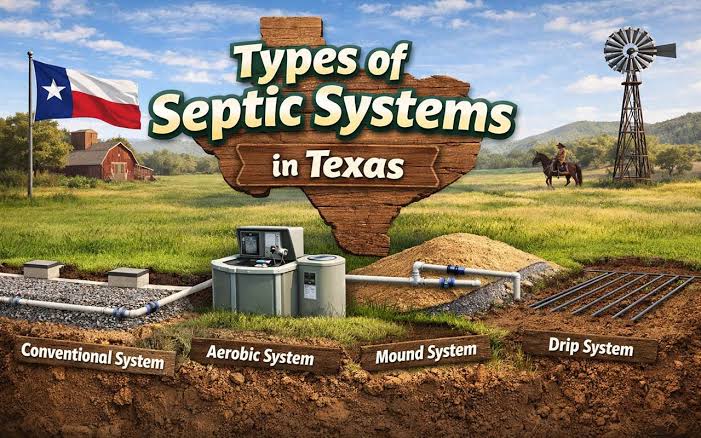
A septic system receives wastewater from toilets, sinks, showers, and laundry. Solids settle or undergo aerobic treatment in a subterranean tank before liquid effluent moves to a drain field, drip field, or spray distribution area. RedFish Inspections systematically evaluates system location, tank integrity, component controls, and disposal field absorption capabilities.
Locating the System & Reviewing Permits
The inspector first locates major components using installation permits, approved site plans, and visual field tracing. Buyers should request all historical OSSF permits and maintenance records from the seller or local permitting authority before the appointment.
Tank, Mechanical & Component Review
Inspectors evaluate critical structural and mechanical components based on system design (conventional or aerobic):
📦 Tank Condition
Check for structural cracks, wall deterioration, ground-water intrusion, and liquid/sludge levels.
⚙️ Mechanical & Baffles
Inspect inlet/outlet baffles, effluent filters, aerators, control panels, and float switches.
🚨 Pumps & Alarms
Test discharge pumps, electrical controls, and audio/visual high-water warning alarms.
🌱 Drain Field & Spray Area
Scan soil absorption zones for surface ponding, sewage odor, erosion, or improper vegetative cover.
Septic Failure Warning Signs
A dry-looking lawn does not guarantee a healthy system. Book an immediate professional evaluation if you observe any of these major red flags:
What a Texas Well Inspection Checks
A private drinking well is an engineered utility system consisting of casing, wellheads, submersible pumps, electrical controls, pressure tanks, and distribution piping. RedFish well inspections test electrical equipment under load and no-load conditions, observe pressure tank cycling, assess surface casing seals, and measure sustained flow rate.
Pump Performance & Flow-Rate Testing
The well pump must deliver consistent water volume under normal household demand. Flow rate is measured in Gallons Per Minute (GPM). During flow testing, the inspector monitors whether water pressure remains stable, whether the pump cycles rapidly (a sign of pressure tank bladder failure), and how the pressure switch responds under continuous load.
Wellhead Protection & Separation Distances
The wellhead cap and sanitary seal prevent surface runoff, insects, and chemical contaminants from entering the drinking water supply. Texas guidelines generally require a minimum separation distance of 50 feet between a water well and a septic tank, and 100 feet between a well and a septic drain field or spray area.
Laboratory Water-Quality Analysis
A mechanical inspection cannot determine whether water is biologically or chemically safe. EPA and state guidelines recommend testing private wells annually through a certified laboratory for:
- Total Coliform & E. Coli Bacteria: Indicators of dangerous biological contamination.
- Nitrates & Nitrites: Agricultural runoff risks dangerous to health.
- pH & Total Dissolved Solids (TDS): Indicators of water corrosiveness, hardness, and mineral content.
When to Add a Farm and Ranch Inspection
Acreage transactions frequently include secondary outbuildings, agricultural structures, and complex utility extensions. Adding a comprehensive farm and ranch inspection ensures that detached structures receive the same rigorous evaluation as the main residence.
| Acreage Feature | Key Buyer & Environmental Concerns | Recommended Specialty Service |
|---|---|---|
| Outbuildings & Barns | Roofing wear, structural framing, subpanels, hazardous wiring | Farm & Ranch Inspection |
| Propane Systems | Tank leaks, supply line integrity, regulator safety, ownership verification | Qualified Propane Specialist |
| Ponds & Surface Drainage | Erosion, overflow pathways, dam stability, culvert blockages | Property & Drainage Evaluation |
| Multiple Utilities | Shared wells, unpermitted septic extensions, long utility runs | Specialty Utility Inspection |
Frequently Asked Questions
Is a septic and well inspection included in a standard home inspection?
No. Well and septic evaluations are specialized services that require dedicated equipment, flow testing, and laboratory coordination. They must be requested separately when booking your inspection.
How long does a laboratory water quality test take?
Water sample collection occurs during the on-site inspection. Samples are delivered to a certified environmental laboratory, with complete biological and chemical analysis typically returned within 2 to 5 business days.
Should the septic tank be pumped before the inspection?
Do not pump the septic tank prior to the inspection. Pumping removes liquid and effluent evidence needed to observe baseline working levels, leaks, and normal operating conditions during flow testing.
What is considered a good well flow rate for a home?
A flow rate of 3 to 5 Gallons Per Minute (GPM) is typically acceptable for standard single-family household needs, though larger homes, irrigation systems, and livestock operations require higher output or storage systems.
What happens if the well is located too close to the septic field?
Inadequate separation increases the risk of drinking water contamination. If proper clearance is lacking, additional water quality testing, engineering reviews, or system modifications may be required.
Can RedFish inspect outbuildings and guest houses on rural properties?
Yes. Our farm and ranch inspection services cover workshops, barns, barndominiums, stables, guest houses, and detached garages across our Texas service areas.
Schedule Your Texas Well and Septic Inspection with RedFish
Don’t let rural charm obscure hidden utility defects. Ensure your private drinking water supply is safe and your septic system functions properly before your option period expires. Whether you are buying acreage in Houston, a ranch in DFW, or a Hill Country retreat near San Antonio, RedFish Inspections delivers clear findings and same-day reports.
Protect your rural property investment with Texas’s trusted utility inspectors. Schedule your well and septic inspection online or call RedFish Inspections today!
Downloadable Resource: Rural Property Pre-Purchase Checklist
Use this practical self-audit worksheet to track private utilities, outbuildings, records, and laboratory testing requirements before closing on your Texas acreage.
Prepared by RedFish Inspections | Buyer Utility Verification WorksheetProperty Profile Details:
• Property Address: [INSERT ADDRESS]
• County / Acreage: [INSERT COUNTY / ACRES]
• Primary Water Source: [PRIVATE WELL / SHARED WELL / OTHER]
• Wastewater System: [CONVENTIONAL / AEROBIC / UNKNOWN]
• Contract Option Period Deadline: [INSERT DATE & TIME]1. Septic System Verification
[ ] Permits & Records: Obtain original installation permit, site plan, and maintenance records.
[ ] Failure Indicators: Check for sewage odors, slow drains, surface water, or active alarms.
[ ] Tank & Field Status: Verify tank access, baffle condition, pump operation, and drain field absorption.
[ ] Professional Scope: Confirm full flow testing and component evaluation with your inspector.2. Private Well System Verification
[ ] Mechanical Components: Inspect pressure tank cycling, control box, wiring, and wellhead cap seal.
[ ] Performance Testing: Perform sustained flow rate test (GPM) and observe pressure stability.
[ ] Separation Distances: Verify 50 ft separation from septic tanks and 100 ft from disposal fields.
[ ] Water Quality Lab Panel: Test for total coliform, E. coli, nitrates, pH, and total dissolved solids.
3. Acreage & Outbuilding Review
[ ] Secondary Structures: Inspect barns, workshops, guest quarters, or barndominiums.
[ ] Fuel & Propane: Confirm propane tank ownership, regulator safety, and underground piping.
[ ] Site Drainage: Evaluate pond overflow, roadway culverts, perimeter fencing, and easements.
Legal Disclaimer: This checklist is provided strictly for educational purposes and does not replace an official property, utility, or environmental inspection conducted by a TREC-licensed inspector, licensed OSSF specialist, licensed water well driller, or structural engineer.
