
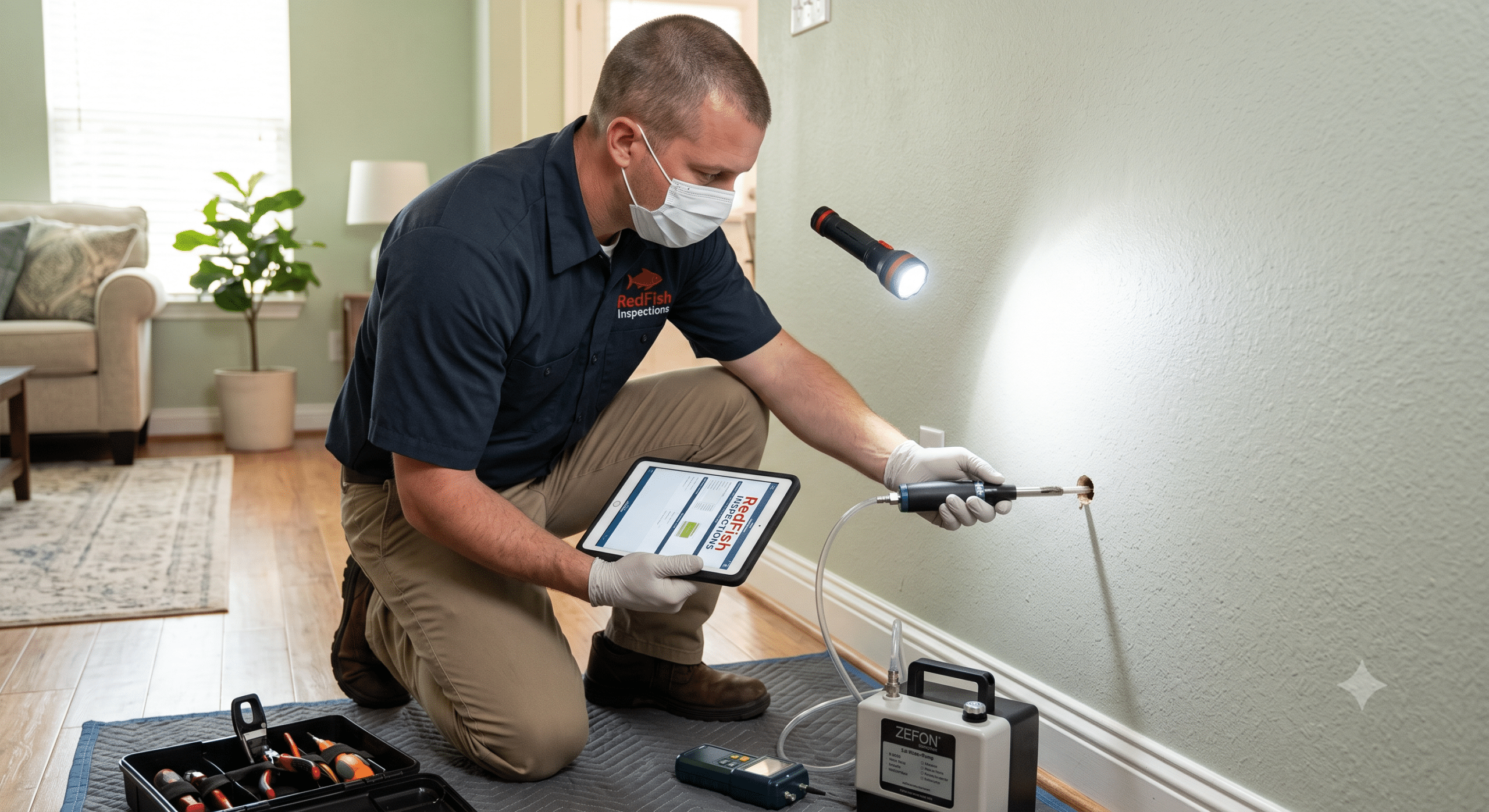
Learning how to test for mold inside walls can feel stressful because hidden mold is more than an ugly home issue. It can point to deep moisture problems, historic water damage, and severe indoor air quality concerns.
The tricky part? Mold does not always announce itself with big black spots across your sheetrock. Sometimes the first clue is a musty smell, allergy-like symptoms, peeling paint, or a bathroom that never feels fully dry. This guide explains the warning signs, whether DIY mold kits are worth your money, how professionals test for mold in walls, and when it is time to call RedFish for help.
Signs of Mold Inside Walls Even When You Can’t See It
Hidden mold almost always starts with lingering moisture. A slow plumbing leak, roof leak, air conditioning condensation issue, poor bathroom ventilation, or past flooding can easily create the damp environment mold needs to colonize.

You may not see structural mold right away, especially if it is trapped behind drywall, under baseboards, around shower walls, or inside wall cavities. That is why homeowners often notice indirect clues first.
| 8 Warning Signs of Hidden Mold | Check |
|---|---|
| Musty or earthy odor that does not go away | ☐ |
| Peeling, bubbling, or cracking paint | ☐ |
| Warped drywall or soft wall spots | ☐ |
| Water stains on walls or ceilings | ☐ |
| Persistent mildew odor in bathroom areas | ☐ |
| Allergy-like symptoms indoors | ☐ |
| Recent leak, flood, or plumbing repair | ☐ |
| Dark staining near baseboards, showers, or vents | ☐ |
One common question is, “Can I smell mold through walls?” Yes, sometimes you can. Mold and mildew produce volatile organic compounds that emit a musty, damp, earthy smell. If that odor is strongest near one wall, cabinet, bathroom, or HVAC closet, it may point to hidden moisture or microbial growth behind the surface.
A mildew odor in bathroom spaces is especially common because showers create daily humidity. If the smell returns soon after cleaning, the problem may be behind tile, under flooring, around the toilet, or inside the wall near plumbing lines.
DIY Mold Test Kits — Do They Actually Work?
DIY mold test kits can seem like an easy answer. You buy a kit, collect a sample, and wait for results. The problem is that most retail kits have major diagnostic limits.
Mold spores are naturally present in many indoor and outdoor environments. Therefore, a basic DIY kit may show that mold exists without telling you where it is coming from, whether it is actively growing inside your walls, or what underlying moisture issue is causing it.
| Diagnostic Factor | DIY Kit Performance | RedFish Professional Inspection |
|---|---|---|
| Finds moisture source | Usually no | Yes, using calibrated structural inspection tools |
| Identifies hidden problems | Highly limited | Yes, based on visible clues and testing strategies |
| Tests air quality | Sometimes | Available and fully laboratory certified |
| Uses thermal imaging | No | Yes, used systematically when needed |
| Explains results | Limited lab printout | Yes, contextualized report with clear next steps |
| Helps with real estate | Limited or invalid | Yes, inspection-focused reporting ready for closings |
DIY kits also cannot see behind walls. They do not tell you whether a stain is historic, whether moisture is actively present, or whether a bathroom odor is caused by mold, plumbing, ventilation, or another issue. For a quick surface concern, a kit may offer some insight. For hidden wall mold, professional testing is usually the smarter move.
How Professionals Test for Mold in Walls
Professional mold testing starts with a careful inspection. The goal is not just to find mold—the goal is to understand why it is there.
A RedFish inspector looks for water stains, soft drywall, damaged trim, leaking plumbing, poor ventilation, roof leak patterns, condensation, and moisture around windows, showers, sinks, toilets, and HVAC components.
Thermal imaging can also help. A thermal camera does not “see mold,” but it shows temperature differences that suggest hidden moisture. Since wet building materials cool differently than dry areas, thermal imaging guides the inspector toward hidden places that need closer review.

1. Visual Inspection
Inspector checks stains, odors, architectural damage, and moisture-prone building envelopes.
2. Moisture Readings
Calibrated moisture meters identify dampness levels deep within construction materials.
3. Thermal Imaging
Infrared patterns reveal temperature differences linked directly to hidden leaks.
4. Sampling Strategy
Air or surface samples are carefully collected when laboratory identification is needed.
This process is exactly how you check for mold in walls without cutting open drywall. Professionals use non-invasive tools first. If readings, odors, or visible damage suggest a deeper issue, further evaluation or controlled access may be recommended.
Types of Mold Commonly Found in Texas Homes
Texas homes deal with high relative humidity, sudden storms, roof leaks, plumbing stress, and hard-working air conditioning systems. This combination can create moisture in bathrooms, attics, walls, crawl spaces, closets, and HVAC areas.
Not every mold is identical, and color alone does not confirm the species. Laboratory testing is the only way to identify mold type with confidence. Still, homeowners often notice certain structural appearances.
| Mold Type | Color / Appearance | Common Location |
|---|---|---|
| Cladosporium | Olive green, brown, or black spots | Window frames, walls, HVAC surfaces |
| Aspergillus | Green, gray, yellow, or white powdery growth | Drywall, insulation, HVAC components, damp dust |
| Penicillium | Blue, green, or white fuzzy growth | Water-damaged materials, wallpaper, carpeting |
| Stachybotrys | Dark green or black, slimy when wet | Wet drywall, fiberboard, saturated ceiling tiles |
| Alternaria | Dark green, brown, or black velvety spots | Showers, window basins, damp walls |
Homeowners often ask, “What does black mold look like inside walls?” Inside cavities, black mold may appear as dark greenish-black staining, blotchy patches, or slimy-looking growth on wet drywall, framing studs, or insulation. However, many molds look black. You cannot identify toxic black mold by appearance alone.
You may also see different types of shower mold in bathrooms. Some look pink, orange, gray, black, or green. The “pink mold” often found around shower grout is usually bacteria, not a true fungus, but it still points directly to moisture and cleaning issues. Persistent dark spots around grout, caulk, or shower walls deserve closer attention.
When to Call a Pro vs. Handle It Yourself
Small surface mildew on tile or shower caulk can often be cleaned safely by a homeowner. But hidden mold is different. If mold is inside a wall cavity, cleaning the exterior surface will not resolve the structural source.
🛠️ DIY / Monitor Scenarios
- Small mildew on shower tile surfaces
- Light odor after an unusually humid day (Improve airflow first)
- Small stain with a known, isolated spill source that is fully dried
🚨 Professional Call Scenarios
- Persistent musty odor concentrated near one wall or baseboard
- Soft drywall, bubbling paint, or warped trim materials
- Mold appearing after a roof leak, storm event, or plumbing burst
- Buying, selling, or evaluating an investment property
Call a professional when the smell is persistent, the affected area returns after cleaning, or you see clear signs of water damage. For buyers, this matters even more. Knowing how to find mold in your home before closing can help you make a better financial decision. A standard home inspection flags visible signs of moisture, while dedicated mold testing services investigate further when concerns appear.
If you are already scheduling home inspection services, adding mold testing is a smart move when the property has historic leaks, musty smells, or visible staining.
Frequently Asked Questions
How do you check for mold in walls?
How to find mold in your home before it spreads?
What are common types of shower mold?
Is a mildew odor in bathroom areas always mold?
Should I cut into drywall to check for mold?
Can thermal imaging find mold?
Is mold testing worth it when buying a home?
Schedule a Mold Inspection with RedFish
Hidden mold can feel overwhelming, but you do not have to guess what is happening behind your walls. RedFish Inspections can help identify warning signs, check moisture-prone areas, and recommend the right next steps.
Schedule a home inspection and learn more about professional mold testing from RedFish today.
