

Learning how to prepare for a home inspection isn’t about making the house look perfect. Instead, it’s about making the property reasonably accessible. That way, the inspector can evaluate the visible and accessible systems included in the inspection scope.
In practice, that means clearing access to important equipment and making sure intended areas can be reached. It also means keeping normal utilities on when appropriate and securing pets. Just as important, it means avoiding last-minute attempts to hide conditions that may deserve attention.
In short, the best seller preparation is surprisingly simple. Make the house accessible, let the systems be observed, and let the inspection do its job.
Captain Obvious: “So the goal isn’t to make the inspector unable to find anything?”
Inspector Hindsight: “No. The goal is to make the property reasonably inspectable.”
That difference matters.
How Do You Prepare for a Home Inspection?
The best way to prepare for a home inspection is to provide reasonable access to the systems, rooms, and equipment that will be inspected.
You don’t need to dismantle the house, empty every closet, or repaint every wall. Nor do you need to spend the night before making your home look like nobody has ever lived there.
Instead, focus on practical preparation. First, think about what an inspector may need to reach, see, or operate. Then remove avoidable obstacles.
Seller’s Checklist to Prepare for a Home Inspection
Use this checklist as a practical starting point:
- ☐ Provide reasonable access to the property
- ☐ Clear access around the electrical panel and other accessible electrical equipment
- ☐ Clear reasonable access around HVAC equipment
- ☐ Clear access around the water heater
- ☐ Make the attic access reasonably accessible
- ☐ Avoid blocking crawl-space or other access points, when applicable
- ☐ Remove excess storage from beneath sinks so visible plumbing can be observed
- ☐ Make sure interior rooms can be accessed
- ☐ Provide access to the garage and other included areas
- ☐ Keep normal utilities on when appropriate
- ☐ Make sure installed appliances within scope are reasonably accessible
- ☐ Secure pets appropriately
- ☐ Put away sensitive personal documents and private information
- ☐ Don’t conceal known visible conditions for the inspection
- ☐ Leave keys, remotes, or access instructions for areas being inspected
- ☐ Ask your agent or inspection company about any property-specific access needs
Now let’s look at why these items matter.
Clear Access to the Electrical Panel
Sellers should provide reasonable access to electrical equipment that will be observed during the inspection.
However, electrical panels often become accidental storage walls. Boxes get stacked in front of them, shelving appears, and garage equipment gets parked nearby. Eventually, reaching the panel requires an archaeological excavation.
Captain Obvious: “The electrical panel is behind twelve boxes, a bicycle, and a Christmas tree.”
Inspector Hindsight: “Then the first inspection finding may be accessibility.”
If an inspector can’t safely reach equipment, the inspection of that component may be limited. So clearing reasonable working space beforehand helps prevent an avoidable access issue.
However, don’t remove covers or perform electrical work yourself to prepare. The goal is access, not DIY electrical work.

Make HVAC Equipment Accessible
Accessible heating and cooling equipment shouldn’t be blocked by stored belongings. So if an HVAC unit sits in a closet, attic area, garage, or utility space, check the path an inspector would use to reach it.
For example, can the equipment be approached safely? Is the access opening blocked? Are boxes stacked in front of the unit, or is furniture covering a return-air grille?
You don’t need to diagnose the HVAC system beforehand. Instead, simply make sure accessible components aren’t buried behind belongings.
Captain Obvious: “Good news. We found the furnace.”
Inspector Hindsight: “Behind the camping equipment?”
Captain Obvious: “Eventually.”
Clear the Area Around the Water Heater
The area around an accessible water heater provides useful inspection information. So avoid blocking it.
Inspectors may need to observe the unit, its visible connections, and the surrounding area. However, storage tends to drift toward utility equipment, because utility spaces look convenient. Paint cans, boxes, cleaning products, decorations, and tools pile up quickly.
A little clearing makes the area easier to observe. Still, this isn’t an invitation to adjust, repair, or dismantle the equipment yourself. Accessibility is the goal.
Make the Attic Access Reasonably Accessible
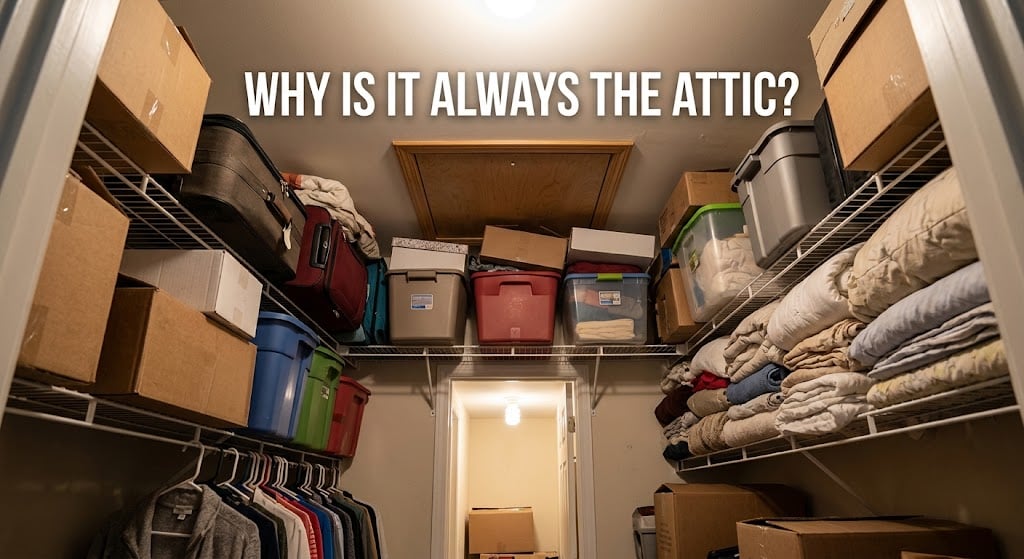
If the attic falls within the inspection scope, make sure the inspector can reach the access point. In fact, this is one of the most common places where storage gets in the way.
For example, attic openings may be located:
- In closets, garages, or hallways
- Above shelving or stored belongings
- Through pull-down stair assemblies
If the inspector would have to move valuables, furniture, or piles of storage to reach it, the area may not be reasonably accessible.
However, you don’t need to enter the attic yourself to “check everything first.” Just make the access point reachable.
Captain Obvious: “Why is it always the attic?”
Inspector Hindsight: “Because people keep putting everything they own underneath the opening.”
Don’t Forget the Areas Under Sinks
Removing excess belongings from beneath sinks makes visible plumbing easier to observe. After all, kitchen and bathroom cabinets often fill up with cleaning products, trash bags, paper goods, containers, and tools. There are also approximately seventeen bottles nobody remembers buying.
An inspector doesn’t need a showroom-empty cabinet. However, if it’s packed so tightly that plumbing can’t be seen, the inspection may be limited. So a little organization beforehand helps.

Make Interior Rooms Accessible
Rooms included in the inspection should be reasonably accessible. Otherwise, locked rooms or blocked doors can prevent observation.
So before inspection day, check whether:
- Bedroom doors can be opened
- Closets with equipment or access points are reachable
- Garage and utility areas can be entered
- Exterior doors can be operated
- Other included spaces are reachable
After all, the inspector shouldn’t have to guess whether a locked room contains anything important. Access answers the question.
Should Utilities Be On for a Home Inspection?
Generally, yes. Normal utilities need to be available when the inspection involves operating systems or components. However, confirm property-specific requirements before inspection day.
An inspector can’t meaningfully observe normal operation if the needed utilities are off. Also, if electricity or water has been disconnected, don’t assume the inspector can or should restore service. That may require the owner, utility provider, or another authorized party.
So coordinate with the right parties beforehand. If you’re unsure, ask the inspection company. Otherwise, you may discover on inspection day that the house has no water. Captain Obvious would call that “a scheduling problem with plumbing consequences.”
Should Appliances Be Accessible?
Installed appliances within the inspection scope should be reasonably accessible when they’re meant to be observed or operated.
That doesn’t mean every personal appliance is part of the inspection. Scope matters. However, you can help avoid limitations by not blocking or disabling installed components.
Also, don’t dismantle appliances or attempt last-minute repairs beyond your comfort level. Instead, simply make normal access possible.
What Should Sellers Do With Pets During a Home Inspection?
Pets should be safely secured so they don’t interfere with the inspection or escape while doors and gates are opened.
Even friendly pets can get stressed when strangers move through the home. For example, inspectors may enter and exit several times, open exterior gates, and operate garage doors.
A secured pet protects the animal, the inspector, the property, and everyone’s blood pressure. So make arrangements beforehand rather than leaving a note that says “Dog is friendly.”
Captain Obvious appreciates friendly dogs. However, he appreciates securely contained friendly dogs even more.

Remove Private or Sensitive Information From View
Sellers should put away sensitive documents and private information before the inspection. After all, the inspection is about the property, not anyone’s personal life.
For example, consider putting away:
- Financial documents and personal account information
- Medical paperwork
- Mail with personal information
- Passwords or alarm codes
- Keys that shouldn’t be left unattended
This is good practice any time outside professionals work in your home. It also keeps the inspection focused on what matters: the property.
Should You Fix Things Before a Home Inspection?
Routine maintenance and legitimate repairs are fine. However, you shouldn’t feel pressured to make the house look artificially perfect.
For example, replacing a burned-out bulb is reasonable. Similarly, adjusting a door latch may be fine if you’re comfortable doing it properly.
On the other hand, an active leak or damaged electrical equipment calls for a qualified professional. In short, maintaining the property and hiding a condition are not the same thing. After all, a cosmetic cover doesn’t fix the underlying issue.
Inspector Hindsight: “The goal isn’t to make evidence disappear. The goal is to understand what needs attention.”
Don’t Cover Up Visible Conditions Before the Inspection
Avoid concealing visible conditions just because an inspection is coming. For example, fresh paint may hide a stain, but it doesn’t explain why the stain appeared.
Likewise, a strategically placed box may hide damaged trim, but it doesn’t repair it. Similarly, a bucket may catch a drip, but it doesn’t fix the leak.
Captain Obvious: “So hiding it behind a plant doesn’t technically fix it?”
Inspector Hindsight: “No.”
Captain Obvious: “I felt that was worth confirming.”
Maintenance and repair are legitimate. Concealment, however, is not preparation.
Should the Seller Be Home During the Inspection?
It depends on the transaction, access arrangements, and instructions from the parties involved. In other words, there’s no universal rule.
So follow the instructions from your real estate professional and the inspection-access plan. In many transactions, giving the inspector and buyer space makes the process more comfortable.
Most importantly, know the plan beforehand. Otherwise, you may discover five minutes before the inspection that nobody knows who’s supposed to be there.
What Not to Do When You Prepare for a Home Inspection
Don’t create new safety risks, attempt unfamiliar technical work, conceal conditions, or block areas being inspected. For example, avoid:
- Opening electrical equipment you aren’t qualified to work on
- Entering unsafe attic areas to “check things”
- Attempting unfamiliar plumbing repairs right before the inspection
- Covering stains without understanding why they appeared
- Blocking known conditions with belongings
- Turning off needed utilities without coordinating
- Leaving pets unsecured
- Locking rooms meant to be accessible
- Removing safety devices because they’re inconvenient
After all, the inspection isn’t a performance. You don’t need to stage the mechanical systems. Instead, just make reasonable inspection possible.
Does the House Need to Be Perfectly Clean?
No. A home doesn’t need to look like a model home for an inspection. In fact, normal household conditions are normal.
Cleaning can make access easier. However, the inspector isn’t grading housekeeping. The real distinction is between clutter that exists and clutter that prevents access.
Nobody needs to alphabetize the pantry. But if forty boxes block the electrical panel, that matters.
Captain Obvious: “The inspector is here for the house.”
Inspector Hindsight: “Not the pantry organization.”
What About Exterior Areas?
Exterior areas included in the inspection should also be reasonably accessible. So before inspection day, check whether:
- Gates can be opened
- Exterior equipment can be reached
- Vegetation or stored items block access points
- Pets are secured
- Vehicles block the view of certain areas
- Locked structures included in the inspection can be accessed
You don’t need to redesign the landscaping. Instead, you’re simply avoiding preventable limitations.
Should You Provide Keys or Access Instructions?
Yes, if an included area requires a key, remote, code, or special arrangement. For example, that may apply to detached structures, locked utility spaces, garage doors, or gates.
However, don’t post or expose security codes unnecessarily. Instead, coordinate secure access through the transaction or inspection process.
After all, the inspector can’t evaluate a room nobody can open. That may be the most Captain Obvious sentence in this entire article.
What If Something Can’t Be Accessed?
If an area can’t be safely or reasonably accessed, the inspection may be limited there. That doesn’t mean the inspector should move heavy furniture, dismantle finishes, or enter unsafe spaces.
In fact, inspection limitations are part of responsible practice. Still, prevention is the better solution. So if you can safely clear a blocked access point beforehand, do it. If you can’t, let the appropriate parties know.
Why It Pays to Prepare for a Home Inspection
Good preparation lets the inspection focus on the house instead of avoidable access problems. For example, consider two scenarios.
Scenario one: The panel is accessible, the attic opening is clear, and the water heater can be reached. Pets are secured, utilities are on, and rooms are unlocked. As a result, the inspector can focus on inspecting.
Scenario two: The panel is behind storage, the attic is blocked, and the dog is loose. Meanwhile, one room is locked, nobody can open the detached shed, and the water is off.
It’s the same house, but a very different inspection experience. Preparation doesn’t change the property’s condition. Rather, it improves the opportunity to evaluate what’s available.
How to Prepare for a Home Inspection: The Night-Before Check
The night before, do one simple walkthrough. Ask:
- Can the inspector reach important equipment?
- Are access points clear?
- Are pets accounted for?
- Are utilities and access arrangements handled?
- Are locked areas addressed?
- Is sensitive information put away?
- Are there obvious obstacles you can safely remove?
You don’t need a three-hour ritual. In fact, ten thoughtful minutes may catch the obvious issues.
Captain Obvious: “I support the obvious-issue walkthrough.”
Inspector Hindsight: “That may be the first genuinely useful thing you’ve named after yourself.”
How to Prepare for a Home Inspection: Inspection-Day Checklist
Before leaving the property or handing it over, review this final list:
- ☐ The inspector has appropriate property access
- ☐ Electrical equipment is reasonably accessible
- ☐ HVAC equipment is reasonably accessible
- ☐ The water heater area is reasonably accessible
- ☐ Attic access is clear, where applicable
- ☐ Under-sink areas aren’t overly obstructed
- ☐ Included rooms and spaces can be entered
- ☐ Normal utilities are on, as appropriate
- ☐ Pets are safely secured
- ☐ Gates and exterior access are addressed
- ☐ Keys and access arrangements are handled securely
- ☐ Sensitive documents are put away
- ☐ No unsafe last-minute DIY work was attempted
- ☐ Known access limitations have been communicated
That’s preparation. There’s no smoke machine and no superhero landing. Just reasonable access.
What Happens After the Home Inspection?
After the inspection, the inspector completes the report and communicates observed conditions. For example, the report may document:
- Maintenance items
- Visible deterioration
- Conditions warranting repair
- Items to monitor
- Areas where access was limited
- Recommendations for further evaluation by a qualified professional
Remember, homes aren’t expected to be perfect, so findings are normal. What happens next is part of the transaction and should be handled with the right professionals. Meanwhile, the inspector’s role is to document and explain conditions within scope.
How Taking Time to Prepare for a Home Inspection Helps Everyone
A prepared home doesn’t guarantee a short inspection, a short report, or zero findings. Nor should it.
Instead, preparation removes unnecessary barriers between the inspector and the property. As a result, the seller gets a smoother process, and the buyer gets a better chance to understand the home. Meanwhile, the inspector spends more time inspecting and less time figuring out how to reach things.
That’s a win for everyone.
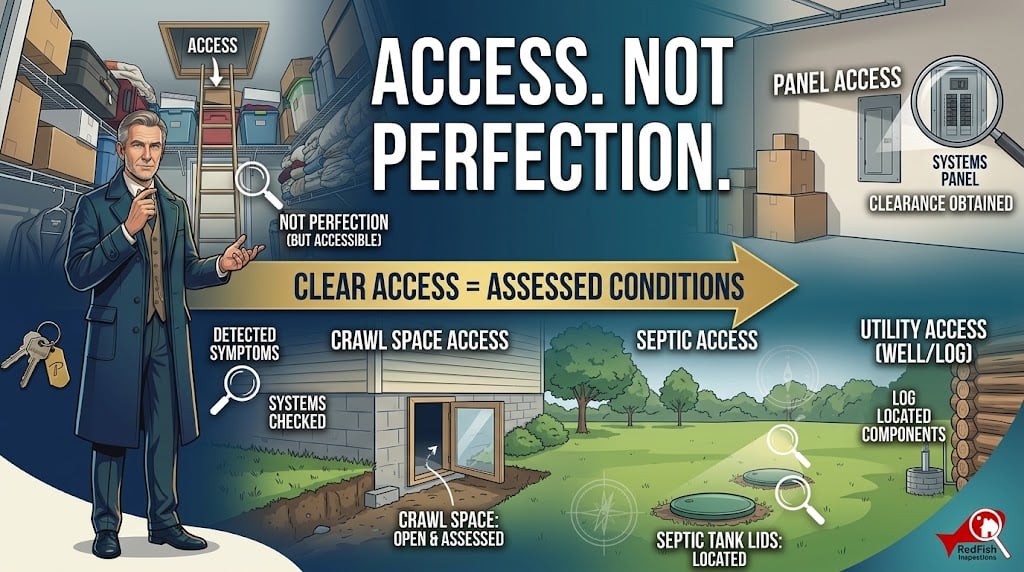
The Goal Is Access, Not Perfection
If you remember one thing about how to prepare for a home inspection, remember this: make the home reasonably accessible.
So clear important equipment, address access points, and secure pets. Also handle utilities and access arrangements, and put away private information.
Most of all, resist treating preparation like a mission to make every imperfection disappear. After all, a home inspection is supposed to provide information. Good preparation simply makes that information easier to gather.
Captain Obvious: “So we clean up the access—not the evidence?”
Inspector Hindsight: “Exactly.”
That’s a pretty good place to leave it.
How to Prepare for a Home Inspection: FAQs
How do I prepare for a home inspection?
Provide reasonable access to systems, equipment, rooms, and access points. Also secure pets, handle utilities and entry arrangements, and remove avoidable obstructions.
How do I prep my house for a home inspection?
Start with a walkthrough. Then clear access around electrical equipment, HVAC, the water heater, attic access, under-sink plumbing, and the garage.
Do I need to clean my house before a home inspection?
It doesn’t need to be perfectly clean. However, clutter shouldn’t block access to areas or components being inspected.
Should utilities be on during the home inspection?
Generally, yes, when systems need to be operated. Confirm the specific requirements with the inspection company or whoever manages access.
Should I fix everything before a home inspection?
No. Appropriate maintenance and legitimate repairs are fine. However, the goal isn’t to make the home look artificially perfect or to hide conditions.
Should the seller be home during a home inspection?
It depends on the transaction and access arrangements. So follow your real estate professional’s instructions.
What should I do with my pets during the inspection?
Secure them so they can’t interfere or escape when doors, gates, or garages are opened.
Should I empty the cabinets under my sinks?
Not completely. However, removing excess storage gives reasonable access to visible plumbing.
What if my attic access is blocked?
If the attic is being inspected, safely clear the access point beforehand to avoid a preventable limitation.
What if an area of the home is locked?
If it’s included in the inspection, arrange access beforehand. An inspector can’t inspect an area that can’t be safely entered.
Should I hide cosmetic problems before the inspection?
No. Covering a problem doesn’t fix it. Instead, focus preparation on access and legitimate maintenance.
Schedule Your RedFish Inspection
Preparing for an inspection? Make access easy, ask questions, and understand the property.
Schedule your RedFish inspection.
RedFish Inspections
Inspecting To A Higher Standard.
Call (866) 218-6699
