

Does a brand-new house need a new construction home inspection? It’s a fair question.
Captain Obvious: “It’s brand new.”
Inspector Hindsight: “Yes.”
Captain Obvious: “So nothing’s had time to break.”
Inspector Hindsight: “That’s not how construction works.”
Captain Obvious: “But it’s new.”
Inspector Hindsight: “New describes its age. Not its condition.”
That distinction matters. A new house hasn’t experienced decades of wear. However, a house doesn’t have to be old for a condition to deserve attention.
After all, new homes are assembled from thousands of components, by people across multiple trades and stages, under changing weather. So inspection isn’t about assuming somebody did something wrong. Rather, it’s about looking at the house that actually exists.
Do You Need a New Construction Home Inspection?
A new home can still benefit from an independent inspection. New construction involves many systems, materials, connections, and installation steps.
An inspection documents visible and accessible conditions at the time of inspection. As a result, it helps you better understand the property.
In addition, depending on the stage and scope, a phase inspection may let certain components be observed before finishes conceal them.
Why Inspect a Brand-New House?
Because new construction is still construction. The home still has:
- A foundation and structural framing
- Roofing and exterior cladding
- Windows and doors
- Electrical, plumbing, and HVAC systems
- Insulation and interior finishes
- Appliances, where applicable
- Drainage
- Many connections between those systems
So an inspection provides another opportunity to evaluate visible and accessible conditions.
Inspector Hindsight: “New doesn’t remove the systems. It just means they’re new systems.”
Is a New Construction Home Inspection About Finding Fault With the Builder?
No. A professional inspection focuses on the property, not personalities, motives, or blame.
For example, if an inspector sees a disconnected component, the report documents the component. Similarly, if something appears damaged or isn’t operating as expected, the report documents that condition.
However, the report doesn’t need to speculate about who caused it, why, or whether someone “cut corners.” The rule is simple: inspect the house, not the people who built it.
Don’t Builders Already Inspect New Homes?
A new home may go through builder reviews, quality-control processes, municipal inspections, and trade inspections.
However, those processes don’t necessarily share the same purpose or scope as a buyer’s independent inspection. Your inspector evaluates the property on your behalf, within the inspection scope. That’s a different relationship. So one inspection shouldn’t be treated as a replacement for every other.
Is a New Construction Home Inspection the Same as a Code Inspection?
Not necessarily. A standard home inspection isn’t a comprehensive code-compliance inspection. After all, building codes, adopted editions, local amendments, and enforcement practices vary.
An inspector may observe a condition that raises an installation or safety question. Still, the report stays within the inspection scope.
Captain Obvious: “So we’re not carrying a giant code book around and issuing citations?”
Inspector Hindsight: “No.”
Captain Obvious: “I had a badge ready.”
Inspector Hindsight: “Put it away.”
What Is a Phase Inspection?
Construction changes over time. For example, a component that’s fully visible one week may be covered by drywall, insulation, flooring, roofing, or cladding the next.
A phase inspection happens at a particular stage of construction, so visible conditions at that stage can be observed and documented. However, the exact phases, timing, and scope depend on the service and the construction process.
Why Does Inspection Timing Matter?
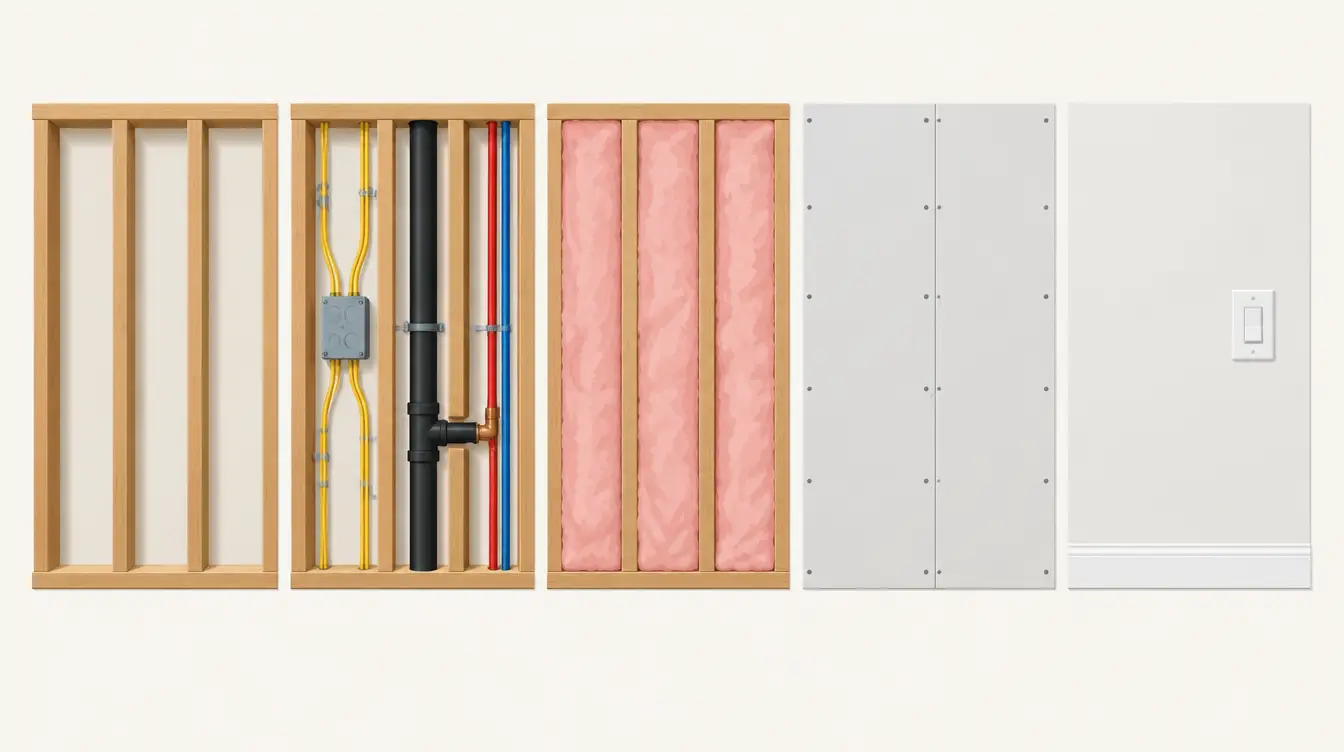
Because construction conceals itself. Framing gets covered, wiring disappears behind walls, and plumbing becomes harder to see. Meanwhile, insulation fills cavities and finishes cover building components.
Those components don’t become defective when they’re concealed. However, the opportunity to see them changes.
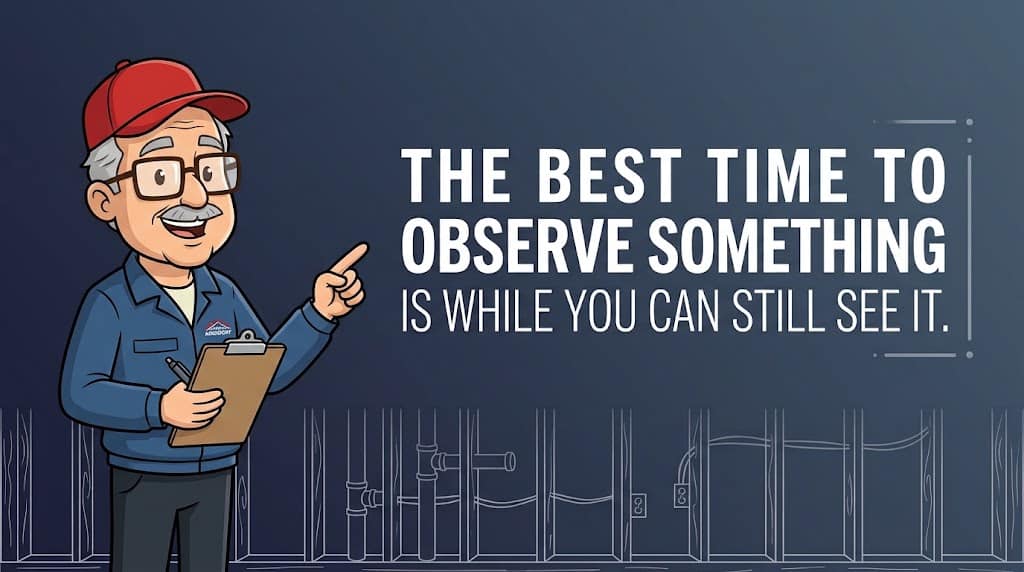
Inspector Hindsight: “The best time to observe something is often while you can still see it.”
What Is a Pre-Drywall Inspection?
A pre-drywall inspection generally happens after rough-in work is in place but before drywall covers much of it. The exact timing varies by project. Its value is visibility.
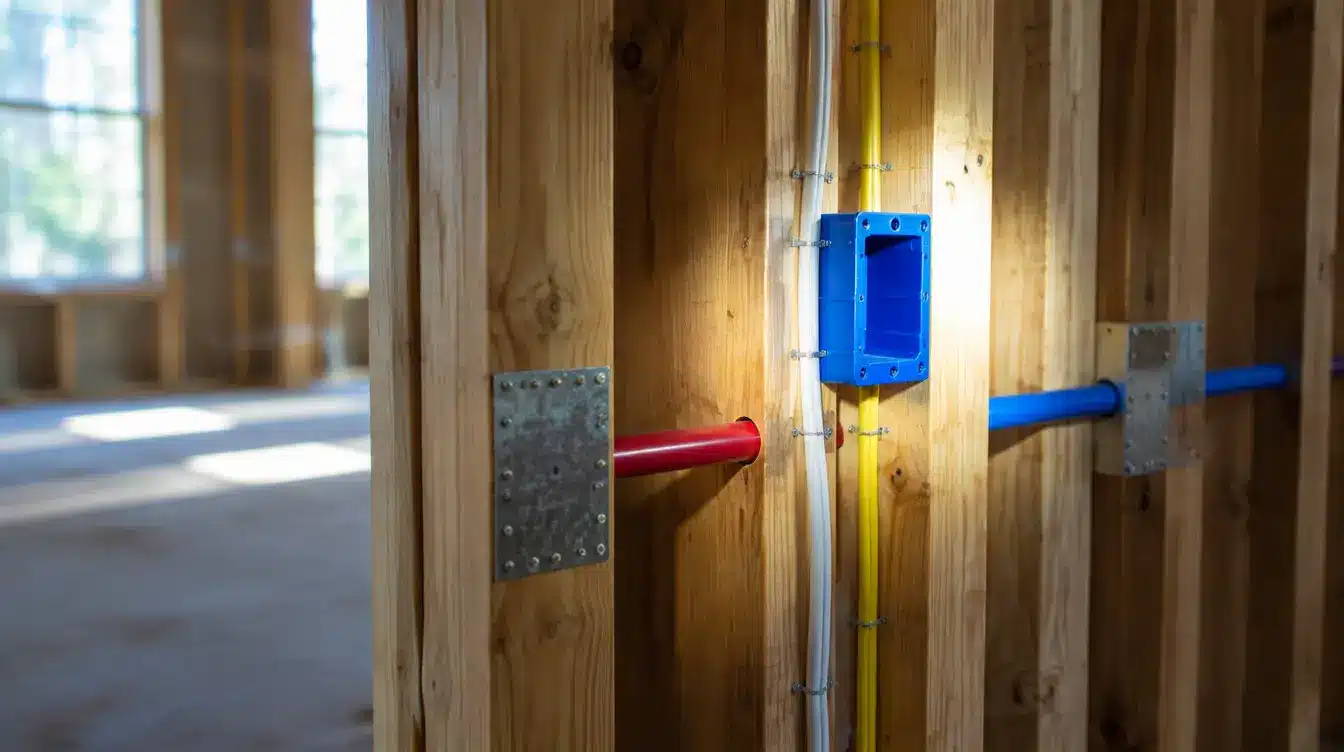
Depending on the stage and scope, an inspector may observe portions of:
- Framing and structural connections
- Electrical rough-in
- Plumbing rough-in
- HVAC components
- Wall penetrations
- Roof framing
- Window and door openings
Once drywall goes up, many of these components become concealed.
What Does a Pre-Drywall Inspection Not Do?
It doesn’t guarantee that:
- Every concealed defect will be found
- The completed house will be defect-free
- Future work will be installed correctly
- The home meets every applicable code
- Nothing will change after the inspection
Rather, it’s a snapshot of visible conditions at that stage. So future construction still matters.
What Might an Inspector Look For in the Framing?
Depending on the stage and scope, visible framing observations may include:
- Damaged or altered components
- Connections and supports
- Openings, including framing around windows and doors
- Roof, wall, and floor framing, where applicable
However, not every unusual-looking piece of lumber is a structural problem. So the question remains: what does the evidence support?
What About Holes or Notches in Framing?
Trades often create openings in framing for plumbing, electrical, and mechanical systems. So an opening isn’t automatically defective just because wood was removed.
Instead, its significance depends on the component, location, size, configuration, purpose, applicable requirements, and surrounding conditions. If an alteration raises a structural question beyond the inspection scope, further evaluation may be appropriate.
Captain Obvious: “Hole in wood.”
Inspector Hindsight: “Yes.”
Captain Obvious: “Bad?”
Inspector Hindsight: “You skipped all the useful questions.”
What Does an Inspector Look For Around Plumbing?
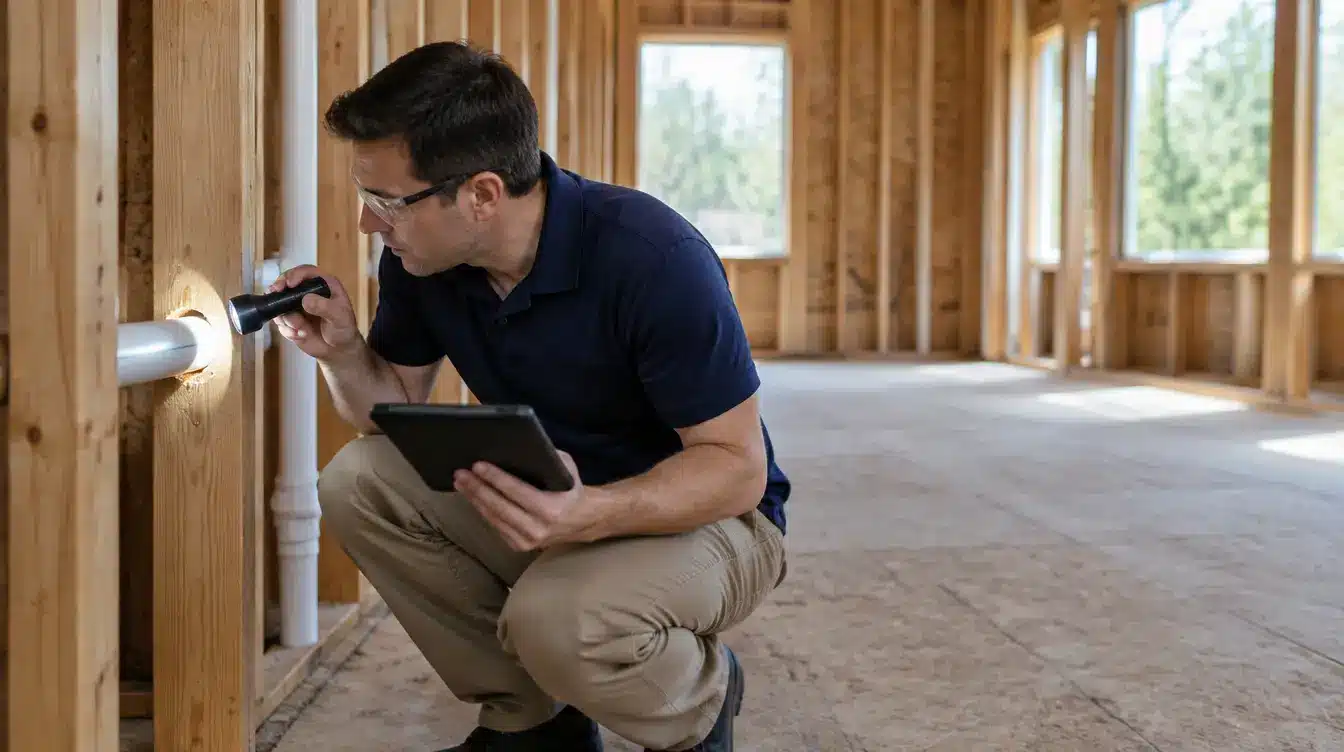
At the right stage, plumbing may be more visible than it will be after finishes. So an inspector may observe visible piping, supports, connections, and penetrations. Drain, waste, vent, and supply components may also be visible.
However, visual observation doesn’t replace specialized testing outside the inspection scope.
What Does an Inspector Look For Around Electrical Work?
Depending on the stage and scope, visible electrical rough-in may include wiring, boxes, routing, protection at penetrations, and panel-related components.
Electrical safety deserves serious attention. So buyers should never touch exposed conductors, open energized equipment, move temporary electrical components, or enter restricted areas. Inspection access must stay safe and authorized. For more, see electrical defects home inspectors flag.
What About HVAC Before Drywall?
Some mechanical components may be visible before finishes cover them. For example, an inspector may observe ductwork, routing, supports, penetrations, and installed equipment.
However, a pre-drywall inspection isn’t a complete operational HVAC evaluation. After all, the system may not be fully installed or running yet.
Can a Pre-Drywall Inspection Find Everything Inside the Wall?
No. Even before drywall, some components may already be concealed or blocked. In addition, some systems may not be installed yet, and some conditions aren’t visually apparent.
Construction may also change after the inspection. In short, “pre-drywall” doesn’t mean everything is visible.
Should Buyers Take Photos Before Drywall?
Construction-stage photos can be useful documentation, when taken with permission and without interfering with the jobsite. For example, they can preserve a record of framing, plumbing locations, electrical routing, mechanical components, and blocking.
However, photos are documentation. They aren’t a substitute for professional evaluation.
What Happens After the Pre-Drywall Stage?
Construction continues, which is why one phase doesn’t tell the whole story. After pre-drywall, work may include drywall, interior finishes, and electrical and plumbing fixtures. HVAC completion, roofing, exterior work, appliances, grading, and drainage may follow.
As a result, a condition absent at pre-drywall may appear later. Likewise, a component observed at pre-drywall may be altered before completion.
What Is a Final New Construction Home Inspection?
A final-stage inspection generally evaluates the home when construction is substantially complete and systems can be inspected within scope.
At this stage, the inspector may evaluate accessible roofing, exterior, structure, electrical, plumbing, and HVAC. Interiors, windows, doors, appliances where included, the attic, foundation, and drainage are also evaluated.
In other words, this stage answers a different question than pre-drywall: what condition does the completed home present today?
Is a Final Inspection the Same as a Blue-Tape Walkthrough?
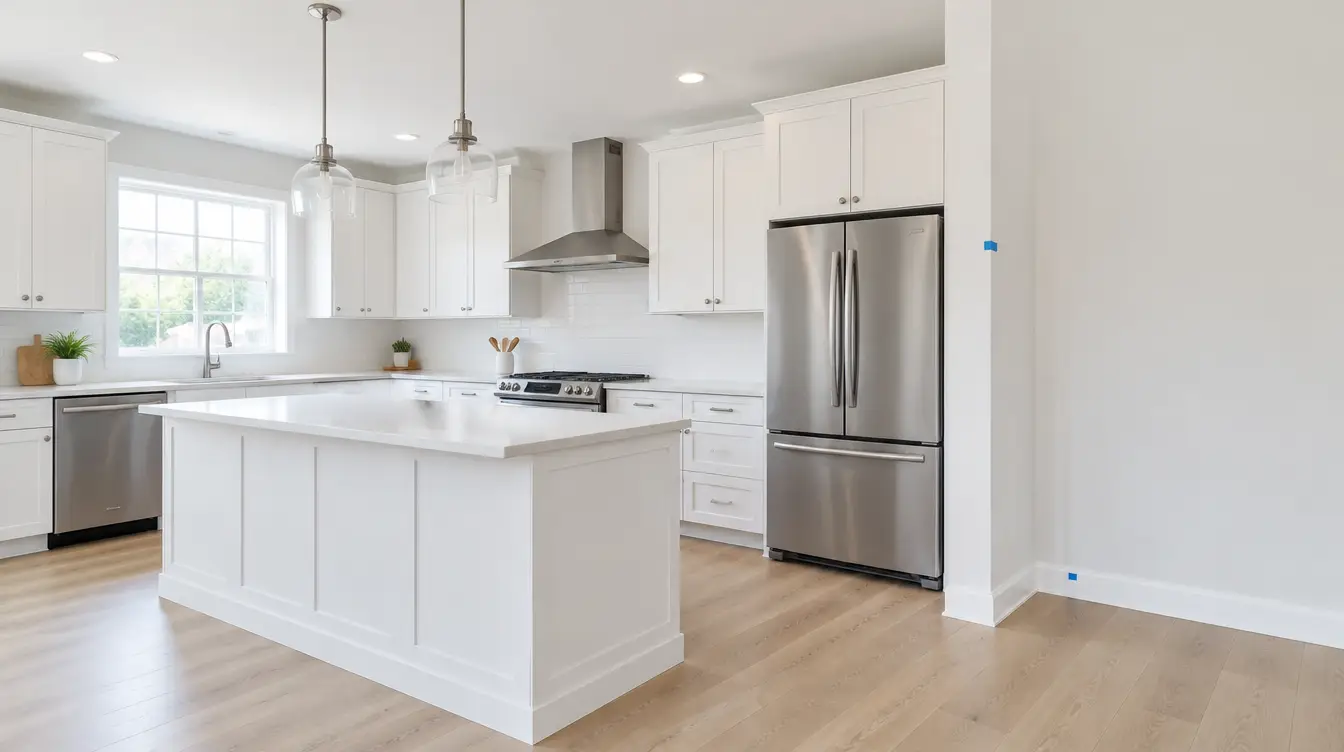
Not necessarily. A buyer walkthrough often focuses on visible finish items, such as paint, trim, cabinetry, flooring, doors, cosmetic damage, and incomplete work.
In contrast, a professional home inspection looks more broadly at building systems and property conditions within scope. So the two can complement each other, but they aren’t the same thing.
Does a Home Inspector Report Cosmetic Defects?
Scope matters. Not every cosmetic imperfection is a functional defect. For example, a small paint blemish and an active plumbing leak are very different observations.
So understand which items belong in the inspection report, the builder walkthrough, or a completion list. In short, a home inspection isn’t an exhaustive cosmetic punch list.
What Are Common New Construction Home Inspection Observations?
Not every new home has these conditions. However, inspectors may encounter observable issues involving:
- Incomplete installation
- Damaged, loose, or missing components
- Fixtures that don’t operate properly
- Water leakage or drainage
- Electrical, plumbing, or HVAC conditions
- Roof or exterior conditions
- Door or window operation
- Insulation or attic conditions
The point isn’t that new homes are full of problems. Rather, it explains why inspection still has value.
Does New Mean Defect-Free?
No. And old doesn’t automatically mean defective. In short, age is context, while condition is evidence.
Captain Obvious: “New house.”
Inspector Hindsight: “Yes.”
Captain Obvious: “Perfect house.”
Inspector Hindsight: “You changed words again.”
Captain Obvious: “I keep doing that.”
Inspector Hindsight: “I’ve noticed.”
What If the Builder Says the Home Already Passed Inspection?
Ask: Which inspection? Performed by whom, and for what purpose? At what construction stage? What was included, and what documentation exists?
After all, “passed inspection” can refer to a process with a different purpose than an independent buyer inspection. So don’t assume one replaces the other.
What If the House Has a Builder Warranty?
A warranty and an inspection answer different questions. A warranty sets out rights, coverage, exclusions, and procedures under its actual terms. Meanwhile, an inspection evaluates observable conditions within its scope.
So a warranty doesn’t make an inspection unnecessary. Likewise, an inspection doesn’t determine warranty coverage. Warranty interpretation belongs to the warranty documents and the appropriate parties.
Should You Wait Until the 11-Month Warranty Inspection?
An 11-month warranty inspection may be useful, depending on your warranty and circumstances. However, it answers a different question than inspecting before or around completion.
In short, waiting changes what information is available at each stage.
Can an Inspector Stop Construction?
Generally, no. A buyer’s home inspector doesn’t control the construction project, unless a specific contract or regulation gives them that role.
Instead, the inspector observes, documents, explains, and recommends further evaluation when appropriate. Construction decisions remain with the appropriate parties.
Can the Inspector Tell the Builder How to Fix Everything?
The inspector’s main role is reporting observed conditions. Some findings have straightforward corrective concepts.
However, others may require design, engineering, trade expertise, manufacturer guidance, or builder evaluation. So the inspector shouldn’t invent repair specifications outside the inspection scope.
What Should Buyers Do With the Inspection Report?
Read the report and look at the photos. Then understand what was observed and where, why it matters, and what couldn’t be inspected. Also note what deserves further evaluation and what remains incomplete.
Next, work with the appropriate parties to decide what happens next. After all, the inspection provides information. It doesn’t make the transaction decision for you.
What Should Buyers Ask Before a New Construction Home Inspection?
Useful questions include:
- What construction stage will the home be in?
- What will be visible, and what will already be concealed?
- Is the site safe and authorized for inspector access?
- Which systems are installed, and which are operational?
- Which areas remain incomplete?
- What’s included in the inspection scope?
- Will another inspection happen later?
- How will findings be documented?
As a result, you’ll have realistic expectations going in.
What Should Buyers Avoid on an Active Construction Site?
Don’t treat an active jobsite like an open house. Hazards may include open electrical work, unprotected openings, and construction debris. Ladders, temporary stairs, tools, incomplete railings, and wet surfaces add more risk.
So follow the builder’s access rules. Also, don’t move protective barriers, touch exposed wiring, operate equipment, or enter restricted areas. After all, the inspection should never create a new safety problem.
The Inspector’s Eye: The Wall That Is About to Disappear
Imagine a house at the rough-in stage. The framing, wiring, plumbing, and mechanical components are all exposed. Captain Obvious sees an unfinished house, which is correct.
Meanwhile, Inspector Hindsight sees a temporary opportunity. Soon, much of what’s visible today will be behind drywall. So Hindsight asks:
- What’s installed, and what’s incomplete?
- What’s damaged or altered?
- Which connections and penetrations are visible?
- What deserves documentation now?
- What will become inaccessible later?
Captain Obvious: “So we’re inspecting it before they hide everything?”
Inspector Hindsight: “Before construction conceals it.”
Captain Obvious: “That’s what I said.”
Inspector Hindsight: “No. Yours sounded like a conspiracy.”
Captain Obvious: “Mine had more drama.”
Inspector Hindsight: “Construction has enough moving parts without adding villains.”
New Construction Home Inspections: The Simple Answer
A new construction home inspection gives you another opportunity to understand a newly built property. In addition, a phase inspection provides visibility at stages when certain components are easier to see. Meanwhile, a final-stage inspection looks at the completed home.
However, remember:
- New doesn’t mean perfect, and it doesn’t mean defective.
- The builder isn’t the enemy.
- A home inspector isn’t a code enforcement officer.
- A pre-drywall inspection doesn’t guarantee every concealed condition will be found.
- A final inspection doesn’t guarantee nothing will change.
- The inspection doesn’t decide whether you should buy the house.
In short, understand what’s visible, document what matters, and know the limitations. That way, you can ask better questions before the next layer of construction makes them harder to answer.
For related reading, see our guide on what to expect at your home inspection, our guide on foundation cracks and what they mean in Texas, slab foundation movement: settling vs. heave, and what thermal imaging reveals in a home inspection.
New Construction Community Guides
Buying in a specific DFW community? These local guides cover active new-home communities and their inspection considerations:
North DFW:
Waxahachie:
Johnson County:
New Construction Home Inspection FAQs
Do new construction homes need a home inspection?
They can still benefit from one. An independent inspector evaluates visible and accessible conditions from the buyer’s perspective.
What is a new construction home inspection?
It’s an inspection of a newly built property at an appropriate construction stage, within the inspection scope.
What is a phase inspection?
It happens at a particular construction stage, so visible conditions can be observed before the project moves on.
What is a pre-drywall inspection?
It generally happens before drywall conceals much of the framing and rough-in work.
What does a pre-drywall inspection look at?
Depending on stage and scope, it may cover visible framing, electrical, plumbing, HVAC, penetrations, and connections.
Can a pre-drywall inspection find everything?
No. Some components may already be concealed, incomplete, inaccessible, or not visibly problematic.
Is a new construction inspection a code inspection?
Not automatically. A standard home inspection isn’t a comprehensive municipal code-compliance inspection.
Does a builder inspection replace a buyer’s home inspection?
Not necessarily. Different inspections have different purposes, scopes, and timing.
Does a builder warranty replace an inspection?
No. A warranty sets contractual terms, while an inspection evaluates observable conditions.
Is a final new construction inspection the same as a blue-tape walkthrough?
Not necessarily. A walkthrough often emphasizes cosmetic and completion items, while an inspection evaluates systems and conditions within scope.
Can a new house have defects?
Yes. A new home can have conditions that deserve attention. New describes age, not guaranteed condition.
Should a buyer walk through an active construction site alone?
Follow the builder’s jobsite access rules. Active construction sites can contain significant hazards.
Schedule Your RedFish Inspection
A brand-new house deserves the same basic question as any other: what condition is it actually in?
And during construction, there’s another question: what can we see today that may be concealed tomorrow? An independent inspection gives you more information about the property you’re preparing to own.
Schedule your RedFish inspection.
RedFish Inspections
Inspecting To A Higher Standard.
Call (866) 218-6699

