

Home inspection red flags can sound alarming. Words like foundation, roof, electrical, and moisture can make any buyer nervous.
However, a “red flag” shouldn’t mean “run away from the house.” Instead, it should mean: pay attention, understand the finding, and get more information when needed.
So the real questions are: What was observed? How serious is it? Is it active? What else is affected? And what remains unknown?
What Are the Biggest Home Inspection Red Flags?
Findings that often deserve closer attention include:
- Serious structural concerns
- Electrical hazards
- Active water intrusion
- Significant roofing or plumbing problems
- HVAC safety concerns
- Moisture-related deterioration
- Wood-destroying insect (WDI) evidence
- Important inspection limitations
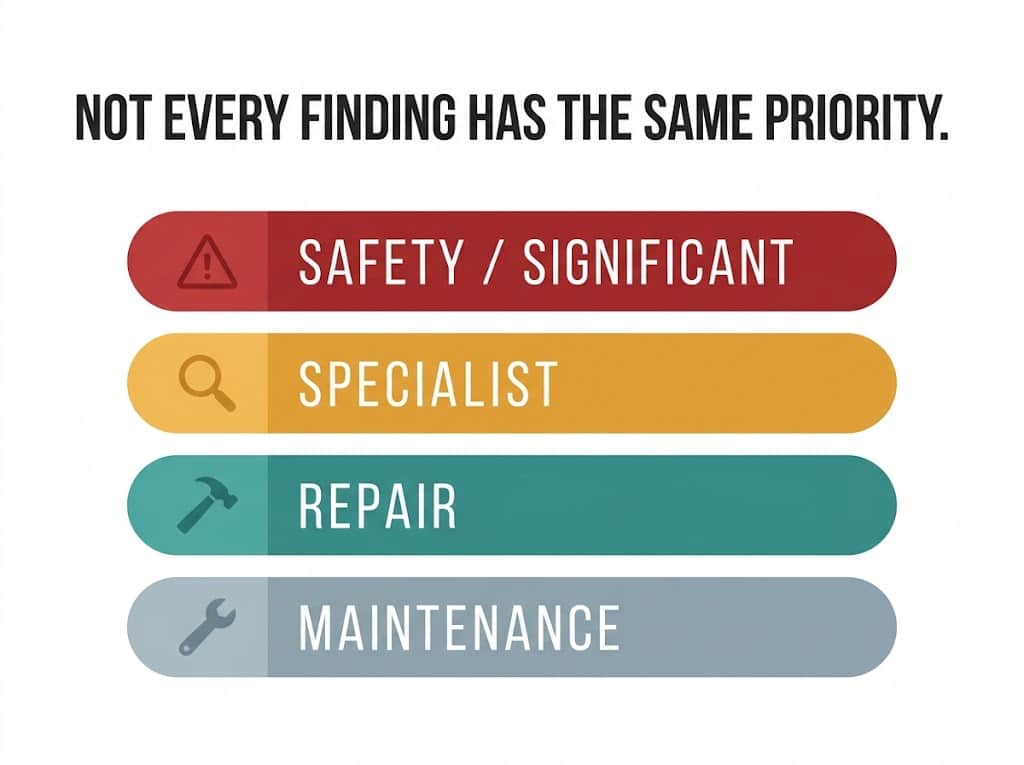
However, severity always depends on the actual finding and its context.
Does a Long Inspection Report Mean the House Is Bad?
No. Report length often reflects documentation, photos, maintenance information, property size, and detail. It doesn’t measure property quality on its own.
For example, a long report on a well-maintained home may simply be thorough. Meanwhile, a short report could still contain one significant finding. So judge findings by severity and context, not by count.
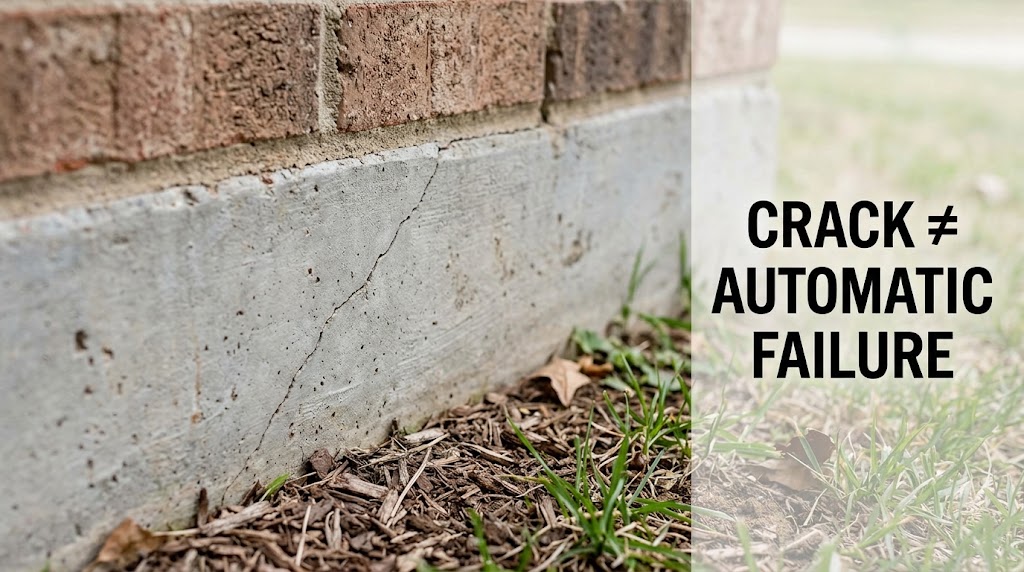
Are Foundation Cracks a Home Inspection Red Flag?
Foundation cracks deserve context. Their significance depends on location, pattern, width, displacement, related conditions, and other evidence.
For example, a hairline crack with no displacement tells a different story than a crack with visible offset, sticking doors, and sloping floors nearby. So a crack is a starting point, not a diagnosis. For more, see slab foundation movement: settling vs. heave.
Is an Old Roof a Red Flag?
Age provides useful context. However, current condition matters more. So an inspector considers visible deterioration, leakage evidence, previous repairs, and other observable conditions.
In other words, an older roof in good observed condition and a newer roof with active leakage present very different pictures.
Are Electrical Issues a Home Inspection Red Flag?
Some electrical findings have significant safety implications. Others may be relatively straightforward corrections. So the actual condition matters.
For example, exposed energized wiring or evidence of overheating deserves prompt attention from a qualified electrician. Meanwhile, a missing cover plate is a simpler fix. For more context, see electrical defects home inspectors flag.

Is a Water Stain a Red Flag?
A water stain deserves investigation. So the key questions are:
- Is the condition active?
- What’s above the stain?
- What other evidence is present?
- Has it rained recently?
- Is plumbing or HVAC equipment nearby?
- Does the attic show related evidence?
- Is there visible material deterioration?
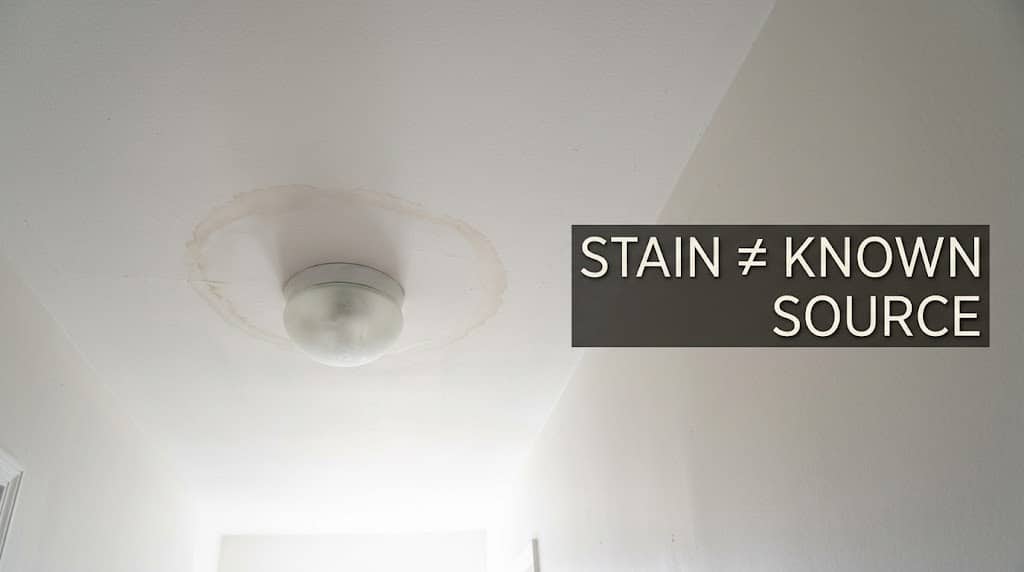
A stain provides information about a moisture-related history or condition. However, it doesn’t identify the source. For more, see what thermal imaging reveals in a home inspection.
Is Active Water Intrusion a Bigger Concern?
Yes. Active leakage generally deserves more immediate attention than a dry, historical stain whose source has been corrected. After all, active water can keep affecting materials and systems.
So when the evidence supports it, the report should clearly distinguish an active condition from evidence of previous moisture.
What About Mold or Dark Spots?
Dark spotting doesn’t automatically identify mold. Visible growth-like material may deserve further evaluation, especially when moisture is present. Still, buyers shouldn’t jump from “black spot” to “toxic mold.”
Instead, the inspection documents appearance, location, visible extent, moisture-related conditions, material condition, and limitations. Species identification and health conclusions require appropriate evidence and expertise.
Is a Musty Odor a Red Flag?
A persistent musty odor can be a useful clue. However, odor alone doesn’t identify the cause.
So the inspector may investigate accessible areas tied to moisture, plumbing, bathrooms, HVAC, attics, crawl spaces, windows, or previous water damage.
Inspector Hindsight: “Smell starts the question. It doesn’t automatically answer it.”
Are Plumbing Leaks a Red Flag?
Leaks deserve attention, but severity varies. For example, a small leak at an accessible fixture is very different from:
- Major active leakage
- Repeated backups
- Significant concealed-water evidence
- Damaged piping
- Water affecting electrical equipment
- Extensive material deterioration
So the report should help you understand the difference.
What About Slow Drains?
One slow drain doesn’t automatically mean the plumbing system has failed. Instead, the inspector may ask:
- Is one fixture affected, or several?
- Is the condition repeatable?
- Are backups occurring?
- What accessible piping is visible?
- Is there sewer or septic history?
- Does the property need specialized evaluation?
In short, patterns matter.
Is a Sewer-Line Concern a Red Flag?
Potentially significant sewer-line findings can deserve further evaluation. However, a standard visual home inspection may not evaluate the inside of underground sewer piping.
That’s where specialized methods, such as a sewer camera evaluation, may add information when appropriate. So if the underground line wasn’t evaluated, don’t assume its condition.
What HVAC Findings Deserve Attention?
HVAC findings may involve:
- A system not operating
- Unusual temperature performance
- Damaged equipment or significant corrosion
- Improper condensate management
- Unsafe combustion-related conditions, where applicable
- Damaged ductwork
However, equipment age alone doesn’t equal failure.
Is an Old HVAC System a Deal-Breaker?
The inspector shouldn’t decide that for you. Older equipment may still operate, while newer equipment may still have defects.
So useful information includes reliable age, current operation, visible condition, maintenance history, observed defects, limitations, and any recommended further evaluation.
Captain Obvious: “Old air conditioner.”
Inspector Hindsight: “Yes.”
Captain Obvious: “Replace immediately?”
Inspector Hindsight: “You skipped the condition again.”
What About Foundation Movement?
Movement-related observations can deserve significant attention when they form a pattern. For example, related conditions may include foundation cracking, floor slope, changes in door or window operation, wall cracking, trim separation, or visible displacement.
However, no single symptom proves the cause. That’s why inspectors look for patterns.
Is a Sticking Door a Red Flag?
Not necessarily. A sticking door may involve adjustment, humidity, installation, frame movement, floor conditions, structural movement, or another cause.
So one sticking door is a clue. However, several sticking doors plus foundation displacement plus related cracking create a different context.
Inspector Hindsight: “One clue asks a question. A pattern gives you more context.”
What About Wood-Destroying Insect Damage?
Visible wood damage or suspected WDI evidence deserves attention. However, damaged wood doesn’t automatically establish active termites, the exact insect, the extent of hidden damage, or structural failure.
So depending on the property and transaction, a specialized WDI evaluation may be appropriate. For more, see our guide to termite and WDI inspections for Texas buyers.
What If Termite Damage Is Old?
Past damage still provides useful history. So you may want to understand:
- Was the condition treated, and when?
- What was repaired?
- Is documentation available?
- Is current activity present?
- What remains concealed?
- Are related areas affected?
After all, history and current evidence are different pieces of information.
Is Crawl Space Moisture a Red Flag?
Potentially. Its significance depends on how much moisture is present, where it is, and what materials are affected. Standing water, plumbing leaks, deteriorated framing, and WDI evidence also matter. So does whether the source is understood and the crawl space was fully accessible.
In short, wet is an observation, and why it’s wet is the next question. For more, see crawl space moisture and what inspectors look for.
What About Attic Problems?
Attic findings can connect multiple systems. For example, an inspector may identify conditions involving roof leakage, ventilation, insulation, electrical wiring, HVAC components, moisture, framing, or exhaust ducts.
The attic matters because problems above the living space may not be obvious from the room below.
What Are Major Safety Red Flags?
Findings with meaningful immediate safety concerns deserve clear attention. Depending on the property, these may include:
- Serious electrical hazards
- Unsafe combustion conditions
- Structural instability
- Significant fire-related concerns
- Dangerous stairs or guards
- Gas leakage or suspected fuel-gas concerns
- Other conditions requiring prompt action
These findings deserve clear, direct communication in the report.
Is Every Safety Comment an Emergency?
No. “Safety” can cover different levels of concern. For example, a missing handrail and an exposed energized conductor both relate to safety. However, they don’t deserve identical urgency.
So the report should communicate what was observed, why it matters, what level of attention fits, and what next step is recommended.
What About Old or Outdated Components?
Older equipment deserves context. Age may affect expected service life, maintenance needs, repair history, parts availability, and performance.
However, old doesn’t automatically mean defective. A good inspection distinguishes age from observed condition.
What If the Report Says “Further Evaluation Recommended”?
Pay attention to it. That phrase generally means the inspector observed something that needs expertise, testing, access, or judgment beyond the home inspection scope.
For example, that may involve structural, electrical, HVAC, plumbing, roofing, or WDI evaluation. However, the recommendation doesn’t prove the worst case exists. Rather, it means another question needs a more specialized answer.
Is “Further Evaluation” Just the Inspector Covering Themselves?
A responsible referral should be tied to an actual observed condition or limitation. The purpose isn’t to send you to every trade. Instead, it’s to recognize when the next question falls outside the current scope.
Inspector Hindsight: “A good inspector knows what they know. And what requires another expert.”
What If an Area Could Not Be Inspected?
Inspection limitations deserve attention. For example, an area may be inaccessible because of stored belongings, low clearance, locked access, unsafe conditions, insulation, finishes, equipment, furniture, or standing water.
An inaccessible area isn’t automatically defective. However, it also isn’t confirmed defect-free.
Captain Obvious: “So ‘not inspected’ means—”
Inspector Hindsight: “Not inspected.”
Captain Obvious: “You have a gift for this.”

Can an Inspection Report Find Every Red Flag?
No. A visual home inspection can’t guarantee finding every defect. For example, conditions may be concealed, inaccessible, intermittent, or inactive during the inspection. They may also be inside walls, under floors, behind finishes, underground, or outside the scope.
That’s why a good report includes limitations. After all, limitations are part of the truth about the inspection.
What Should Buyers Not Panic About?
Don’t treat ordinary repair or maintenance items as proof the house is a bad purchase. For example, minor cosmetic damage, normal wear, routine maintenance, simple fixture defects, small isolated repairs, and common adjustments are typical.
Still, any finding’s importance depends on the actual condition. So don’t minimize a finding because it sounds common. Likewise, don’t exaggerate it just because it appears in the report.
What Makes a Home Inspection Finding More Important?
Severity often increases when several factors appear together. For example, a finding may be:
- Active or recurring
- Extensive or expanding
- Safety-related or structural
- Affecting multiple systems
- Possibly concealed in extent
- Requiring specialized evaluation
- Limiting use of the property
In short, a category alone doesn’t create urgency. Rather, the characteristics of the finding do.
What Should Buyers Ask Their Inspector?
Ask:
- What exactly did you observe, and where?
- Is it active?
- How extensive is the visible condition?
- Is this maintenance or a significant concern?
- Is safety involved?
- Which other systems are affected?
- What couldn’t be determined?
- Is further evaluation recommended?
- What happens if the condition is ignored?
- What should I understand before deciding?
These questions turn a report into useful information. For more on the process, see our guide on what to expect at your home inspection.
Should Buyers Ask the Inspector How Much Everything Will Cost?
An inspection isn’t a repair estimate. Repair costs depend on scope, contractor, materials, location, design, access, and the extent of damage.
Instead, the inspector helps you understand the condition and the right next step. Meanwhile, qualified repair professionals can provide actual proposals when needed.
Should an Inspector Tell You Not to Buy the House?
No. The inspection doesn’t make the purchase decision. The inspector provides information, and you weigh findings, specialist evaluations, history, repair information, transaction factors, personal tolerance, budget, and other advice.
After all, a house can have defects and still be right for you. Likewise, a house can look good and still not fit your needs. Those decisions belong to you.
The Inspector’s Eye: One Red Flag or a Pattern?
Imagine an inspector finds a crack above a doorway. Captain Obvious sees a structural problem.
Meanwhile, Inspector Hindsight asks:
- Is this the only crack?
- Are doors sticking, or windows misbehaving?
- What do the floors and foundation show?
- Is displacement visible?
- What’s happening outside?
- Is moisture involved?
- Is there repair history?
- What pattern does the rest of the house create?
Captain Obvious: “So one crack isn’t the whole story.”
Inspector Hindsight: “Exactly.”
Captain Obvious: “But ten related clues might change the story.”
Inspector Hindsight: “Now you’re thinking like an inspector.”
Captain Obvious: “It was obvious.”
Inspector Hindsight: “Until it wasn’t.”

The Biggest Red Flag May Be What You Don’t Understand
A finding is much harder to evaluate when you don’t understand what it means, how serious it is, what remains unknown, whether it’s active, or what comes next.
A good report should reduce confusion, not create more. So if a finding sounds alarming, ask for context. If it sounds minor, ask why it was included. And if a referral is recommended, understand what question the specialist will answer.
After all, information is the purpose of the inspection.
Home Inspection Red Flags: The Simple Answer
The biggest home inspection red flags aren’t simply the longest list of defects. Instead, pay closer attention to findings involving structure, active water, serious electrical conditions, roofing, plumbing, HVAC, significant moisture, wood deterioration, WDI evidence, safety, major systems, inaccessible areas, and specialist referrals.
However, remember:
- A crack isn’t automatically foundation failure.
- A stain isn’t automatically an active roof leak.
- A dark spot isn’t automatically mold.
- Old equipment isn’t automatically failed.
- One sticking door isn’t automatically structural movement.
- A specialist referral isn’t automatically the worst case.
- An inspection report doesn’t decide whether you buy the house.
In short, read the finding, understand the context, and know what’s observed and what remains unknown. Then decide what information you need next.
Home Inspection Red Flags FAQs
What are the biggest red flags in a home inspection?
Significant structural concerns, serious electrical hazards, active water intrusion, major plumbing leaks, roof conditions, HVAC safety concerns, moisture deterioration, WDI evidence, and important inaccessible areas may deserve closer attention.
Does a long inspection report mean the house is bad?
No. Length can reflect documentation, photos, maintenance information, property size, and detail rather than property quality alone.
Are foundation cracks always a red flag?
They deserve context. Location, pattern, displacement, and related conditions determine their significance.
Is an old roof a red flag?
Age is useful context. However, current condition, leakage evidence, deterioration, and repairs matter more.
Is a water stain a red flag?
It deserves investigation. However, it doesn’t identify the source or prove the condition is active.
Do black spots mean mold?
No. Color alone doesn’t identify mold.
Is a sticking door a foundation red flag?
Not automatically. It has several possible causes and should be weighed with other evidence.
Are electrical issues serious?
Some have significant safety implications, while others are simple corrections. The actual condition matters.
What does “further evaluation recommended” mean?
It generally means a condition or limitation needs expertise, testing, or evaluation beyond the home inspection scope.
Is an inaccessible area a red flag?
It’s an important limitation. It doesn’t establish a defect, but the area’s condition couldn’t be fully evaluated.
Can a home inspection find every major problem?
No. Concealed, inaccessible, or intermittent conditions may not be found during a visual inspection.
Can a home inspector tell me whether to buy the house?
No. The inspector provides condition information, and you make the purchase decision.
Should I panic if my report has a lot of items?
No. Understand severity, context, affected systems, and next steps rather than counting comments.
Schedule Your RedFish Inspection
The goal of a home inspection isn’t to give you reasons to panic. Instead, it’s to give you better information.
What matters? What’s active? What deserves repair, and what deserves another professional? What couldn’t be inspected? And what does the evidence actually support?
Schedule your RedFish inspection.
RedFish Inspections
Inspecting To A Higher Standard.
Call (866) 218-6699

