

The signs of roof damage aren’t always visible from the driveway. A roof may look simple: it’s the thing on top of the house that keeps rain out.
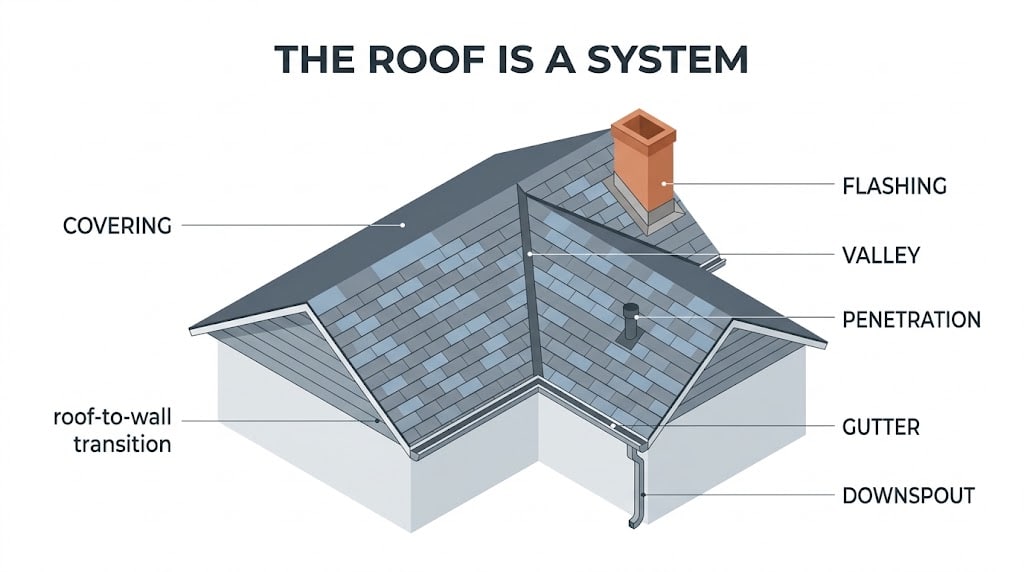
However, a roof is really a system of materials, transitions, openings, drainage paths, and connections. So a home inspector looks at how those parts work together, not just whether the shingles look okay.
Captain Obvious: “Roof inspection.”
Inspector Hindsight: “Yes.”
Captain Obvious: “Check the shingles.”
Inspector Hindsight: “And?”
Captain Obvious: “More shingles?”
Inspector Hindsight: “Flashing. Penetrations. Valleys. Drainage. Edges. Vents. Previous repairs. Attic evidence.”
Captain Obvious: “So we’re not just checking shingles.”
Inspector Hindsight: “Now we’re getting somewhere.”
What Does a Home Inspector Check on a Roof?
A home inspector evaluates visible and accessible roof conditions within the inspection scope. Depending on the roof and access, that may include:
- The roof covering
- Flashing and penetrations
- Valleys and edges
- Drainage components
- Visible deterioration and previous repairs
- Roof-mounted components
- Related evidence in the attic or interior
Roof access depends on safety and accessibility. An inspection can identify visible signs of roof damage. However, it can’t guarantee that every concealed or future leak will be found.
What Are the Most Common Signs of Roof Damage?
Visible signs that may deserve attention include:
- Missing or damaged roof-covering materials
- Loose or displaced components
- Cracking or deterioration
- Exposed areas
- Flashing concerns
- Damaged penetrations
- Previous repairs
- Debris accumulation
- Drainage concerns
- Staining or moisture evidence in the attic or interior
However, no single list applies equally to every roof. After all, different roofing materials can show distress in different ways.
Does a Home Inspector Always Walk on the Roof?
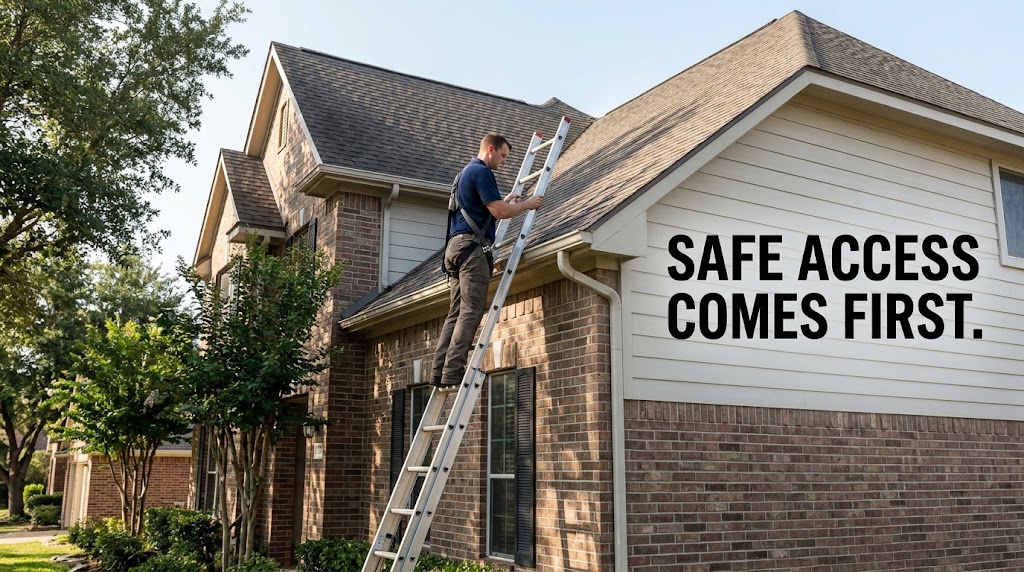
No. Roof access should never be assumed. Whether a roof can be safely accessed may depend on pitch, height, weather, surface condition, roofing material, moisture, fragility, and other safety factors.
An inspector shouldn’t take an unreasonable safety risk or damage the property just to say, “I walked the roof.”
Captain Obvious: “So no superhero landing?”
Inspector Hindsight: “No.”
Captain Obvious: “Cape?”
Inspector Hindsight: “Metaphorical.”
How Can a Roof Be Inspected if It Isn’t Walked?
Depending on the property, scope, and safe inspection methods, roof conditions may sometimes be observed from other appropriate vantage points.
So the important question isn’t whether the inspector’s boots touched every part of the roof. Instead, it’s what was visible, how it was observed, what limitations existed, and what conditions were documented.
If parts of the roof couldn’t be adequately observed, the report should say so.
What Does an Inspector Look for in Roof Coverings?
The roof covering is the material exposed to weather. The inspector may look for missing or damaged material, displacement, deterioration, openings, previous repairs, unusual wear patterns, and other visible concerns.
The goal is to describe the actual condition rather than assume every cosmetic irregularity means failure.
Are Missing Shingles a Sign of Roof Damage?
Missing roof-covering material deserves attention because it may expose areas meant to be protected. Still, the inspector considers:
- Where the material is missing
- How much is affected
- What’s exposed
- Whether related damage or water-intrusion evidence is visible
- What repair or further evaluation fits
After all, one missing component and widespread roof-covering damage aren’t the same condition.
What About Curling, Cracked, or Damaged Shingles?
Visible deterioration provides information about roof condition. Depending on the material, inspectors may observe cracking, curling, splitting, surface material loss, physical damage, displacement, or other signs of aging.
However, deterioration doesn’t tell you exactly when the roof will leak, how much life remains, or when replacement will be needed. In short, an inspection describes current condition. It doesn’t create a countdown clock.
Is an Old Roof Automatically a Bad Roof?
No. Age matters, but condition matters too. An older roof may still be performing, while a newer roof may have installation or damage concerns.
So useful information includes the roofing material, approximate age when reliably known, visible condition, leakage evidence, repair history, observed deterioration, and inspection limitations.
Captain Obvious: “Old roof.”
Inspector Hindsight: “Yes.”
Captain Obvious: “Bad roof?”
Inspector Hindsight: “Age is context. Condition is evidence.”
What Is Roof Flashing?
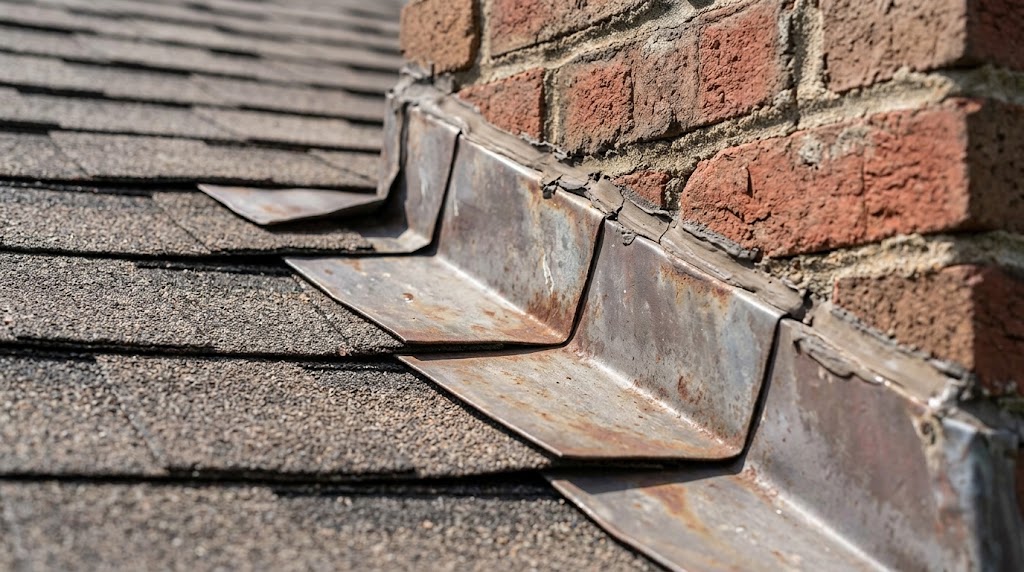
Flashing helps manage water at roof transitions and vulnerable areas. Depending on the design, it may be found at wall intersections, chimneys, penetrations, valleys, roof edges, and other transitions.
These areas deserve attention because water has to be managed wherever materials and surfaces change.
Why Do Roof Transitions Matter?
A large, uninterrupted roof surface may look dramatic. However, many inspection questions arise where something changes: roof meets wall, roof meets chimney, roof meets vent, one slope meets another, or roof meets an edge.
Inspector Hindsight: “Water likes the details.”
Captain Obvious: “Water has preferences?”
Inspector Hindsight: “Gravity does.”
Transitions deserve attention because they’re part of how the roof manages water.
What Are Roof Penetrations?
Roof penetrations are places where components pass through the roof surface. For example, these include plumbing vents, mechanical vents, exhaust components, and other roof-mounted penetrations.
So an inspector may evaluate visible flashing, seals, boots, physical damage, deterioration, previous repairs, and the surrounding roof materials.
Why Can a Small Roof Penetration Matter?
Water doesn’t need a large opening to create a problem. A small defect around a penetration may let water affect materials below.
That doesn’t mean every old-looking vent boot is leaking. Rather, the inspector considers the component, its condition, the surrounding roofing, and any related evidence below.
What Do Inspectors Check in Roof Valleys?
Roof valleys collect and direct water where slopes meet. So inspectors may look at roofing condition, debris, damage, deterioration, flashing where applicable, and previous repairs.
A valley isn’t defective just because it carries a lot of water. After all, that’s its job. The question is whether the visible components are managing that water as intended.
Why Does Roof Drainage Matter?
Rain lands on the roof, and then it has to go somewhere. Depending on the home, drainage may involve slopes, valleys, gutters, downspouts, scuppers or drains, discharge locations, and site drainage.
So the inspection doesn’t necessarily stop at the roof edge. Hindsight asks: where does the water go next?
Are Clogged Gutters a Roof Problem?
Debris-filled or poorly functioning gutters can affect water management. Observations may include debris, damage, loose components, poor drainage, overflow evidence, or discharge concerns.
However, a gutter issue is a gutter issue unless other evidence connects it to something more. In other words, clogged gutters alone don’t prove foundation damage, roof failure, or water intrusion.
Why Do Downspouts Matter During a Roof Inspection?
Getting water off the roof is only part of the job. Where that water discharges can affect the property below.
So an inspector may observe whether accessible downspouts direct water in relation to the foundation, walkways, grade, and other building components. Observation comes first, and conclusions follow only when the evidence supports them.
What About Chimneys?
Where a chimney meets the roof, several building components come together. Depending on construction and scope, visible observations may involve flashing, exterior chimney materials, visible cap components, surrounding roofing, sealant or repair areas, and moisture evidence.
However, a stain near a chimney doesn’t automatically prove the chimney flashing is the source.
What Do Inspectors Look for Around Skylights?
Skylights create another roof opening and transition. So an inspection may consider surrounding roof materials, flashing, exterior deterioration, interior staining, and condensation-related evidence.
Still, an interior stain near a skylight requires investigation.
Captain Obvious: “Stain below skylight. Skylight leak.”
Inspector Hindsight: “Maybe.”
Captain Obvious: “I knew you were going to say that.”
Inspector Hindsight: “Then you’re learning.”
Does a Ceiling Stain Mean the Roof Is Leaking?
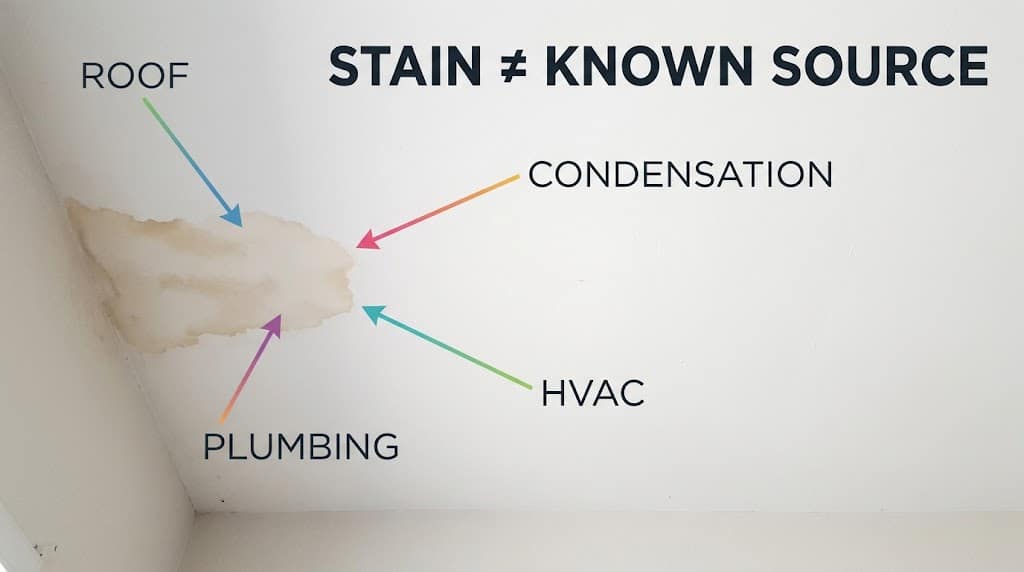
Not automatically. A ceiling stain is evidence, not a complete diagnosis. Possible sources include:
- Roof-related water intrusion
- Plumbing
- HVAC condensate
- Condensation
- Previous moisture
- Another source
So the inspector may look for relationships between the interior stain and conditions above it.
What Does the Attic Tell an Inspector About the Roof?
When safely accessible, the attic provides another perspective. For example, an inspector may observe water staining, roof-deck conditions, framing, penetrations, daylight at unintended openings, insulation, ventilation, HVAC equipment, and electrical components.
In short, the roof surface tells one part of the story, and the attic may tell another.

Does Attic Staining Prove an Active Roof Leak?
No. Staining may reflect current moisture, previous leakage, a repaired condition, condensation, or another source. So an inspector looks for supporting evidence before calling a historical stain an active leak.
Inspector Hindsight: “Old evidence still matters. But old evidence and active evidence are not the same thing.”
What About Roof Leaks That Only Happen During Heavy Rain?
Intermittent conditions can be hard to observe. A roof may be dry during the inspection even if the homeowner has seen leaks in certain weather.
That’s why property history matters. Useful information includes when and where leakage appears, whether wind direction seems relevant, whether repairs were attempted, whether photos exist, and whether the condition recurs.
After all, an inspection is a snapshot, and weather doesn’t perform on command.
Can a Home Inspector Guarantee a Roof Doesn’t Leak?
No. A visual inspection can’t guarantee a roof is, or will remain, leak-free. Some leaks are intermittent, weather-dependent, concealed, inactive during the inspection, or tied to conditions that aren’t visible.
Future damage can also occur after the inspection. So the inspector reports observable conditions at the time of the inspection.
What About Previous Roof Repairs?
A previous repair is information, not automatically a defect. An inspector may observe patch materials, sealant, replaced or different-looking roofing, flashing repairs, and other repair evidence.
Then the questions are: What condition does the repair show today? Is deterioration or moisture evidence present? Is further evaluation appropriate?
Captain Obvious: “Repair.”
Inspector Hindsight: “Yes.”
Captain Obvious: “Bad repair?”
Inspector Hindsight: “You haven’t even looked at it yet.”
Does a New Roof Mean There’s Nothing to Inspect?
No. “New” describes age, not guaranteed condition. A newer roof can still have observable concerns involving materials, flashing, penetrations, drainage, damage, or incomplete work.
So an inspection evaluates what exists today rather than assuming new means perfect. The same idea applies to newly built homes, which is why many owners schedule an 11-month warranty inspection.
What About Hail Damage?
Roof surfaces may show evidence consistent with physical impact or weather exposure. However, an inspector shouldn’t draw unsupported conclusions about when damage occurred, which storm caused it, insurance coverage, claim eligibility, or repair cost.
Instead, the inspector documents observable condition. Insurance decisions belong to the appropriate parties.
Can a Home Inspector Determine Whether Insurance Will Cover a Roof?
No. A home inspection and an insurance decision are separate processes. A home inspector may document roof condition. Meanwhile, the insurance company determines coverage according to its policy, underwriting standards, claim investigation, and other requirements.
So don’t treat an inspection report as an insurance guarantee.
What About Trees Touching the Roof?
Vegetation touching or right next to the roof can deserve attention. For example, an inspector may document branches contacting roofing, debris, restricted access, physical wear, or drainage obstruction.
However, a nearby tree is only reported as causing damage when damage is actually observed.
What About Debris on the Roof?
Debris can hide roof surfaces, collect in drainage areas, hold moisture, block gutters or valleys, and limit visibility. Its significance depends on the amount, location, roof design, material, and related conditions.
Sometimes the debris itself is the finding. Other times, it’s also an inspection limitation.
What if Part of the Roof Cannot Be Seen?
Then that limitation matters. Visibility may be restricted by height, pitch, roof configuration, weather, trees, solar or mechanical equipment, fragile materials, or unsafe surfaces.
An unobserved area isn’t automatically defective. However, it also isn’t confirmed defect-free.
Captain Obvious: “So ‘couldn’t inspect’ means—”
Inspector Hindsight: “We couldn’t inspect it.”
Captain Obvious: “You really commit to this.”
What About Solar Panels?
Solar equipment can affect roof visibility and access. A general home inspection isn’t a specialized solar system evaluation.
So the inspector may document visible roof relationships and limitations. Areas beneath the equipment may not be fully visible.
Can Thermal Imaging Find a Roof Leak?
Thermal imaging can show surface-temperature patterns that help guide an investigation when conditions are right. However, it doesn’t directly see water, a roof leak, mold, or hidden damage.
So a thermal anomaly is evidence that needs interpretation, not a yes-or-no leak detector. For more, see what thermal imaging reveals in a home inspection.
What Are the Biggest Roof Red Flags for Buyers?
Conditions that may deserve closer attention include:
- Active water intrusion
- Significant visible roof-covering damage or missing materials
- Significant deterioration
- Damaged flashing or penetrations
- Large areas of previous repair
- Moisture-related attic damage
- Structural roof concerns
- Important areas that couldn’t be inspected
- Patterns involving several related conditions
Remember, a red flag means “pay attention.” It doesn’t automatically mean “don’t buy the house.” For more, see our guide to red flags in a home inspection report.
What Should Buyers Ask After a Roof Inspection?
Useful questions include:
- What roof material is present?
- What areas were inspected, and how was the roof observed?
- Were any areas inaccessible?
- What visible damage was found?
- Was active leakage observed, or only historical moisture evidence?
- Were previous repairs visible?
- What did the attic show?
- Were drainage concerns observed?
- Is further evaluation recommended?
- What remains unknown?
These questions create a much clearer picture than simply asking, “Is the roof good?” For more on the overall process, see our guide on what to expect at your home inspection.
Should Buyers Ask How Many Years the Roof Has Left?
Age and condition provide useful context. However, an inspector should be cautious about promising an exact remaining service life.
After all, roof performance depends on material, installation, weather, maintenance, exposure, ventilation, repairs, and physical damage. So an inspection describes current condition. It can’t promise a failure date.
What Signs of Roof Damage Can Homeowners Spot From the Ground?
From a safe spot on the ground, you may notice:
- Missing or displaced materials
- Debris
- Damaged gutters
- Tree contact
- Obvious exterior deterioration
- Gutters overflowing during rain
Inside, watch for new ceiling stains, dripping water, musty odors, or changes after storms. However, don’t climb onto the roof just because you notice something unusual. Roof access can involve serious fall hazards.
What Should Homeowners Not Do?
Don’t:
- Walk on a wet roof
- Climb a steep roof without proper training and equipment
- Step on visibly damaged or fragile materials
- Reach from an unstable ladder
- Touch overhead electrical components
- Lift or dismantle roofing materials
- Attempt an unsafe storm-damage check
Your roof isn’t worth a fall. So if something can’t be safely observed from the ground, leave the closer look to a professional.
The Inspector’s Eye: The Stain on the Ceiling
Imagine a buyer walks into a bedroom and sees a brown stain on the ceiling.
Captain Obvious: “Roof leak.”
Inspector Hindsight: “Maybe.”
Captain looks offended. So Hindsight starts asking questions:
- What’s above this room: roof, attic, plumbing, or HVAC equipment?
- Where is the stain relative to roof penetrations?
- Does the attic show moisture evidence?
- Is the material wet right now?
- Is there a repair history?
- Did the stain appear after rain, and has it changed?
Then the inspector looks outside at the roof covering, flashing, penetrations, valleys, transitions, and drainage. Then back inside. Now the stain has context.
Captain Obvious: “So the stain wasn’t the answer.”
Inspector Hindsight: “It was the beginning of the investigation.”
Captain Obvious: “It was obvious.”
Inspector Hindsight: “Until it wasn’t.”

Roof Inspection Checklist: What an Inspector May Consider
Depending on the property, inspection scope, accessibility, and safety conditions:
- ✔ Roof covering
- ✔ Visible damage
- ✔ Missing materials
- ✔ Deterioration
- ✔ Flashing
- ✔ Penetrations
- ✔ Valleys
- ✔ Roof edges
- ✔ Vents
- ✔ Chimney relationships
- ✔ Skylight relationships
- ✔ Gutters
- ✔ Downspouts
- ✔ Drainage
- ✔ Previous repairs
- ✔ Debris
- ✔ Tree contact
- ✔ Roof-mounted components
- ✔ Attic evidence
- ✔ Interior moisture clues
- ✔ Access limitations
- ✔ Need for further evaluation
This is an educational checklist. Not every item is present, accessible, or included in every inspection.
Signs of Roof Damage: The Simple Answer
A roof inspection isn’t just a shingle inspection. Instead, a home inspector may consider visible relationships among roof coverings, flashing, penetrations, valleys, drainage, edges, vents, previous repairs, attic conditions, interior moisture evidence, and access limitations.
And remember:
- Old doesn’t automatically mean failed.
- New doesn’t automatically mean perfect.
- A stain doesn’t automatically identify the source.
- A previous repair doesn’t automatically mean current failure.
- A dry roof during the inspection doesn’t guarantee it has never leaked.
- An inspection can’t guarantee a roof will never leak.
- An inaccessible area isn’t confirmed defect-free.
- The inspector doesn’t determine insurance coverage.
So the most important roof question is often not “How old is it?” Rather, it’s “What does the evidence tell us about its condition today?”
Roof Inspection FAQs
What does a home inspector check on a roof?
Depending on accessibility, safety, roof type, and scope, an inspector may evaluate visible roof coverings, flashing, penetrations, valleys, drainage, edges, previous repairs, deterioration, and related attic or interior evidence.
What are common signs of roof damage?
Visible signs may include missing or damaged roofing materials, deterioration, displaced components, flashing concerns, damaged penetrations, previous repairs, drainage problems, and moisture-related evidence.
Do home inspectors walk on every roof?
No. Roof access depends on safety, accessibility, pitch, weather, surface condition, roofing material, and other conditions.
Can a roof be inspected without walking on it?
Depending on the property and safe inspection methods, roof conditions may sometimes be observed from other appropriate vantage points. Important limitations should be documented.
Does a ceiling stain mean the roof is leaking?
Not necessarily. Plumbing, HVAC condensate, condensation, previous moisture, or another source may also cause staining.
Does an old roof need to be replaced?
Age alone doesn’t determine current condition or an exact replacement date. Visible condition and other evidence matter.
Does a new roof still need to be inspected?
Yes. New describes age, not guaranteed condition.
Can a home inspector guarantee the roof doesn’t leak?
No. Some leaks are intermittent, concealed, weather-dependent, or inactive during the inspection.
What does the attic tell an inspector about the roof?
Accessible attic areas may show water staining, roof-deck conditions, framing, penetrations, ventilation components, or other roof-related evidence.
Does attic staining mean there is an active leak?
Not automatically. Staining can reflect current or previous moisture and requires context.
Can thermal imaging find a roof leak?
Thermal imaging shows surface-temperature patterns. It doesn’t directly identify or prove a roof leak.
Can a home inspector tell me if insurance will cover my roof?
No. Coverage and underwriting decisions belong to the insurance company under the applicable policy.
Should a homeowner climb on the roof to look for damage?
Roof access involves serious fall hazards. So homeowners shouldn’t attempt unsafe roof access and should call a professional when a closer look is needed.
Schedule Your RedFish Inspection
Your roof is more than the material you see from the street. It’s a water-management system of surfaces, transitions, penetrations, drainage paths, and connections.
And sometimes the most important roof clue isn’t on the roof at all. It’s in the attic, or on the ceiling below. A good inspection follows the evidence.
Schedule your RedFish inspection.
RedFish Inspections
Inspecting To A Higher Standard.
Call (866) 218-6699

