

Preston Hollow is one of Dallas’s best-known estate neighborhoods, known for large lots, custom homes, and mature landscaping within the Dallas–Fort Worth Metroplex.
For buyers searching for a Preston Hollow home inspector, the goal is to understand the property beyond its size, design, and finishes. After all, an estate home can contain far more systems than a typical residence, and each one deserves attention.
Why Hire a Preston Hollow Home Inspector?
A Preston Hollow home inspection helps buyers understand the visible and accessible systems in a large or custom property before ownership.
The inspection evaluates accessible roofing, attic areas, electrical, plumbing, heating and cooling, exterior and interior components, and structural elements within the inspection scope. For a full breakdown, see what is checked during a home inspection.
Sale price doesn’t determine property condition. A multi-million-dollar home can still have conditions worth understanding.
Estate Homes Have More Equipment
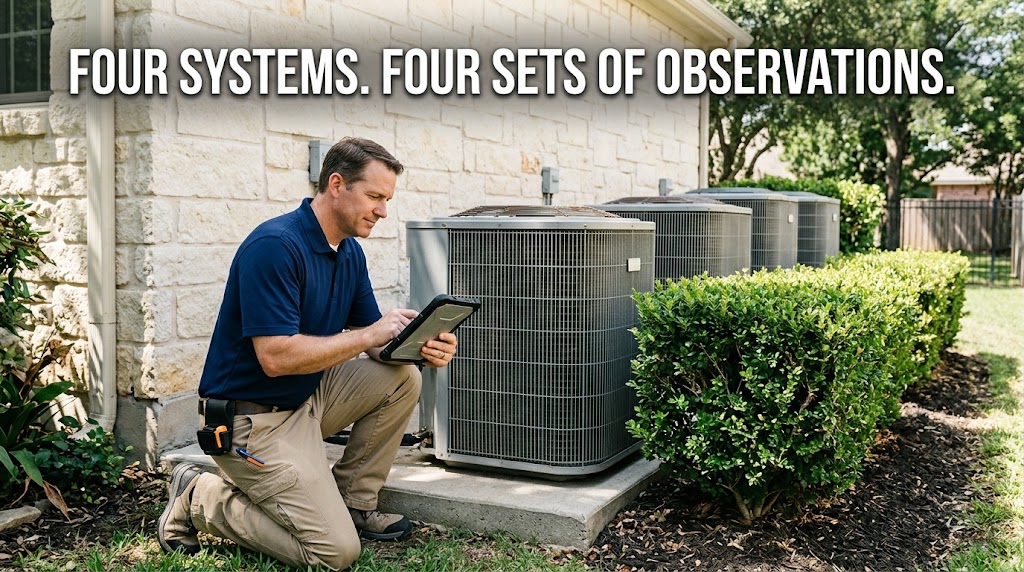
Estate homes can contain substantially more equipment than a typical residence, including:
- Multiple HVAC systems and zones
- Large electrical installations, sometimes with more than one panel
- Multiple water heaters
- Extensive plumbing serving many bathrooms and fixtures
- Complex roofing
- Pools and outdoor living areas, where applicable
That doesn’t make the property problematic. It does mean more systems to evaluate, so more observations to document and understand. For example, four HVAC systems are four separate sets of equipment, each with its own condition.
For help reading electrical findings, see electrical defects home inspectors flag.
Large Lots Matter
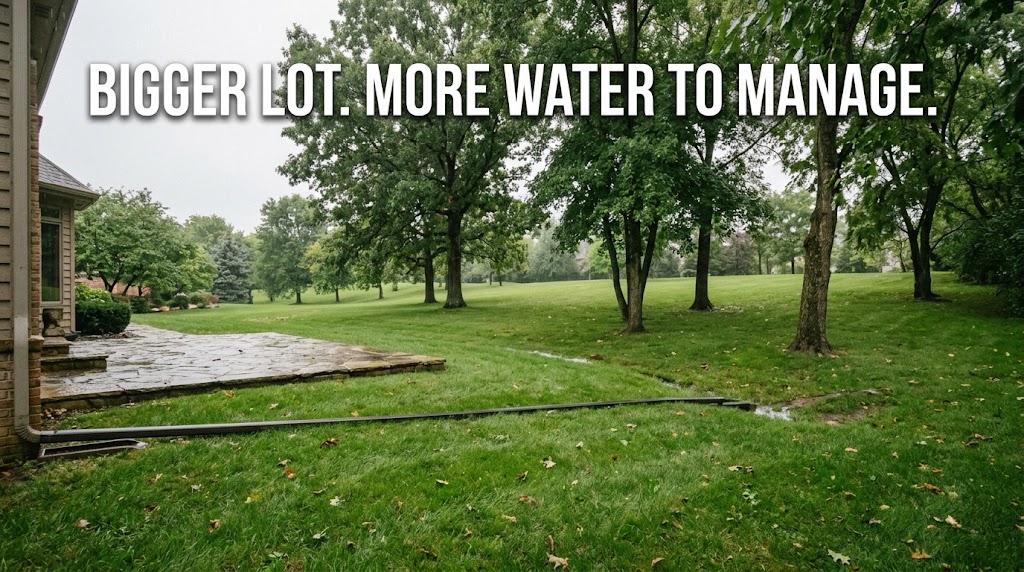
On estate-sized properties, exterior conditions deserve attention. A large home sheds a lot of roof water, and a large lot has more ground for that water to cross.
So an inspector may look at observable grading, drainage paths, roof runoff, downspout discharge, exterior wall systems, and foundation areas. Mature trees and DFW’s expansive clay soils add useful context, too.
However, a neighborhood name can’t tell you how an individual lot behaves. Every property drains differently. For more, see slab foundation movement: settling vs. heave.
Custom Designs and Complex Rooflines
Many estate homes are custom-built, with unique layouts, multiple roof planes, dormers, valleys, and chimneys. Every change in the roof creates a transition where water has to be managed.
So the inspector looks at visible roof coverings, flashing, penetrations, valleys, and drainage, subject to safe access. Steep or tall roofs may limit direct access, and any limitation should appear in the report. For more, see what inspectors check on your roof.
Multiple Attics and Access Limits
A large, complex roof often means more than one attic space. Some may be easily accessible, while others may be small, segmented, or reachable only through tight openings.
Each accessible attic can show framing, decking, insulation, ventilation, ductwork, wiring, and moisture evidence. However, areas that can’t be safely reached are noted as limitations. An inaccessible area isn’t automatically defective, but it also isn’t confirmed defect-free.
Guest Houses, Pool Houses, and Other Structures
Estate properties may include detached garages, guest houses, pool houses, standby generators, or other outdoor systems.
Don’t assume every structure or feature on the property is included in a standard home inspection. Instead, confirm the inspection scope before scheduling, so you know exactly what will and won’t be evaluated.
Renovations and Additions
Luxury properties are often improved over time. An addition can introduce transitions involving roofing, framing, electrical, plumbing, HVAC, and foundation systems. Those transitions deserve property-specific observation.
For more on how additions affect an inspection, see our University Park home inspector guide.
What a Preston Hollow Home Inspection Can’t Do
A home inspection is visual and limited to accessible conditions within scope. It can’t see inside walls, guarantee every concealed condition will be found, or predict future performance. It also doesn’t decide whether you should buy the house.
Instead, it gives you better information. For help prioritizing findings, see our guide to home inspection red flags.
Captain Obvious: “It’s an estate. Bigger house, better house.”
Inspector Hindsight: “Bigger house, more house to inspect.”
Captain Obvious: “It was obvious.”
Inspector Hindsight: “Until it wasn’t.”
Preston Hollow Home Inspection FAQs
Do multi-million-dollar homes still need inspections?
Yes. Sale price doesn’t determine property condition.
Do large homes take more inspection attention?
They can, because there may be more systems and components to evaluate.
Are guest houses and pool houses included in a home inspection?
Not necessarily. Confirm the inspection scope before scheduling, so you know which structures and features will be evaluated.
Can every attic space be inspected?
Only those that are safely accessible. Areas that can’t be reached are noted as limitations.
Is Preston Hollow in Dallas?
Yes. Preston Hollow is a residential area in the city of Dallas, within the DFW Metroplex. Nearby, Highland Park and University Park are separate municipalities. For those areas, see our Highland Park home inspector and University Park home inspector guides.
Schedule a Preston Hollow Home Inspection
Looking for a Preston Hollow home inspector, a Dallas luxury home inspection, or a professional DFW home inspection? Understand the estate before it becomes your home.
Schedule your RedFish home inspection, or call (866) 218-6699 to confirm service in your area.
RedFish Inspections
Inspecting To A Higher Standard.

