

Turtle Creek differs from many estate-focused Dallas communities. Luxury housing here can include high-rise residences, condominiums, townhomes, and traditional detached homes.
For buyers searching for a Turtle Creek home inspector, that variety matters, because the inspection scope can vary considerably depending on what you’re buying. A detached home, a townhome, and a high-rise condo unit each come with different responsibilities and different questions.
Why Hire a Turtle Creek Home Inspector?
A prestigious address or building doesn’t replace unit-level due diligence. Whatever the property type, a home inspection helps you understand visible and accessible conditions before ownership.
However, the first question is often different here: what exactly is included in the inspection? For a general overview, see what is checked during a home inspection.
Condo Inspection Is Different From a Detached Home
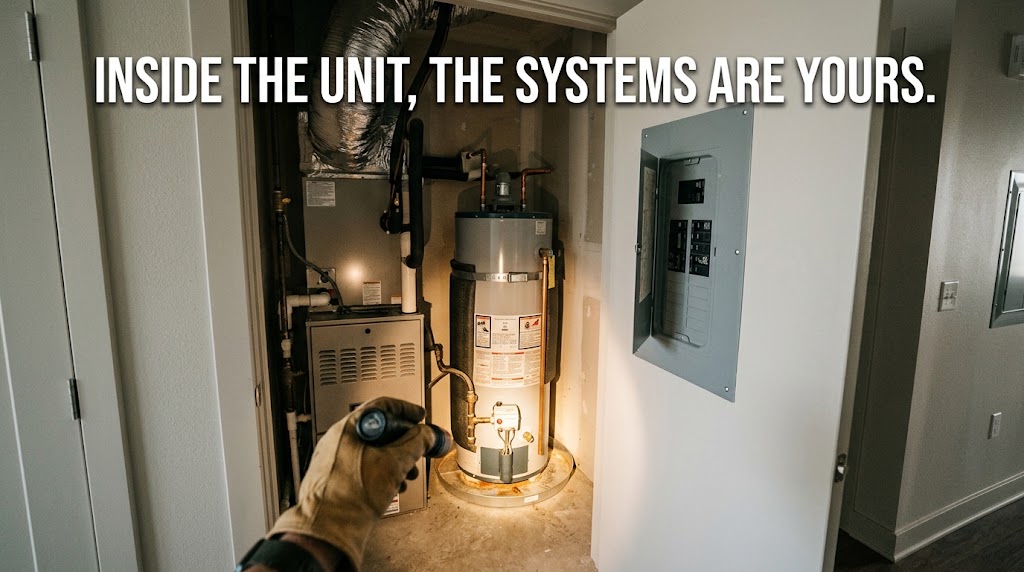
A condominium inspection usually focuses primarily on components within the unit, plus any other areas included in the agreed inspection scope.
Meanwhile, common building systems typically fall under an association or building management structure. So buyers should review association documents separately, with their real estate or legal professionals, to understand who maintains what.
What a Condo Inspection Usually Covers
Depending on access and the agreed scope, a unit inspection may evaluate:
- In-unit electrical components, such as a sub-panel, receptacles, switches, and lighting
- Plumbing fixtures, visible supply and drain connections, and evidence of leakage
- In-unit water-heating equipment, where present
- In-unit heating and cooling equipment
- Windows and doors
- Interior walls, ceilings, floors, cabinets, and built-in components
In short, the systems inside the unit still matter, even in a well-run building.
What a Condo Inspection Usually Doesn’t Cover
Building-wide systems typically fall outside a unit inspection. These may include:
- The roof and building structure
- The exterior building envelope
- Elevators
- Central mechanical, plumbing, and electrical systems
- Fire and life-safety systems
- Common areas, garages, and amenities
Exact boundaries vary by building and by the inspection agreement. So confirm the scope before the inspection, and use association documents to understand building-wide responsibilities.
Water Can Come From Somewhere Else
In a multi-unit building, a ceiling stain doesn’t always start in your unit. The source could be the unit above, a shared pipe, a neighboring unit, or the building envelope.
So an inspector documents the visible evidence and its location within the unit. However, tracing a source into another unit or a common area may fall outside the unit inspection, and that question may belong with building management.
Inspector Hindsight: “In a condo, the stain is in your unit. The source might not be.”
Balconies and Terraces
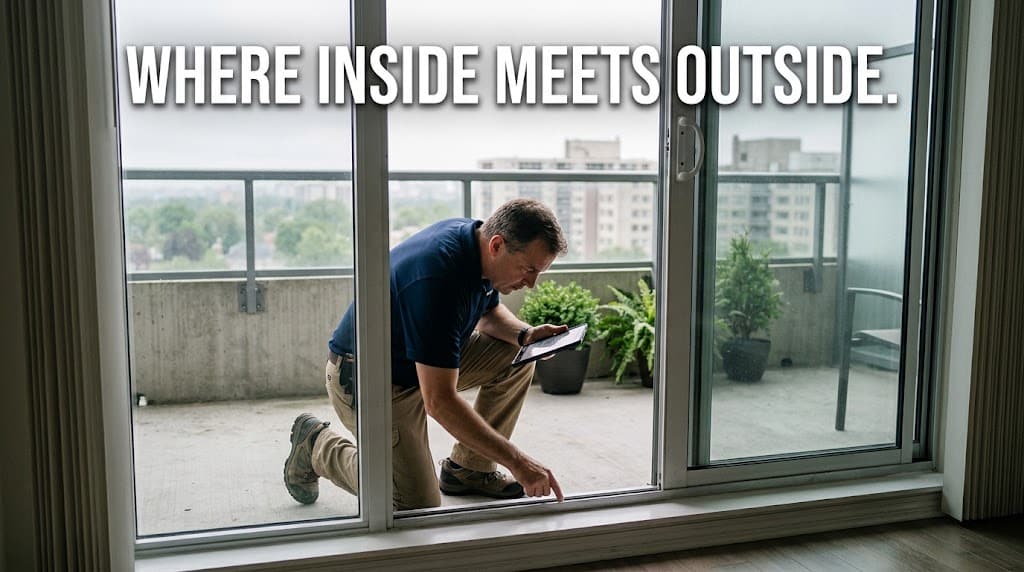
Balconies and terraces are where the inside of a unit meets the outside of the building. An inspector may observe accessible door thresholds, tracks, sealant, railings, and visible surface conditions within scope.
However, who’s responsible for repairing a balcony depends on the association documents. Also, structural evaluation of balconies is beyond the scope of a home inspection.
Townhomes: Shared Walls, Shared Questions
Townhomes sit between condos and detached homes. Depending on the property, an inspection may cover more of the structure, including the roof, attic, and exterior, than a high-rise unit inspection would.
However, shared walls, shared roofs, and common exteriors can blur the lines of responsibility. So check the association documents to see who maintains the roof, exterior walls, and other shared components. For help with roof findings, see what inspectors check on your roof.
Traditional Homes in Turtle Creek
Turtle Creek also includes traditional detached homes. For those properties, the inspection covers the full range of visible and accessible systems, including roofing, attic, structure, exterior, and drainage.
If you’re comparing detached homes in nearby areas, see our Highland Park, University Park, and Preston Hollow home inspector guides.
What a Turtle Creek Home Inspection Can’t Do
A home inspection is visual and limited to accessible conditions within scope. It can’t see inside walls, guarantee every concealed condition will be found, evaluate building-wide systems outside the agreed scope, or interpret association documents. It also doesn’t decide whether you should buy.
Instead, it gives you better information. For help prioritizing findings, see our guide to home inspection red flags.
Captain Obvious: “Doorman, valet, rooftop pool. The unit must be fine.”
Inspector Hindsight: “None of them live in your mechanical closet.”
Captain Obvious: “It was obvious.”
Inspector Hindsight: “Until it wasn’t.”
Turtle Creek Home Inspection FAQs
Do luxury condos need inspections?
Yes. The condition of the individual unit still matters.
Does a condo inspection cover the entire building?
Not automatically. Building-wide systems typically fall under the association, so confirm the scope before the inspection.
Who is responsible for a leak coming from another unit?
That depends on the source and the association documents. An inspection documents visible evidence within the unit, while responsibility questions belong with building management and your transaction professionals.
Are townhome inspections different from condo inspections?
Often, yes. Townhome inspections may include more of the structure, such as the roof and exterior, depending on the property and scope.
Is Turtle Creek part of Dallas?
Yes. Turtle Creek is a Dallas urban residential area within the DFW Metroplex.
Schedule a Turtle Creek Home Inspection
Looking for a Turtle Creek home inspector for a condo, townhome, or traditional home? Understand your unit or home before it becomes yours, and confirm the scope that fits your property type.
Schedule your RedFish home inspection, or call (866) 218-6699 to confirm service in your area.
RedFish Inspections
Inspecting To A Higher Standard.

