

Uptown Dallas combines urban living with luxury condominiums, townhomes, and other high-density residential properties, just north of downtown Dallas.
For buyers searching for an Uptown Dallas home inspector, a professional inspection helps you understand the part of the property you’re actually buying and maintaining. In attached housing, that line isn’t always obvious.
Why Hire an Uptown Dallas Home Inspector?
Whether you’re buying a condo or a townhome, an inspection helps you understand visible and accessible conditions before ownership. A building’s reputation and a unit’s condition are separate questions.
For a general overview, see what is checked during a home inspection.
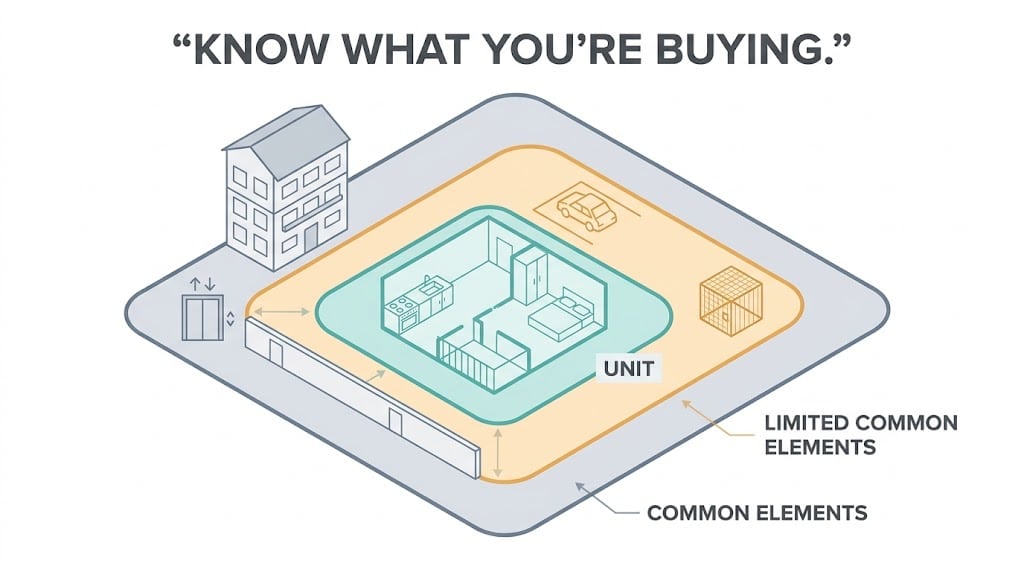
Understand the Inspection Boundary
For attached housing, it helps to think in three layers:
- The unit: the interior space and the systems that serve only that space, such as in-unit electrical, plumbing fixtures, HVAC equipment, windows, and doors.
- Limited common elements: areas or components that serve one unit but may be owned or governed differently. Depending on the building, these might include a balcony, an assigned parking space, a storage unit, or equipment serving a single unit.
- Common elements: shared building systems and spaces, such as the roof, structure, hallways, elevators, and central mechanical systems.
A home inspector can explain the inspection scope. However, the association documents define ownership and maintenance responsibility, so review them with your real estate or legal professionals.
Newer Does Not Mean Inspection-Free
Much of Uptown’s housing is relatively modern. However, newer construction can still contain observable conditions.
Inspector Hindsight: “New construction is still construction.”
That applies to vertical housing too. If a property is still within a builder warranty period, an inspection can document visible conditions while there’s still time to raise them. For more, see our guides to new construction home inspections and the 11-month warranty inspection.
Multi-Story Townhomes
Many urban townhomes stack living space over three or more floors, often with a garage at ground level. That vertical layout creates its own inspection points:
- Stairs and guards: several flights of stairs, landings, handrails, and guards that deserve attention for visible safety concerns.
- HVAC serving different floors: heating and cooling may be split between levels, so each system’s operation and visible condition matter.
- Garage below living space: the relationship between the garage and the rooms above it deserves a look for visible safety-related conditions.
- Limited attic access: some designs have little or no accessible attic, which limits what can be observed above the top floor.
So more floors simply mean more transitions to understand.
Rooftop Decks
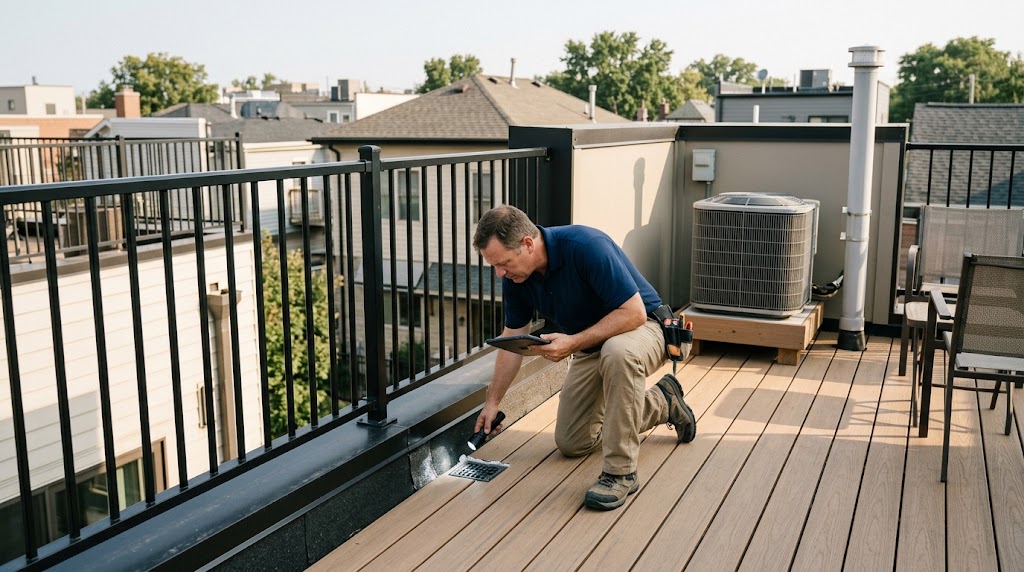
Rooftop decks are a popular feature in urban townhomes. They’re also a place where a lot of water management happens out of sight.
An inspector may observe visible deck surfaces, railings, drains, penetrations, and rooftop equipment, subject to safe access. However, the waterproofing layer beneath a deck surface usually isn’t visible during a standard inspection. So any concealed area is noted as a limitation. For more, see what inspectors check on your roof.
Condo Units in Mid-Rise and High-Rise Buildings
For condo units, the inspection usually focuses on components inside the unit and any other areas in the agreed scope. Building-wide systems typically fall under the association.
In a multi-unit building, water can also come from somewhere else, such as a unit above or a shared pipe. For more on condo scope, water from other units, and balconies, see our Turtle Creek home inspector guide.
What an Uptown Dallas Home Inspection Can’t Do
A home inspection is visual and limited to accessible conditions within scope. It can’t see inside walls or beneath deck surfaces, guarantee every concealed condition will be found, evaluate building-wide systems outside the agreed scope, or interpret association documents. It also doesn’t decide whether you should buy.
Instead, it gives you better information. For help prioritizing findings, see our guide to home inspection red flags.
Captain Obvious: “Built five years ago. Practically brand new.”
Inspector Hindsight: “Five years of weather, five years of use.”
Captain Obvious: “It was obvious.”
Inspector Hindsight: “Until it wasn’t.”
Uptown Dallas Home Inspection FAQs
Should I inspect an Uptown Dallas condo?
Yes. An inspection can provide useful information about accessible systems and components in the unit.
Does a luxury building guarantee unit condition?
No. Building reputation and unit condition are separate questions.
What are limited common elements?
They’re areas or components that serve one unit but may be owned or governed differently, such as a balcony or an assigned parking space. Association documents define how they’re handled.
Does an inspection cover a rooftop deck?
Visible and accessible deck components may be observed within scope. However, the waterproofing beneath the deck surface usually isn’t visible.
Do newer townhomes need inspections?
Yes. New construction can still contain observable conditions worth documenting.
Schedule an Uptown Dallas Home Inspection
Looking for an Uptown Dallas home inspector for a condo or townhome? Understand what you’re buying, and where the boundaries are, before it becomes yours.
Schedule your RedFish home inspection, or call (866) 218-6699 to confirm service in your area.
RedFish Inspections
Inspecting To A Higher Standard.

