

Thinking about a mold inspection in a rental property in Texas? This guide explains who must receive TDLR’s required information, what that requirement does and doesn’t mean, and what renters can do next.
You rent the property. You suspect there may be mold. You want a licensed professional to inspect it.
So does the landlord have to approve the mold inspection?
The TDLR requirement we’re discussing is a notification requirement: when the client and property owner are different people, a licensed mold assessor must provide the Consumer Mold Information Sheet to both before beginning mold-related activity. That requirement applies when, for example, a tenant hires the assessor but does not own the property. (Source: Texas Licensing and Regulation)
That distinction matters.
Providing the required notice to the property owner is not the same thing as TDLR saying the owner must consent to the mold assessment. At the same time, the notification requirement should not be interpreted as independently giving a tenant a right to enter areas, authorize access, or disregard provisions of a lease.
Here’s what Texas renters, property owners, property managers and commercial tenants should understand.
What Does Texas Require Before a Licensed Mold Assessment Begins?
A licensed mold assessor or remediator must provide TDLR’s Consumer Mold Information Sheet to the client and, when the client isn’t the property owner, to the property owner before mold-related activity begins.
The Consumer Mold Information Sheet states:
“State rules require licensed mold assessors and remediators to give a copy of this Consumer Mold Information Sheet to each client and to the property owner, if not the same person, before starting any mold-related activity.”
The document identifies 16 TAC §78.70 as the applicable rule. Consumer Mold Information Sheet
TDLR’s current FAQ reinforces this requirement. In its section specifically addressing mold in rental housing, TDLR states that a mold assessor must provide the Consumer Mold Information Sheet to both the client and property owner before providing services. (Source: Texas Licensing and Regulation)
What does that mean in a typical apartment?
Imagine Sarah rents an apartment in Texas and hires a licensed mold assessor.
Sarah is the client.
The apartment owner is the property owner.
Because those are two different parties, the required Consumer Mold Information Sheet must be provided to both before the mold-related activity begins. (Source: Texas Licensing and Regulation)
The same basic issue can arise with someone renting a single-family house, duplex or other residential property.
Inspector Hindsight: “The important distinction isn’t who made the appointment. It’s whether the client and property owner are the same person.”
Captain Obvious: “Renting the house does not make you the owner of the house.”
Sometimes the obvious part really is the important part.
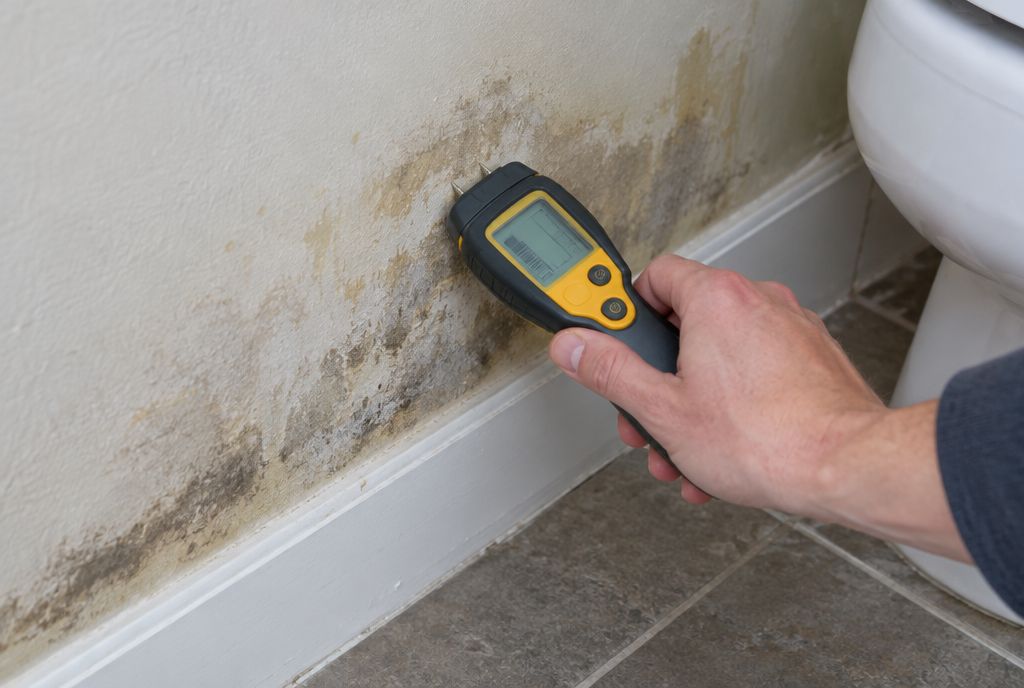
Does the Landlord Have to Give Permission for the Mold Inspection?
The TDLR provision cited here requires that the property owner receive the Consumer Mold Information Sheet; it does not state that the owner must give consent before the licensed mold assessor can perform the assessment. (Source: Texas Licensing and Regulation)
Those are different concepts:
Notification: The required information is provided to the property owner before the mold-related activity.
Consent: The owner affirmatively authorizes the activity.
The TDLR material we’re relying on establishes the first requirement. It should not be rewritten as though it establishes the second.
However, renters should also understand that this does not resolve every possible landlord-tenant issue surrounding an inspection. A lease may contain provisions concerning property access, alterations or other activities, and circumstances can differ from one property to another.
TDLR itself notes that mold issues in rental housing are typically handled through the lease like other maintenance matters and says it cannot provide tenants with legal advice concerning issues such as rent, relocation, breaking a lease or eviction. (Source: Texas Licensing and Regulation)
So the practical message is:
TDLR requires the notice. Don’t confuse that requirement with a blanket statement about permission or access rights.
Does This Apply to Apartment Complexes?
Yes, licensed mold activity in apartment properties is subject to Texas mold regulations, although specific licensing exemptions can differ depending on the property and circumstances.
The TDLR Consumer Mold Information Sheet specifically addresses residential properties and explains that an owner, managing agent or employee of an owner generally has a licensing exemption for certain work on residential property—but that particular exemption changes when the property has 10 or more residential dwelling units. Consumer Mold Information Sheet
TDLR’s newer consumer guidance similarly distinguishes residential properties with fewer than 10 dwelling units from properties containing 10 or more units. (Source: Texas Licensing and Regulation)
For a tenant hiring an independent licensed mold assessment company, however, the important point remains straightforward:
If the tenant is the client and someone else owns the property, the licensed assessor must provide the required Consumer Mold Information Sheet to the property owner before beginning the mold-related activity. (Source: Texas Licensing and Regulation)
What About Someone Renting a House?
The same client-versus-property-owner distinction can apply to a rented single-family home.
Nothing in the notification language limits the requirement to large apartment complexes.
If the renter contracts with the licensed mold assessor and another person or entity owns the home, the client and property owner aren’t the same party. The Consumer Mold Information Sheet therefore must be provided as required before mold-related activity begins. (Source: Texas Licensing and Regulation)
That’s why this isn’t simply an “apartment rule.”
It’s relevant to rental property more broadly.
Does the Requirement Apply to Commercial Rental Properties?
Texas mold regulation is not limited to residential properties, and TDLR’s own Consumer Mold Information Sheet expressly addresses non-residential property.
Texas Occupations Code §1958.002 states that Chapter 1958 applies to the regulation of mold-related activities affecting indoor air quality. The statute does not restrict that regulatory scope to houses or apartments. (Source: Texas Statutes)
The TDLR Consumer Mold Information Sheet makes the commercial/non-residential application even clearer when discussing licensing exemptions:
“For non-residential properties, an owner or tenant, or a managing agent or employee of an owner or tenant, is not required to be licensed to do mold assessment or remediation on property owned or leased by the owner or tenant, unless the mold contamination affects a total surface area of 25 contiguous square feet or more.”
TDLR directs readers to 16 TAC §78.30 for the details of those exemptions. Consumer Mold Information Sheet
That exemption is important because it confirms that Texas’s mold regulatory framework expressly contemplates non-residential properties and tenants, not just homeowners and residential renters.
The exact licensing requirements can depend on who performs the work and the circumstances, so commercial tenants should not treat that exemption as a universal exemption from Texas mold regulations.
What Exactly Is a “Mold Assessment”?
TDLR describes mold assessment as an inspection of a building by a mold assessment consultant or technician to determine whether mold growth is present and the extent of that growth.
Sampling may be performed to determine the amount and types of mold present, but TDLR also notes that sampling isn’t necessary in every situation. Consumer Mold Information Sheet
That’s another useful distinction.
A mold assessment isn’t necessarily synonymous with “taking an air sample.”
The professional assessment can involve inspection of the building and conditions associated with suspected mold growth, with sampling used when appropriate.
Does Texas Require a Landlord to Have Mold Inspected or Removed?
TDLR says current Texas mold law does not itself require property owners or landlords to inspect for or clean mold. (Source: Texas Licensing and Regulation)
The Consumer Mold Information Sheet likewise explains that while Texas rules regulate licensed professionals performing mold-related activities, those rules themselves do not require every property owner or occupant to clean up mold or have it cleaned up. Consumer Mold Information Sheet
That’s separate from the requirement imposed on a licensed mold professional once that professional is going to perform regulated mold-related activity.
Think of these as different questions:
Does Texas’s mold licensing law automatically require every landlord to order mold testing? No, according to TDLR.
If a licensed assessor is hired and the client isn’t the property owner, does TDLR require the Consumer Mold Information Sheet to be provided to the owner before mold-related activity? Yes. (Source: Texas Licensing and Regulation)
Why Does the Property Owner Receive the Information Sheet?
The Consumer Mold Information Sheet gives consumers and property owners important information about how Texas regulates mold assessment and remediation.
Among other things, it explains licensing, what constitutes mold assessment and remediation, clearance criteria, insurance requirements, confidentiality, complaints and certain licensing exemptions. Consumer Mold Information Sheet
In other words, the notice isn’t just paperwork.
It helps make sure the parties connected to the property have access to basic information about the regulated mold activity before it begins.
Inspector Hindsight: “Good decisions start with knowing what’s actually happening.”
Captain Obvious: “Which is considerably easier when everybody gets the information they’re legally supposed to get.”
Mold Assessment and Mold Remediation Aren’t the Same Thing
Mold assessment evaluates the potential mold condition; mold remediation involves cleanup or removal.
TDLR regulates both, but they’re distinct activities.
The Consumer Mold Information Sheet explains that mold remediation involves cleaning and removing mold growth and actions intended to prevent its return. When regulated remediation is necessary, a licensed mold assessment consultant can prepare a remediation protocol specifying matters such as locations, estimated quantities, methods and clearance criteria. Consumer Mold Information Sheet
Texas also separates assessment and remediation professionals to address conflicts of interest. TDLR states that its rules prohibit a licensee from conducting both mold assessment and mold remediation on the same project. Consumer Mold Information Sheet
That’s an important consumer protection to understand when choosing professionals.
What Should a Texas Renter Do If They’re Concerned About Possible Mold?
Start by documenting the condition and communicating the concern through the appropriate channels established by your lease or property management.
TDLR says rental mold issues are typically addressed like other maintenance matters, with a written request submitted to the landlord or property owner. TDLR also encourages tenants to work with landlords and property owners toward an agreement about handling a mold situation. (Source: Texas Licensing and Regulation)
If you decide to hire someone to conduct a regulated mold assessment, verify that the individual or company holds the appropriate TDLR license. TDLR provides an online license-search tool for that purpose. Consumer Mold Information Sheet
And if you’re the client but not the property owner, expect the licensed mold professional to follow the applicable TDLR notification requirement before the mold-related activity begins.
Frequently Asked Questions
Can a tenant hire a mold assessor in Texas?
TDLR expressly discusses tenants hiring licensed mold assessors to document mold problems in rental units. Anyone providing regulated mold assessment services in Texas must generally hold the appropriate TDLR mold-assessment license unless an exemption applies. (Source: Texas Licensing and Regulation)
Does my landlord have to be notified before a mold assessment?
When a licensed mold assessor is performing mold-related activity and the client isn’t the property owner, TDLR requires the Consumer Mold Information Sheet to be provided to both the client and property owner before the activity begins. (Source: Texas Licensing and Regulation)
Does the TDLR notice mean my landlord has to approve the inspection?
The cited TDLR requirement establishes delivery of the Consumer Mold Information Sheet; it does not state that property-owner consent is required by that provision. Questions involving access rights or lease provisions should be considered separately.
Does this apply if I rent a house instead of an apartment?
Yes, the notification language isn’t limited to apartment complexes. The relevant question is whether the client and property owner are different parties. (Source: Texas Licensing and Regulation)
Does Texas regulate mold assessment in commercial buildings?
Yes. Texas Occupations Code Chapter 1958 applies to regulated mold-related activities affecting indoor air quality, and TDLR’s Consumer Mold Information Sheet expressly addresses licensing exemptions involving non-residential properties and their owners and tenants. (Source: Texas Statutes) Consumer Mold Information Sheet
Does every mold inspection require air sampling?
No. TDLR says samples may be taken during a mold assessment, but sampling isn’t necessary in many cases. Consumer Mold Information Sheet
Can I check whether a mold assessor is licensed?
Yes. TDLR maintains an online license search for currently licensed individuals and companies. Consumer Mold Information Sheet
The Bottom Line for Texas Renters
If you rent an apartment, house or commercial property and hire a licensed mold assessor, there’s an important distinction to remember:
When you are the client but someone else owns the property, TDLR requires the licensed mold professional to provide the Consumer Mold Information Sheet to both you and the property owner before mold-related activity begins. (Source: Texas Licensing and Regulation)
That is a notification requirement under the cited mold rule. It should not automatically be described as a requirement that the property owner “approve” or “consent to” the mold assessment.
And because leases, access rights and individual circumstances can create additional legal considerations, the TDLR notification requirement shouldn’t be portrayed as resolving every landlord-tenant question.
Understanding that distinction helps everyone know what to expect before the assessment starts.
Schedule Your RedFish Inspection
Schedule your RedFish inspection online, or call (866) 218-6699 to confirm availability for your property and the inspection type you need.
RedFish Inspections
Inspecting To A Higher Standard.

