

Highland Park is one of the best-known luxury residential communities in the Dallas–Fort Worth Metroplex. Along with University Park, it makes up the area commonly called the Park Cities.
For buyers searching for a Highland Park home inspector, the goal is simple: understand the house beyond its architecture, finishes, landscaping, and reputation.
A high-end home may contain extensive systems, multiple renovations, and construction from different periods. That makes a property-specific inspection especially important.
Why Hire a Highland Park Home Inspector?
A Highland Park home inspection helps buyers understand visible and accessible conditions before taking ownership. After all:
- Historic character doesn’t establish current condition.
- A major renovation doesn’t establish current condition.
- A luxury finish package doesn’t establish current condition.
Instead, a home inspector evaluates accessible roofing, attic areas, electrical systems, plumbing, heating and cooling equipment, exterior components, interior components, and structural elements within the inspection scope. For a full breakdown, see what is checked during a home inspection.
Historic Homes and Renovations
Established Highland Park properties often combine older architecture with newer systems. A home may keep original structural elements while containing newer electrical, plumbing, HVAC, roofing, or interior work.
That makes one principle especially useful: don’t assume the entire property is the same age. A renovated kitchen tells you about the kitchen. It doesn’t necessarily tell you about the wiring behind the walls, the plumbing below the floor, or the framing in the attic.
Inspector Hindsight: “You don’t need a perfect house. You need to understand the house you’re buying.”

Older Electrical in Renovated Homes
A beautifully remodeled interior can still connect to older electrical components. Depending on the home’s history, an inspector may find a mix of original and updated wiring, panels, or devices.
So the inspection documents visible and accessible electrical conditions, including panels, breakers, visible wiring, and devices. Findings that need closer attention may be referred to a licensed electrician. For more, see electrical defects home inspectors flag.
Mature Trees, Clay Soils, and Foundations
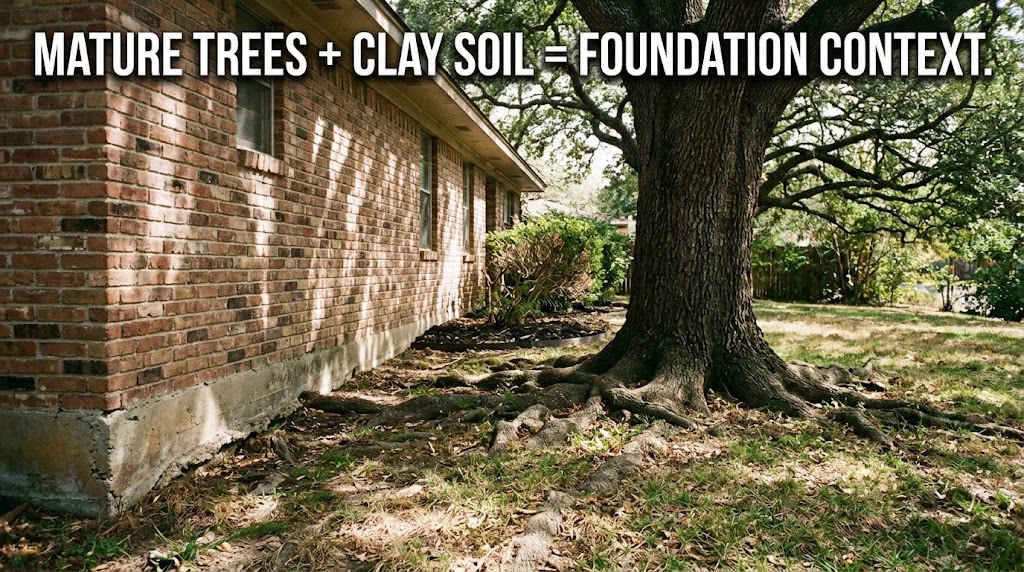
Highland Park’s large, established trees are part of its character. Much of the DFW area also sits on expansive clay soils, which can shrink and swell as moisture levels change.
Together, mature trees and clay soils create useful context for foundation observations. However, a tree near the house doesn’t prove foundation movement, and a crack doesn’t prove failure. Instead, an inspector looks for patterns, such as cracking, displacement, door and window operation, floor changes, and drainage.
For more, see slab foundation movement: settling vs. heave.
Pier-and-Beam Homes and Crawl Spaces
Some older homes sit on pier-and-beam foundations with a crawl space below. When it’s safely accessible, a crawl space can show moisture, plumbing, framing, supports, and wood condition that aren’t visible from inside.
However, access may be limited by low clearance, obstructions, or unsafe conditions. Areas that can’t be observed are noted as limitations. For more, see crawl space moisture and what inspectors look for.
New Builds on Established Lots
In established neighborhoods like Highland Park, some older homes have been replaced with new construction. A new home still benefits from an independent inspection, because “new” describes age, not guaranteed condition.
For more, see our guides to new construction home inspections and the 11-month warranty inspection.
Luxury Homes Can Be More Complex
Larger residences may include:
- Multiple HVAC systems
- Extensive electrical distribution
- Multiple water-heating systems
- Complex rooflines
- Pools or outdoor living components, where applicable
- Substantial additions or remodels
More systems mean more information to understand. Specialty features like pools may fall outside a standard home inspection, so confirm the inspection scope for your property. For help reading roof findings, see what inspectors check on your roof.
What a Highland Park Home Inspection Can’t Do
A home inspection is visual and limited to accessible conditions within scope. It can’t see inside walls, guarantee that every concealed condition will be found, or predict future performance.
It also doesn’t decide whether you should buy the house. Instead, it gives you better information so you can make that decision. For help prioritizing findings, see our guide to home inspection red flags.
Captain Obvious: “It’s Highland Park. The house must be perfect.”
Inspector Hindsight: “The zip code isn’t a condition report.”
Captain Obvious: “It was obvious.”
Inspector Hindsight: “Until it wasn’t.”
Highland Park Home Inspection FAQs
Do luxury Highland Park homes need inspections?
Yes. Property value and finishes don’t replace evaluation of accessible systems and components.
Should historic homes receive inspections?
Yes. Older homes may contain components from multiple periods of construction and renovation.
Does a newly built Highland Park home need an inspection?
Yes. New describes age, not guaranteed condition.
Is Highland Park part of Dallas?
No. Highland Park is its own municipality within the Dallas–Fort Worth metropolitan area. It’s commonly grouped with University Park as the Park Cities.
Does a home inspection include the pool?
Not necessarily. Specialty features may fall outside a standard home inspection, so confirm the scope before scheduling.
Can a home inspection find every problem?
No. Home inspections are limited to visible and accessible conditions within scope.
Schedule a Highland Park Home Inspection
Looking for a Highland Park home inspector, a Park Cities inspection, or a professional DFW home inspection? Understand the house before it becomes your house.
Schedule your RedFish home inspection, or call (866) 218-6699 to confirm service in your area.
RedFish Inspections
Inspecting To A Higher Standard.

