

Coastal home maintenance is different from maintaining a home inland. Along the Brazoria County Gulf Coast, salt air, wind-driven rain, humidity, and storm season work on a house all year.
None of that means a coastal home is a problem. It means the house needs attention on a coastal schedule. The goal is simple: notice small changes before they become bigger ones, and know when a professional look makes sense.
Captain Obvious: “It’s a beach house. It’s supposed to look weathered.”
Inspector Hindsight: “Weathered paint is a look. Weathered fasteners are a question.”
Why Coastal Home Maintenance Is Different
Inland homes deal with heat, rain, and time. Coastal homes deal with all of that, plus:
- Salt in the air, which speeds up corrosion on metal components
- Wind-driven rain, which pushes water sideways into joints and openings
- High humidity, which puts steady demands on ventilation and HVAC systems
- Storm season, which can bring wind and water at the same time
So coastal maintenance is less about one big annual project and more about regular, careful observation.
Salt Air and Corrosion
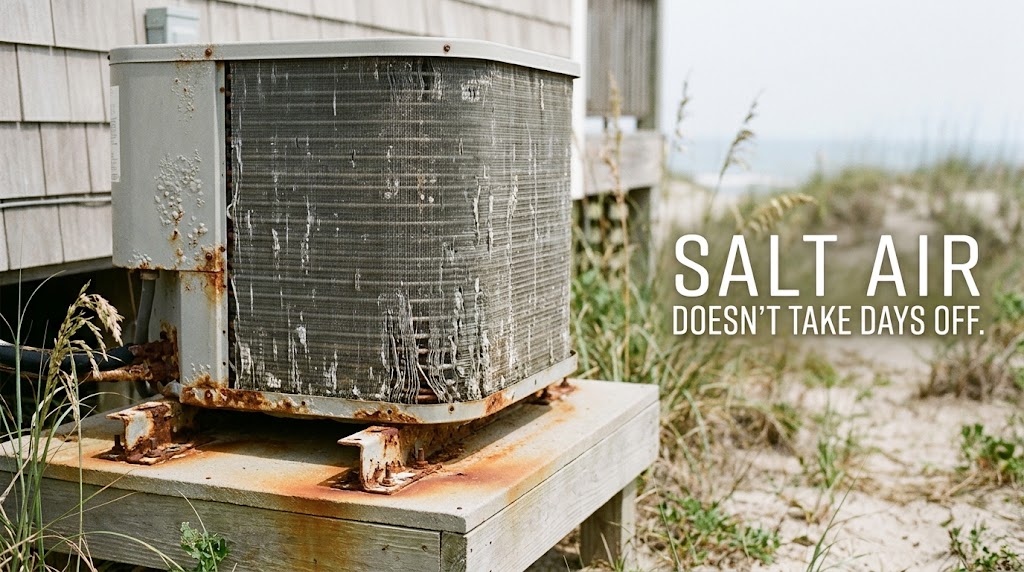
Salt-laden air can be hard on anything metal. Common places to watch include:
- Outdoor air-conditioning units, their cabinets, and mounting brackets
- Metal fasteners, connectors, and hardware on decks, stairs, and porches
- Railings, gates, and exterior light fixtures
- Exterior electrical components, such as meter bases, disconnects, and outdoor receptacles
- Metal flashing and roof components
Surface rust isn’t automatically a structural concern. However, corrosion on connectors, fasteners, or anything holding weight deserves attention. For HVAC equipment, follow the manufacturer’s maintenance guidance. For anything electrical, call a licensed electrician rather than handling it yourself. For more, see electrical defects home inspectors flag.
Wind-Driven Rain and Sealants
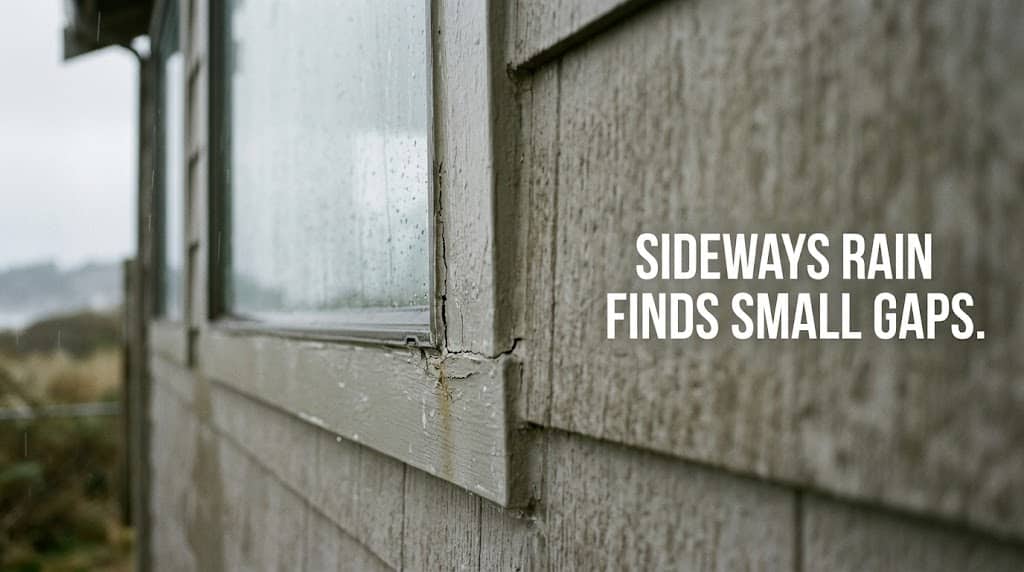
On the coast, rain doesn’t always fall straight down. Strong wind can push water sideways into small gaps that rarely matter inland.
So pay attention to sealant joints and transitions around:
- Windows and exterior doors
- Siding joints and trim
- Pipe, vent, and wire penetrations through exterior walls
- Where porches, decks, and roofs meet the house
Cracked, shrinking, or missing sealant is a common maintenance item. It’s also worth watching interior walls and ceilings near windows for new staining after storms.
Humidity and Ventilation
High humidity is part of life along the Gulf Coast. Inside the home, that puts steady demands on ventilation and air conditioning.
Useful habits include:
- Running bathroom exhaust fans during and after showers
- Making sure exhaust fans vent to the exterior, not into the attic
- Keeping HVAC condensate lines draining properly
- Watching for musty odors, staining, or condensation on windows and ducts
A musty smell or a dark spot doesn’t automatically identify the cause. However, it’s a clue worth following. For more, see what thermal imaging reveals in a home inspection.
Elevated Homes: What’s Underneath
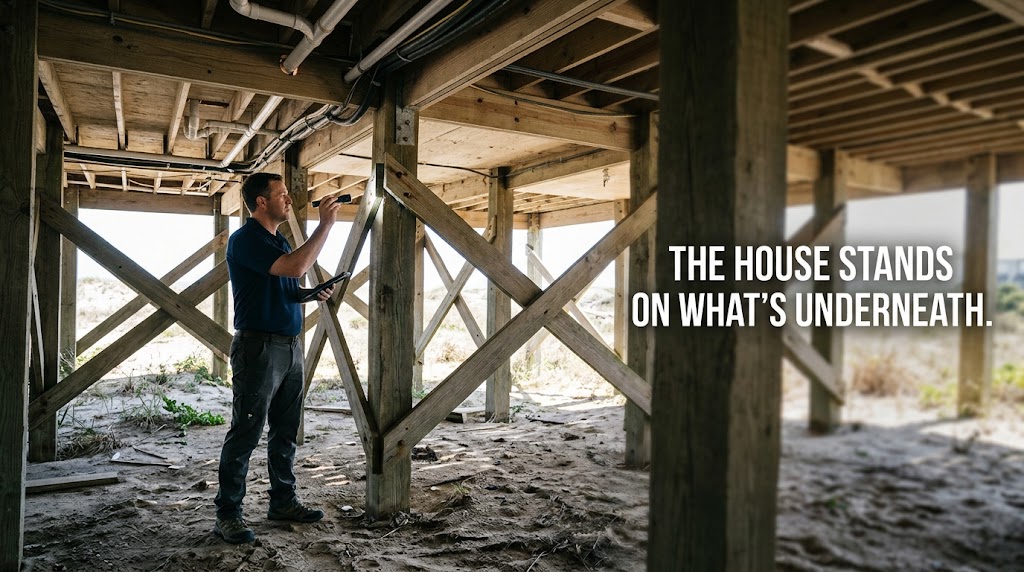
Many coastal homes are built on pilings or raised foundations. The area beneath the house is easy to ignore, but it holds a lot of useful information.
From safe, accessible areas, it’s worth watching:
- Pilings and posts for visible damage, deterioration, or corrosion at connections
- Beams and floor framing overhead
- Bracing and metal connectors
- Plumbing, electrical, and duct runs under the floor
- Exterior stairs, landings, and railings
A home inspector can document visible conditions in accessible areas. However, evaluating the structural adequacy of pilings or a foundation system requires a qualified structural professional.
Roofs and Storm Season
Before storm season, a ground-level look at the roof can be useful. From a safe spot on the ground, watch for missing or lifted roofing materials, loose flashing, damaged vents, and gutters that are clogged or pulling away.
Don’t climb onto the roof yourself. Roof access involves serious fall hazards, especially in wind or wet conditions. For more, see what inspectors check on your roof.
After a Storm
After a major storm, safety comes first. Stay clear of downed power lines, standing water near electrical equipment, and damaged structures.
When it’s safe:
- Look over the home from the ground for visible damage.
- Check ceilings and walls for new staining.
- Take photos before any cleanup or repairs.
- Contact your insurance company about any damage.
- Call qualified professionals for anything structural, electrical, or on the roof.
A home inspection can document visible conditions after a storm. However, it doesn’t determine storm causation, damage dates, or insurance coverage.
Flooding and Windstorm Requirements Are Separate Questions
Coastal homeowners often have questions about flood risk and windstorm insurance. These are important questions, but a home inspection doesn’t answer them.
- Flood risk: FEMA flood maps show a property’s flood zone. Your insurance agent can help with flood coverage.
- Windstorm requirements: In parts of the Texas coast, specific windstorm-related insurance and construction requirements may apply. The Texas Department of Insurance and your insurance agent are the right sources.
A home inspection documents visible conditions. It doesn’t certify a home for flood or windstorm purposes.
Inspector Hindsight: “The inspection tells you about the house. The flood map tells you about the land. The insurer tells you about the policy.”
A Seasonal Coastal Home Maintenance Checklist
Before storm season:
- Look over the roof, gutters, and downspouts from the ground.
- Check window and door sealants.
- Secure or store loose outdoor items.
- Look for corrosion on railings, connectors, and outdoor equipment.
Through the humid months:
- Use exhaust fans consistently.
- Keep HVAC condensate lines draining.
- Watch for musty odors or new staining.
After any major storm:
- Check the home from the ground, and photograph any damage.
- Look for new interior staining.
- Call qualified professionals for anything you can’t safely evaluate.
Every so often:
- Check under elevated homes, decks, and stairs for visible changes.
- Keep records of repairs and maintenance.
When an Inspection Helps
Regular homeowner maintenance goes a long way. However, a professional inspection can add value at certain moments:
- Buying a coastal home, to understand its visible condition before ownership
- After a major storm, to document visible conditions
- Before selling, to understand the home before buyers do. See what a pre-listing inspection is.
- When something changes, such as new staining, odors, or visible movement
For a full breakdown, see what is checked during a home inspection. Buying new nearby? See our guide to new construction inspections in Manvel and Iowa Colony.
What a Home Inspection Can’t Do
A home inspection is visual and limited to accessible conditions within scope. It can’t see inside walls or underground, guarantee every concealed condition will be found, certify flood or windstorm compliance, determine storm causation or insurance coverage, or predict future performance.
Instead, it gives you better information. For help prioritizing findings, see our guide to home inspection red flags.
Captain Obvious: “Ocean view, salt breeze, perfect house.”
Inspector Hindsight: “That breeze has been working on the railings for years.”
Captain Obvious: “It was obvious.”
Inspector Hindsight: “Until it wasn’t.”
Coastal Home Maintenance FAQs
Why do coastal homes need different maintenance?
Salt air, wind-driven rain, humidity, and storm season all affect a coastal home more than an inland one, so regular observation matters more.
Is rust on a coastal home a serious problem?
Not automatically. Surface rust is common. However, corrosion on fasteners, connectors, or anything supporting weight deserves professional attention.
Can a home inspection tell me if my home is in a flood zone?
No. Flood-zone status comes from FEMA flood maps. Your insurance agent can help with flood coverage questions.
Does a home inspection certify a home for windstorm insurance?
No. Windstorm-related requirements are separate. The Texas Department of Insurance and your insurance agent are the right sources.
Should I climb on my roof after a storm?
No. Look from the ground, photograph any visible damage, and call a qualified professional for a closer look.
Can a home inspector evaluate the pilings under an elevated home?
An inspector can document visible conditions in accessible areas. Structural evaluation of pilings requires a qualified structural professional.
Schedule a Coastal Home Inspection
Living on, buying on, or selling along the Brazoria County Gulf Coast? Understand how the coast is treating your house.
Schedule your RedFish home inspection, or call (866) 218-6699 to confirm service in your area.
RedFish Inspections
Inspecting To A Higher Standard.

