

Buying a new home in Manvel or Iowa Colony? A Manvel new construction home inspection gives you something the builder’s process can’t: an independent look at the house before you own it.
Both communities sit in Brazoria County, south of Houston, where new subdivisions continue to bring brand-new homes to market. However, “new” describes the home’s age, not its condition. Even a well-built home can have items worth finding while they’re still the builder’s responsibility.
Captain Obvious: “It’s brand new. Nobody’s even lived in it.”
Inspector Hindsight: “Plenty of people worked on it, though.”
Why Get a Manvel New Construction Home Inspection?
A new home is built by many different trades, often on a tight schedule. Framers, plumbers, electricians, HVAC installers, roofers, and finishers each do their part, and small items can be missed along the way.
An independent inspection evaluates visible and accessible conditions, including roofing, attic areas, electrical, plumbing, heating and cooling, exterior and interior components, and structural elements within the inspection scope. For a full breakdown, see what is checked during a home inspection.
The Builder Walkthrough vs. an Independent Inspection
Most builders offer a walkthrough before closing. That’s useful, but it serves a different purpose.
- The builder walkthrough typically shows you the home, explains features, and notes cosmetic touch-ups.
- An independent inspection looks at the home’s systems and components from the buyer’s side, documenting visible conditions in a written report.
Municipal code inspections serve another purpose again: they check construction against applicable requirements at specific points. A home inspection isn’t a code inspection, and a code inspection isn’t a home inspection. So each answers different questions.
Inspect at More Than One Stage
Many new-construction buyers choose to have the home inspected at more than one point during the build. Common stages include:
- Before the foundation is poured: forms, reinforcement, and plumbing layout may be visible.
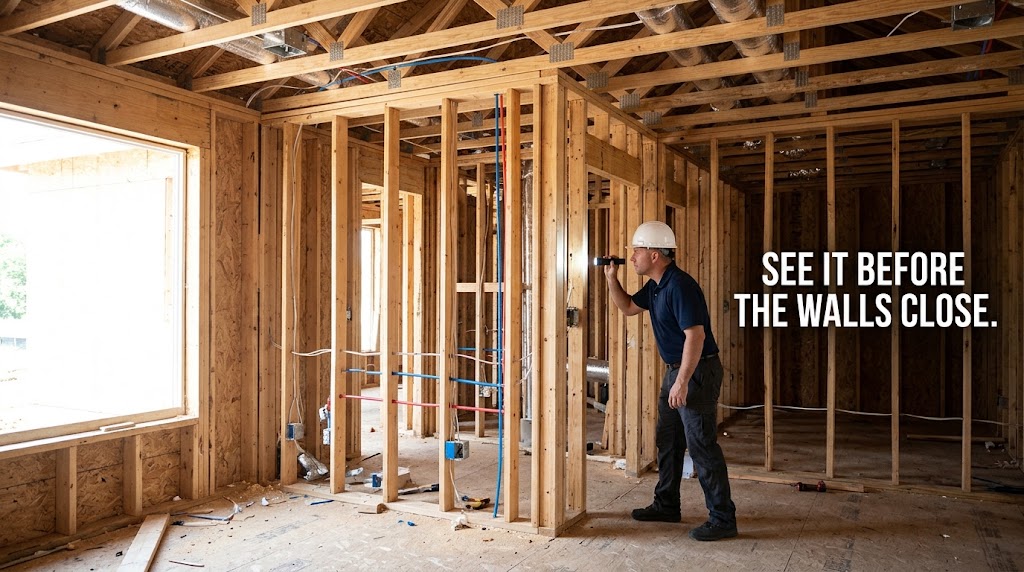
- Before drywall: framing, wiring, plumbing, and ductwork are still exposed.
- Before closing: the finished home’s systems can be operated and evaluated.
The pre-drywall stage is especially valuable because once the walls close, much of what’s inside them can no longer be seen. For more, see our guide to new construction home inspections.
Flat Lots and Drainage
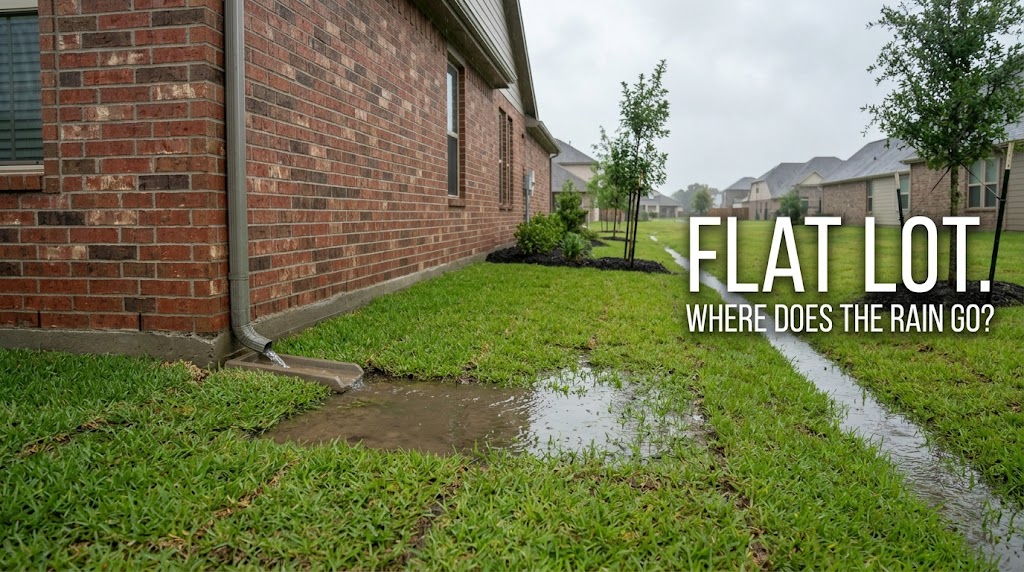
Much of the area south of Houston is very flat, and heavy rain is part of life on the Gulf Coast. On a flat lot, small differences in grading can decide whether water moves away from the house or collects near it.
New lots also change quickly. Fresh sod settles, soil around the foundation compacts, and landscaping gets added after closing. So an inspector may observe:
- Grading near the foundation
- Downspout discharge and extensions
- Low spots and visible standing water
- Drainage swales between homes
- How patios and walkways slope
A puddle after a storm isn’t automatically a defect. However, water that consistently collects against the foundation is worth understanding.
Humidity, Attics, and Ventilation
The Houston area’s heat and humidity put steady demands on a home’s attic and HVAC system. In a new home, these systems are worth a careful look from day one.
When the attic is safely accessible, an inspector may observe insulation coverage, ventilation components, ductwork connections, HVAC equipment, condensate drain lines and pans, and any visible moisture evidence. In a humid climate, a disconnected duct or a poorly draining condensate line can lead to moisture problems. So small installation details matter.
Expansive Clay and Slab Foundations
Many soils in the Houston area are expansive clays, which swell when wet and shrink as they dry. Most new homes in the area are built on concrete slab foundations.
A new foundation may show small cracks or other visible conditions. Not every crack is a concern, but the inspector documents what’s visible and looks for patterns. Drainage and moisture near the foundation also matter on expansive soils. For more, see slab foundation movement: settling vs. heave.
Common Items Found in New Homes
Every home is different, but new-construction inspections often document items like:
- Incomplete or missing components
- Gaps or displacement in attic insulation
- Roof flashing or penetration details that need attention
- Minor plumbing leaks under sinks or at fixtures
- Electrical devices that aren’t working or are missing covers
- Doors and windows that need adjustment
- Grading or downspout issues near the foundation
Most of these are straightforward for a builder to address, especially when they’re documented before closing. For more on roof details, see what inspectors check on your roof.
Final Walkthrough Tips
A few practical steps can help you get the most out of the final stage before closing:
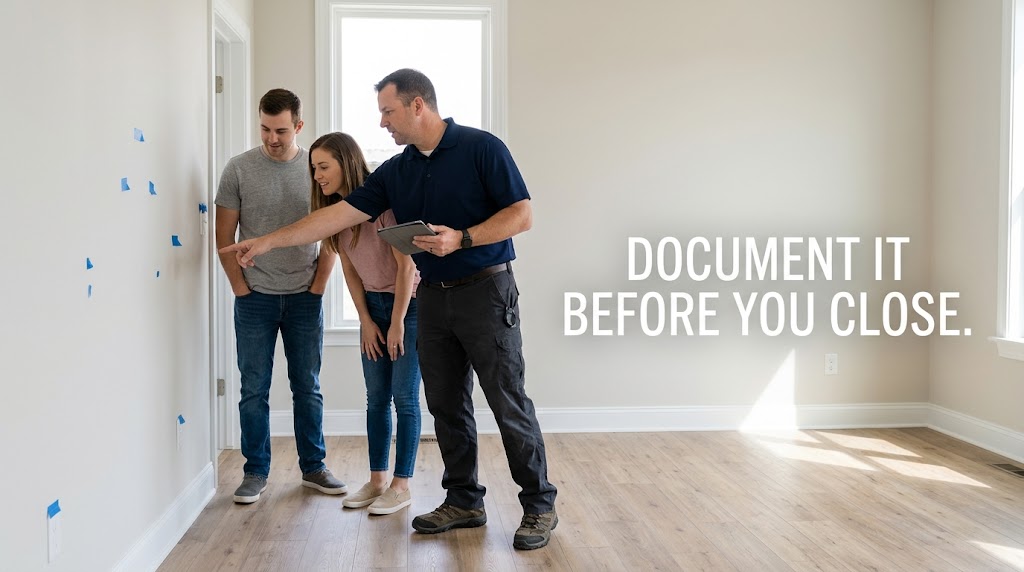
- Schedule the inspection before your final walkthrough, so you can bring the report with you.
- Make sure utilities are on, so systems can be operated.
- Use the report to build your list of items to discuss with the builder.
- Keep everything in writing, including what the builder agrees to address.
- Take photos of items before and after they’re corrected.
For more preparation tips, see how to prepare for a home inspection.
Don’t Forget the 11-Month Warranty Inspection
Many new homes come with a builder warranty, and the first year is when the house goes through its first full cycle of seasons and use. Items can show up after move-in that weren’t visible before closing.
An inspection near the end of the first year can document visible conditions while there’s still time to raise them under the warranty. Review your warranty documents for the exact terms and deadlines. For more, see our guide to the 11-month warranty inspection.
What a New Construction Inspection Can’t Do
A home inspection is visual and limited to accessible conditions within scope. It can’t see inside finished walls, guarantee every concealed condition will be found, certify code compliance, or predict future performance. It also doesn’t interpret your builder contract or warranty.
Instead, it gives you better information while it’s still the most useful. For help prioritizing findings, see our guide to home inspection red flags.
Captain Obvious: “It passed the city inspection, so we’re done.”
Inspector Hindsight: “Different inspection. Different questions.”
Captain Obvious: “It was obvious.”
Inspector Hindsight: “Until it wasn’t.”
Manvel and Iowa Colony New Construction FAQs
Do new homes in Manvel and Iowa Colony need inspections?
Yes. New construction can still contain observable conditions, and documenting them before closing gives you the most options.
Is the builder’s walkthrough the same as an inspection?
No. A builder walkthrough typically shows you the home and notes cosmetic items. An independent inspection evaluates visible systems and components from the buyer’s side.
When should a new home be inspected?
Many buyers choose more than one stage, such as before drywall and before closing, followed by an inspection near the end of the first year.
Does a home inspection replace city code inspections?
No. Code inspections and home inspections serve different purposes and answer different questions.
Why does drainage matter on a new lot?
Flat terrain, heavy rain, and settling soil can affect where water goes. Water collecting near the foundation is worth understanding, especially on expansive clay soils.
What is an 11-month warranty inspection?
It’s an inspection near the end of the first year, done to document visible conditions while there may still be time to raise them under the builder warranty.
Schedule Your New Construction Inspection
Buying new in Manvel or Iowa Colony? Understand the home while there’s still time to act on what you learn.
Schedule your RedFish home inspection, or call (866) 218-6699 to confirm service in your area.
RedFish Inspections
Inspecting To A Higher Standard.

