

A termite inspection for home purchase decisions can answer questions a general home inspection may not. However, many Texas buyers are unsure what each inspection actually covers.
Picture it. You walk through a house with a great kitchen, good floors, and fresh paint.
Then someone points at a piece of wood and asks, “Could that be termite damage?” Suddenly, the whole conversation changes.
That is because several different questions get mixed together:
- Are termites present now?
- Were termites present in the past?
- Is the damage active?
- What insect caused it?
- Has treatment or repair occurred?
- Is additional evaluation needed?
Most importantly, who is qualified to answer each question? That is where the difference between a home inspection and a specialized WDI evaluation matters.
Do You Need a Termite Inspection for a Home Purchase?
A termite inspection for home purchase situations may provide information beyond a standard home inspection. This is especially true when wood-destroying insect concerns are relevant to the property or transaction.
For example, a general home inspector may observe visible conditions such as:
- Damaged or unusual wood
- Moisture-related deterioration
- Possible insect evidence
- Wood-to-soil contact
- Other accessible conditions
However, identifying the insect, determining activity, or producing a WDI report may require a qualified or licensed specialist.
Captain Obvious: “So if something ate the house, we’d like to know.”
Inspector Hindsight: “We’d like to know what the evidence actually shows.”
Captain Obvious: “That was the sophisticated version of what I said.”
Inspector Hindsight: “Very.”
What Does WDI Mean?
WDI stands for wood-destroying insect. As a result, the term is broader than simply saying “termite.”
Termites are commonly linked with wood damage. Still, a specialized WDI evaluation covers the insects and evidence included in its specific scope.
For buyers, the key principle is simple: wood damage does not automatically identify the insect that caused it.
Captain Obvious: “Something ate the wood.”
Inspector Hindsight: “Maybe.”
Captain Obvious: “Termites.”
Inspector Hindsight: “Maybe.”
Captain Obvious: “You’re doing the foundation-crack thing again.”
Inspector Hindsight: “Evidence first.”
Is a Termite Inspection for a Home Purchase the Same as a WDI Inspection?
People often use the terms interchangeably. However, buyers should confirm exactly which inspection or report is being ordered and what it includes.
That matters because terminology, professional requirements, and reporting can differ. Therefore, do not assume “termite inspection” means every possible wood-destroying insect condition was evaluated.
Likewise, do not assume every home inspection includes a specialized WDI evaluation. Instead, ask what is actually included.
Is a Home Inspection the Same as a Termite Inspection?
No. A general home inspection and a specialized termite or WDI inspection have different scopes and purposes.
A home inspection evaluates visible and accessible conditions of major building systems and components. That may include damaged wood that deserves attention. However, observing damaged wood is different from identifying a pest.
For instance, a home inspector may see damaged wood. That is an observation. In contrast, determining which insect caused it, whether activity is current, or what treatment fits may require specialized expertise.
Inspector Hindsight: “Seeing the condition and identifying the cause aren’t always the same job.”
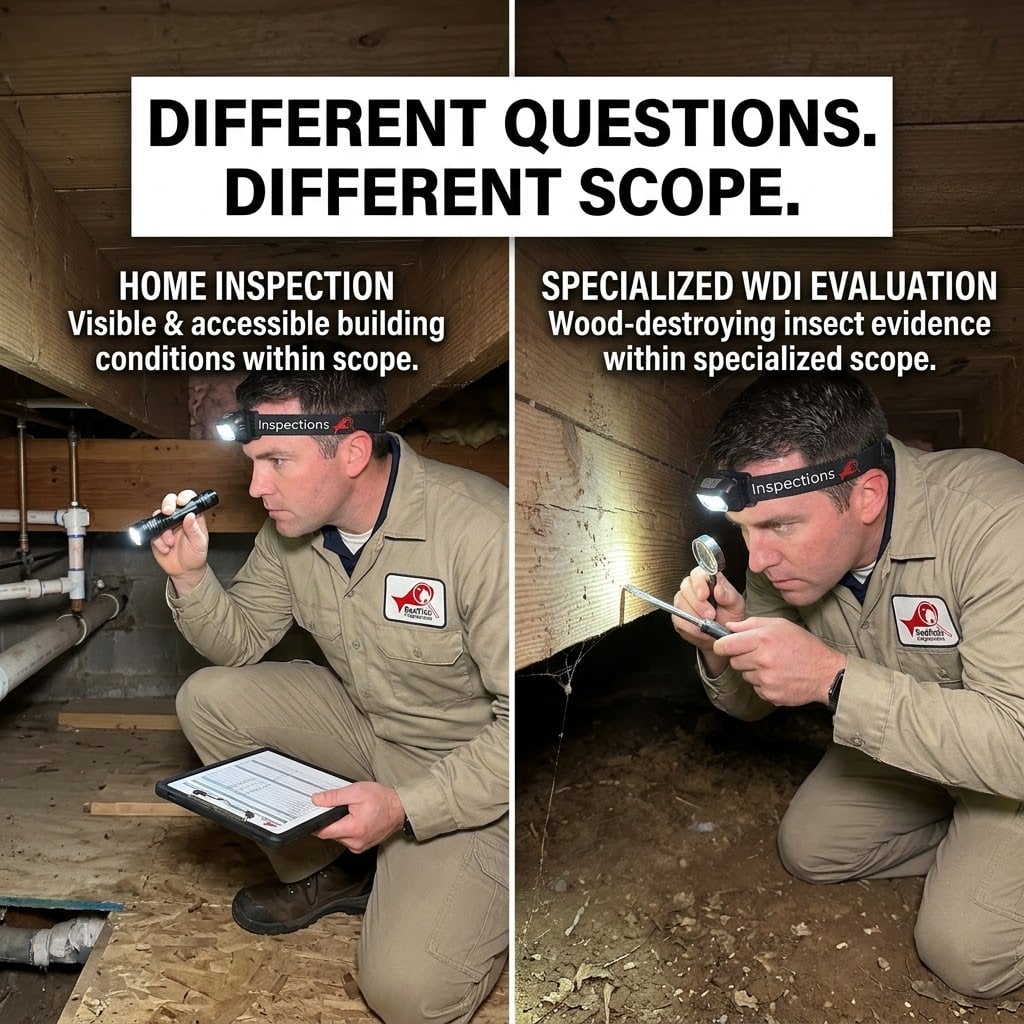
Do Home Inspectors Check for Termites?
A home inspector may observe visible conditions that raise concern about wood damage or possible insect activity. Even so, a standard home inspection is not equivalent to a specialized WDI inspection.
Ideally, this distinction should be clear before the inspection. During it, a general inspector may encounter:
- Damaged or deteriorated wood
- Moisture-affected materials
- Possible insect evidence
- Unusual wood surfaces
- Wood-to-soil contact
- Previous repairs
When appropriate, the inspector may then recommend further specialized evaluation. To learn more about standard scope, see our guide on what to expect at your home inspection.
Why Does a Termite Inspection Matter for a Home Purchase?
The inspection process should tell you what is known and what still needs evaluation. That is why a termite inspection for home purchase planning deserves careful thought.
Suppose an inspector sees visible wood damage. The useful response is not automatically “active termites.” Equally, it is not “nothing to worry about.”
Instead, the useful response asks:
- What is visible, and where?
- How extensive is the visible condition?
- Are related conditions present?
- Is the cause clear?
- Is specialized evaluation appropriate?
As a result, the buyer gets useful information without anyone pretending to know more than the evidence shows.
What Are Signs of Termites in a House?
Possible signs of termites in a house include visible insect activity, insect-related material, or damaged wood. However, identification should come from a qualified professional.
For example, buyers may notice unusual conditions involving:
- Wood surfaces and trim
- Framing, where visible
- Exterior wood components
- Areas near the foundation
- Accessible crawl spaces, garages, and attics
Still, avoid diagnosing the insect from a photo or a damaged board alone.
Captain Obvious: “Wood looks eaten.”
Inspector Hindsight: “That’s an observation.”
Captain Obvious: “By something with very poor respect for property rights.”
Inspector Hindsight: “I’ll allow that.”
What Do Termite Tubes Look Like?
Certain termites build tube-like pathways as they move. However, suspected tubes should be evaluated rather than identified by appearance alone.
For example, a homeowner may notice unusual material along foundation surfaces, walls, wood, or masonry.
In that case, don’t destroy it before it can be evaluated. Instead, document it, photograph it, and have it evaluated.
Inspector Hindsight: “Evidence is more useful before somebody scrapes it off the wall.”
Should You Break Open a Suspected Termite Tube?
Generally, you don’t need to dismantle suspected insect evidence yourself. There are two good reasons.
First, you may destroy useful evidence. Second, you may still not know what you’re looking at afterward.
Captain Obvious: “So no poking it with a screwdriver?”
Inspector Hindsight: “You don’t have to personally investigate everything.”
Captain Obvious: “That sentence hurts.”
Instead, document the condition and get a professional evaluation when needed.
Can Termite Damage Be Hidden?
Yes. Some insect activity or damage occurs in concealed areas that a visual inspection cannot reach.
For example, a standard home inspection cannot see through walls, finished ceilings, or floor coverings. Similarly, cabinetry and insulation can conceal conditions.
Even specialized inspections have access limits. Therefore, no responsible inspector should promise to find every termite or all hidden damage.
What Does Termite Damage Look Like?
Insect-affected wood can look different depending on the insect, material, and extent of damage. In addition, moisture and exposure affect its appearance.
Possible observations include:
- Wood deterioration or surface changes
- Voids in the wood
- Damaged trim
- Damaged framing, where accessible
- Other unusual wood conditions
However, appearance alone cannot identify the insect or confirm current activity. In other words, a photo can show damage, but not its full history.
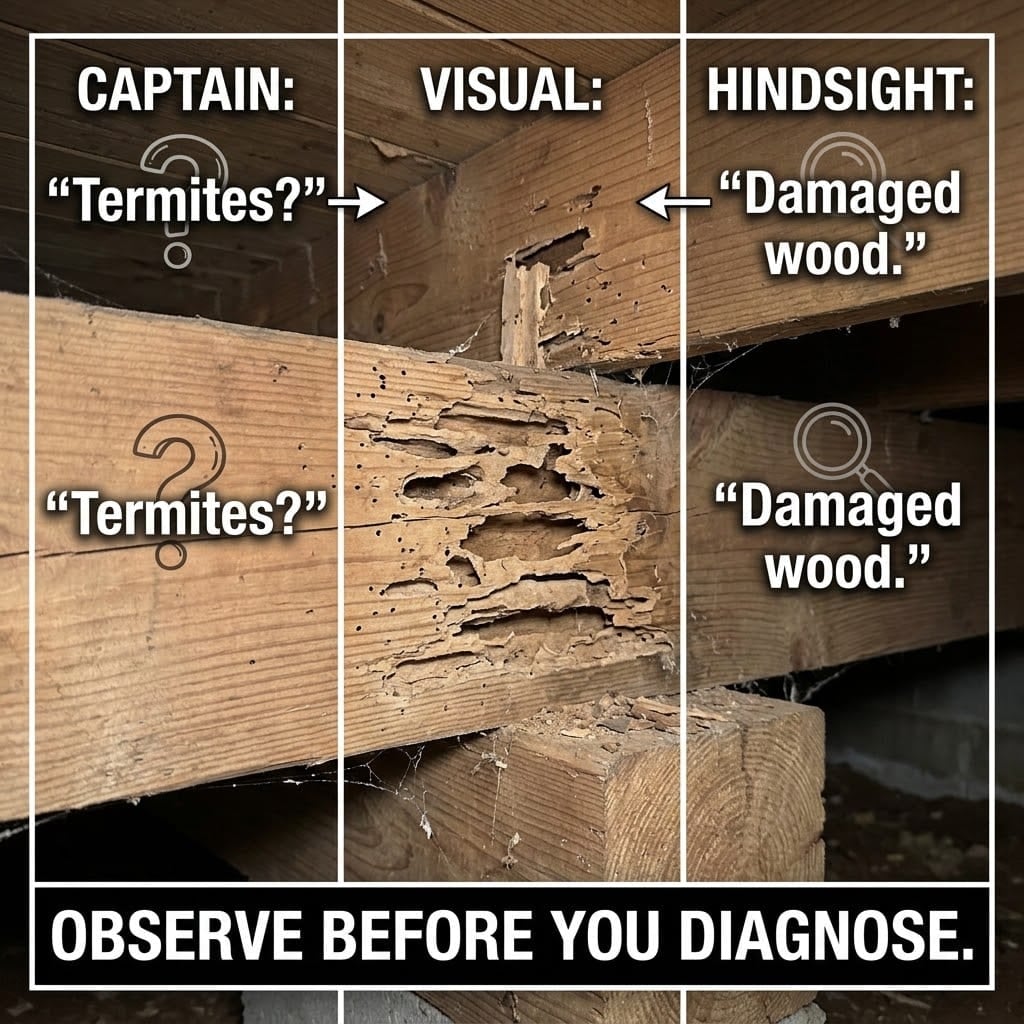
Does Old Termite Damage Mean Termites Are Still Active?
No. Visible damage alone does not show whether termite or WDI activity is current. Instead, damage may reflect:
- Past or current activity
- Previous treatment or repair
- A different wood-destroying organism
- Another source of deterioration
Consequently, current status requires appropriate evaluation.
Captain Obvious: “Damage means something happened.”
Inspector Hindsight: “Exactly.”
Captain Obvious: “Past tense?”
Inspector Hindsight: “That’s the part we need evidence for.”
What If the House Was Previously Treated for Termites?
Previous treatment is useful history. However, it does not reveal the current condition of every area.
Therefore, buyers may want to request:
- Previous inspection reports
- Treatment and repair records
- Warranties or service agreements, if applicable
- Treatment dates and areas addressed
Then compare that history with current visible conditions and any specialized evaluation.
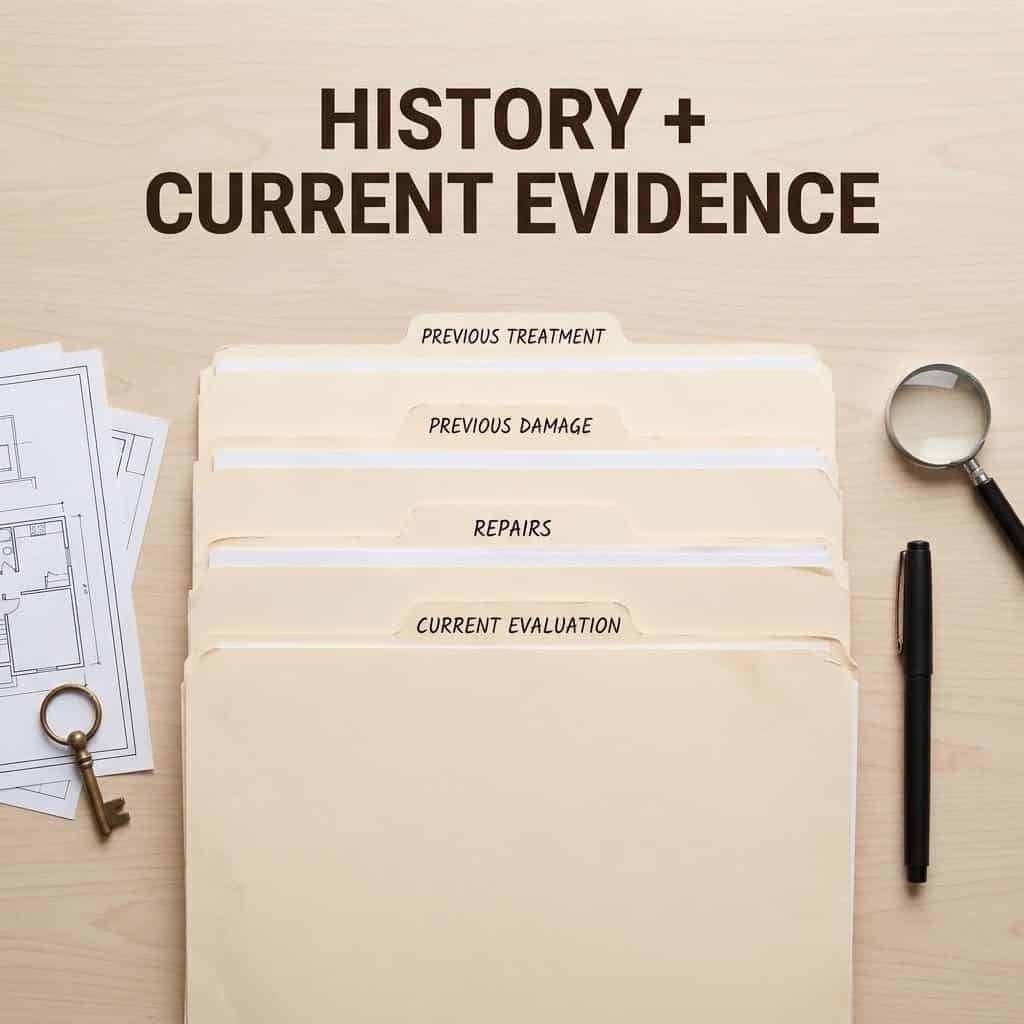
What Is a Wood Destroying Insect Report?
A wood destroying insect report documents findings from a specialized WDI evaluation. It follows the applicable inspection and reporting requirements.
The exact form, scope, and professional requirements should be confirmed for your transaction. Also, a WDI report should not be confused with a general home inspection report.
In fact, each answers different questions:
- Home inspection report: covers visible and accessible building systems and components within its scope.
- Specialized WDI report: covers the applicable wood-destroying insect evaluation within its specialized scope.
Do Texas Home Buyers Need a Wood Destroying Insect Report?
It depends. Requirements can vary by transaction, property, and lender. So don’t assume every Texas home purchase has identical requirements.
Instead, confirm with:
- Your real estate professional
- Your lender, when applicable
- Your inspection provider
- The appropriate specialized professional
Please note that this article is general education. It is not legal, lending, or contract advice.
Why Texas Buyers Should Understand WDI History
Texas real estate documents can include questions about termites and other wood-destroying insects. As a result, buyers may see references to:
- Active infestation
- Previous treatment
- Previous damage or repairs
- Damage needing repair
Importantly, these are different statements. For example, previous treatment does not automatically mean a current infestation.
Similarly, “previous damage repaired” does not explain why it occurred or what is visible today. In short, history provides context, while current evaluation provides current observations.
Should Buyers Read the Seller’s Disclosure for Termite History?
Yes. Disclosures and other records provide useful history to consider alongside current inspection information.
If the disclosure mentions treatment, damage, repairs, or infestation, use it to ask better questions:
- When was the condition identified?
- Who evaluated it?
- Was treatment performed?
- What was repaired?
- Is documentation available?
- Is there a warranty or service agreement?
After all, the home inspection is a snapshot. Documentation helps add history.
What If the Seller Says the Termites Were Treated Years Ago?
Previous treatment may be useful information. However, buyers should understand what documentation exists and what current evaluation shows.
On one hand, “treated once” doesn’t mean no future concern is possible. On the other hand, “previously treated” doesn’t mean termites are present now.
In both cases, the conclusion goes beyond the information provided.
Inspector Hindsight: “History matters. Current evidence matters too.”
What Conditions Make a Home Worth Closer WDI Attention?
Moisture, damaged wood, inaccessible areas, and prior WDI history may justify closer attention. Likewise, wood near the ground can matter.
For example, an inspector may observe:
- Wood-to-soil contact
- Moisture-damaged wood or plumbing leakage
- Exterior deterioration or damaged trim
- Crawl-space moisture
- Poorly accessible areas
- Previous repairs or suspected insect evidence
These observations don’t prove active termites. Rather, they show where additional evaluation may help.
Why Does Wood-to-Soil Contact Matter?
Wood at or near soil is harder to observe. In addition, it can create conditions relevant to deterioration or insect concerns.
Examples include:
- Siding near grade
- Wood trim touching soil
- Fence or landscaping elements against the structure
- Wood debris near the house
The home inspector reports the visible condition. Meanwhile, a WDI professional determines what it means within the WDI scope.
Does Moisture Attract Termites?
Moisture can be relevant to wood deterioration and certain pest environments. However, moisture alone does not establish termite activity.
For example, a home may have plumbing leaks, water intrusion, or crawl-space moisture. Similarly, drainage concerns, wet wood, or HVAC-related moisture may appear.
These conditions deserve attention on their own. If suspected insect evidence is also present, specialized evaluation may become appropriate. For more context, read our guide on humidity and moisture control in Texas homes.
Inspector Hindsight: “Moisture can be part of the story. Don’t let it write the conclusion by itself.”
Can Wood Rot Be Mistaken for Termite Damage?
Yes. To an untrained eye, different kinds of wood deterioration can look alarmingly similar. That is another reason not to identify termites from damaged wood alone.
In fact, wood may deteriorate because of:
- Moisture or decay
- Insect activity
- Mechanical damage
- Age or previous repairs
So the useful observation may simply be “visible wood deterioration.” Then determine which expertise fits the cause.
What About Carpenter Ants or Other Texas House Bugs?
Not every insect around a Texas house is a wood-destroying insect. Likewise, not every damaged board points to termites.
The phrase “Texas house bugs” is broad, and homes encounter many insect types. However, a home inspection is not a general insect-identification service.
Instead, when pest identification or WDI evaluation is needed, a qualified professional should make that call.
Captain Obvious: “Bug.”
Inspector Hindsight: “Yes.”
Captain Obvious: “Texas bug.”
Inspector Hindsight: “We are physically in Texas.”
Captain Obvious: “Case closed.”
Inspector Hindsight: “That’s not how this works.”
Can Termites Damage Structural Wood?
Wood-destroying insects can affect wood, including structurally important components. However, significance depends on the material, location, extent, and surrounding conditions.
In practice, a WDI professional may identify insect evidence. Meanwhile, a home inspector may observe building-component conditions.
When significant structural damage is possible, further evaluation may be warranted. Still, don’t jump from “possible termite damage” to “structural failure.” Instead, let the evidence set the next step.
What If Damage Is Found in the Crawl Space?
Crawl spaces deserve careful documentation because several conditions can intersect there. For example, an inspector may consider accessible:
- Floor framing and foundation components
- Plumbing and moisture
- Ventilation
- Wood deterioration
- Possible insect evidence
However, accessibility matters. If part of the crawl space can’t be safely reached, that limitation should be communicated. No inspector should imply that inaccessible areas were inspected.
What If Damage Is Found in the Attic?
Attics also contain wood components that deserve evaluation. For instance, an inspector may observe accessible roof framing, decking, moisture staining, or previous repairs. Possible insect-related conditions may also appear.
Captain Obvious: “Why is it always the attic?”
Inspector Hindsight: “You knew that line was coming.”
Captain Obvious: “I have contractual obligations.”
Again, damaged attic wood does not automatically identify termites. Instead, the evidence determines the next question.
Can Fresh Paint Hide Termite Damage?
Paint can cover surfaces, and a visual inspection cannot see behind every finish. However, fresh paint is not automatically evidence of concealment. That assumption would be unfair and unsupported.
Instead, inspectors evaluate what is visible and communicate where finishes limit observation.
Captain Obvious: “Fresh paint. Fresh problem?”
Inspector Hindsight: “Fresh paint.”
Captain Obvious: “You’re taking away all my lines.”
Inspector Hindsight: “Only when you’re trying to turn them into diagnoses.”
Can a Termite Inspection See Through Walls?
No. A termite or WDI inspection does not make concealed areas visible.
For example, finished walls can hide framing, insulation, damage, moisture, and insect activity. Methods vary by specialized service. Nevertheless, no visual inspection guarantees discovery of every concealed condition.
The same principle always applies: visible, accessible, and within scope.
What If There Are No Visible Signs of Termites?
No visible evidence does not guarantee that no concealed WDI condition exists. That is why careful report language matters.
For example, a responsible report won’t claim a problem is impossible. Instead, a specialized report may state that no applicable evidence was observed in the areas evaluated.
Meanwhile, a general home inspection report uses home-inspection language. It does not issue a WDI conclusion.
What to Ask Before Ordering a Termite Inspection for a Home Purchase
Before ordering a termite inspection for home purchase needs, understand exactly what service you’re getting. For example, ask:
- Is this a specialized WDI inspection?
- Who performs it, and what licensing applies?
- Which insects are included in the scope?
- Will a formal report be provided?
- Which areas will be evaluated, and what access limits apply?
- What happens if evidence is observed?
- Does my transaction or lender require a specific report?
- How should previous treatment records be handled?
As a result, you avoid assuming a home inspection and a WDI inspection are interchangeable.
What Should Buyers Ask If Termite Damage Is Found?
Ask questions that separate the visible condition from unsupported conclusions. For example:
- What exactly was observed, and where?
- Was an insect identified?
- Is activity considered current?
- How extensive is the visible damage?
- Are concealed areas involved?
- Is additional or structural evaluation recommended?
- Are treatment or repair records available?
- What limitations affected the inspection?
Ultimately, better questions produce better information.
Does Termite Damage Mean You Should Not Buy the House?
No. An inspector should not tell you to reject a property simply because WDI evidence was observed. Instead, inspection information helps you understand the property.
For that reason, a buyer may need to understand:
- What was observed and whether activity was identified
- What damage is visible
- What remains concealed or unknown
- Whether treatment or repair records exist
- Whether further evaluation is recommended
Then you can decide with your transaction professionals.
Inspector Hindsight: “An inspection doesn’t make the decision for you. It gives you better information to make it.”
Does Termite Damage Mean the House Is Structurally Unsafe?
No. Termite-related damage does not automatically make a structure unsafe. Rather, significance depends on:
- Which material is affected, and where
- How extensive the visible damage is
- Whether structural components are involved
- What remains concealed
- Whether previous repair occurred
If significant structural damage is suspected, further evaluation may be appropriate. However, don’t build a structural conclusion from pest evidence alone. For related reading, see our guide on foundation cracks and what they mean in Texas, plus slab foundation movement: settling vs. heave.
Can a Seller Fix Termite Damage Before the Inspection?
Legitimate treatment and repair can be appropriate. However, previous work is not the same as current verification.
So if treatment or repairs exist, documentation helps buyers understand:
- What was identified and treated
- Who performed the work, and when
- What was repaired
- Whether follow-up evaluation occurred
In short, conditions shouldn’t be concealed. Likewise, cosmetic repair doesn’t explain the entire history.
How Does WDI History Fit With a Home Inspection?
Think of the information in layers:
- Property history: seller disclosures, previous reports, and treatment or repair records.
- Current home inspection: visible and accessible building conditions.
- Specialized WDI evaluation: applicable insect evidence and specialized reporting.
- Additional technical evaluation: structural or other analysis, when warranted.
No single layer answers every question. Together, however, they provide a clearer picture.
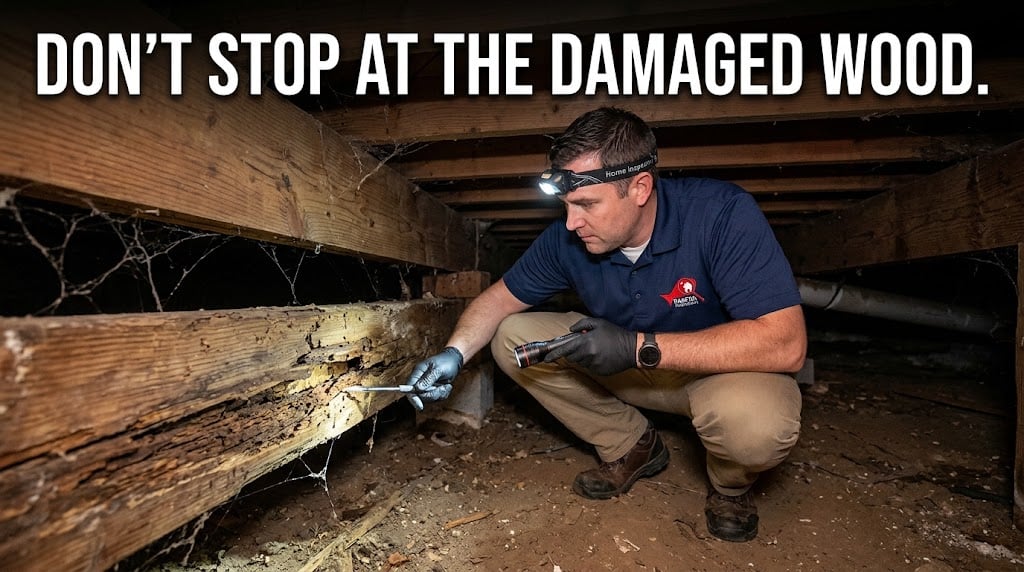
The Inspector’s Eye: Don’t Stop at the Damaged Wood
Imagine an inspector observes a deteriorated wood component. Captain Obvious sees damaged wood, which is useful.
Next, Inspector Hindsight asks more questions:
- Why is it damaged?
- Is moisture present?
- Is insect evidence visible?
- Are nearby materials affected?
- Is it isolated, or does it appear repaired?
- Is specialized evaluation needed?
Then the real inspector applies technical judgment within the inspection scope.
Captain Obvious: “Okay. I found the damaged wood.”
Inspector Hindsight: “And now?”
Captain Obvious: “We figure out what the evidence supports.”
Inspector Hindsight: “You’re learning.”
Termite Inspection for a Home Purchase: The Simple Answer
If you’re buying a Texas home, understand the difference between a general home inspection and a specialized termite or WDI evaluation.
A home inspector may identify visible conditions that deserve attention. Meanwhile, a WDI professional evaluates insect evidence within that specialized scope.
Above all, remember these rules:
- Wood damage does not automatically mean active termites.
- Previous treatment does not automatically mean current infestation.
- No visible evidence does not guarantee nothing is concealed.
- A home inspection is not automatically a WDI inspection.
Captain Obvious: “So if something is eating the house—”
Inspector Hindsight: “We want the right professional to identify what the evidence shows.”
Captain Obvious: “And if nothing is eating the house?”
Inspector Hindsight: “We don’t invent something.”
Captain Obvious: “Our work here is done.”
Inspector Hindsight: “The inspector did the work.”
Captain Obvious: “Details.”

Termite Inspection for Home Purchase FAQs
Do I need a termite inspection for a home purchase?
A specialized termite or WDI evaluation may help when WDI concerns are relevant. Also, confirm any transaction or lender requirements with the right professionals.
What does WDI stand for?
WDI stands for wood-destroying insect.
Is a home inspection the same as a termite inspection?
No. A general home inspection and a specialized termite or WDI inspection have different scopes and purposes.
Do home inspectors check for termites?
A home inspector may observe wood damage or possible insect evidence. However, a standard home inspection is not equivalent to a WDI inspection.
What is a wood destroying insect report?
It documents findings from a specialized WDI evaluation, following the applicable inspection and reporting requirements.
What are signs of termites in a house?
Possible signs include visible insects, insect-related material, or damaged wood. Still, a qualified professional should identify suspected conditions.
Does termite damage mean termites are active?
No. Visible damage alone does not establish whether activity is current.
Can termite damage be hidden?
Yes. Damage or activity can exist in concealed or inaccessible areas that a visual inspection cannot observe.
Does previous termite treatment mean the house is clear now?
Not automatically. Treatment history is useful, but current conditions and documentation also matter.
Can moisture be related to WDI concerns?
Yes, moisture can relate to wood deterioration and pest environments. However, moisture alone does not establish WDI activity.
Can wood rot look like termite damage?
Yes. Different kinds of deterioration can look similar, so appearance alone shouldn’t identify termite damage.
Can a termite inspection find every hidden problem?
No. Concealed or inaccessible conditions may not be discoverable during an inspection.
Should I buy a house that has termite damage?
The inspection provides information, not the decision. So review the condition, activity findings, history, limitations, and recommended evaluations first.
Schedule Your RedFish Home Inspection
Damaged wood is a clue. Understanding what caused it is the next step.
Schedule your RedFish home inspection.
RedFish Inspections
Inspecting To A Higher Standard.
Call (866) 218-6699
