

Rural properties around Rosharon and West Columbia often come with something city homes don’t: their own water supply and their own wastewater system. That’s why a well and septic inspection question comes up so often when buyers look at acreage in Brazoria County.
A house on a private well and a septic system depends on both working well. So understanding them before you buy is just as important as understanding the roof, foundation, and electrical system.
Captain Obvious: “Nice house. Big lot. Done.”
Inspector Hindsight: “Where does the water come from? And where does it go?”
Why Rural Properties Need a Different Checklist
In town, water arrives from a utility and wastewater leaves through a municipal sewer. On many rural properties, both happen on site:
- A private well supplies the home’s water.
- A septic system treats and disperses the home’s wastewater.
That means the owner is responsible for maintaining both. It also means a standard home inspection doesn’t automatically answer every question about them. For more on what a standard inspection covers, see what is checked during a home inspection.
What a Well and Septic Inspection Looks at: The Well
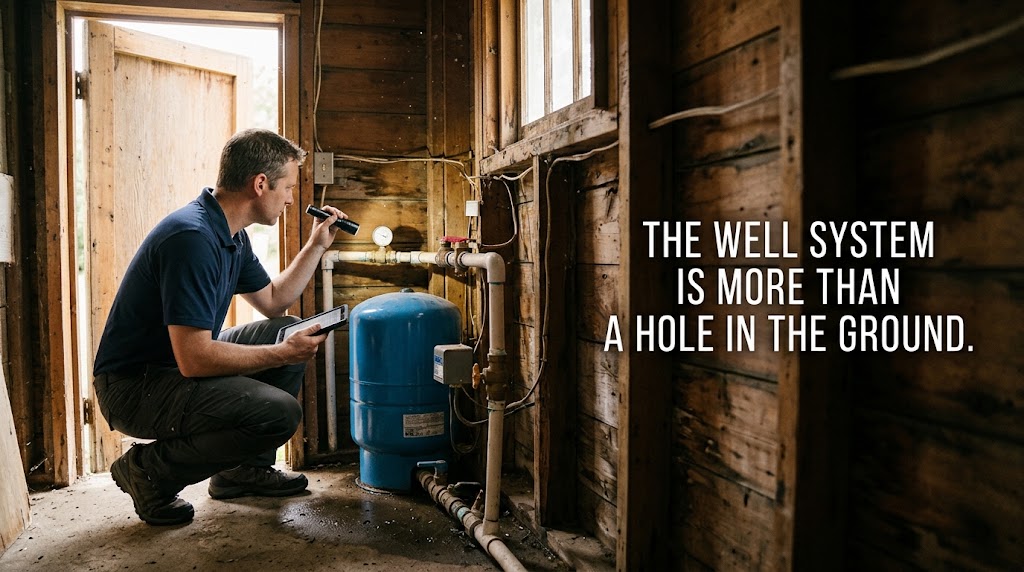
A well inspection evaluates the visible and accessible parts of the well system and how it operates. Depending on the property and access, that may include:
- The well housing or well house
- Visible well components and the wellhead area
- Accessible plumbing and valves
- The pressure tank and related components
- Limited water-pressure testing
- Operational testing of the pump
The goal is to understand how the system is functioning at the time of the inspection. For more, see our guide to well inspections and water testing.
Well Function vs. Water Quality
A well can work perfectly and still deliver water that should be tested. That’s because function and quality are two different questions:
- Function: Does the system deliver water at adequate pressure? Is the equipment operating?
- Quality: What’s in the water? Is it suitable for its intended use?
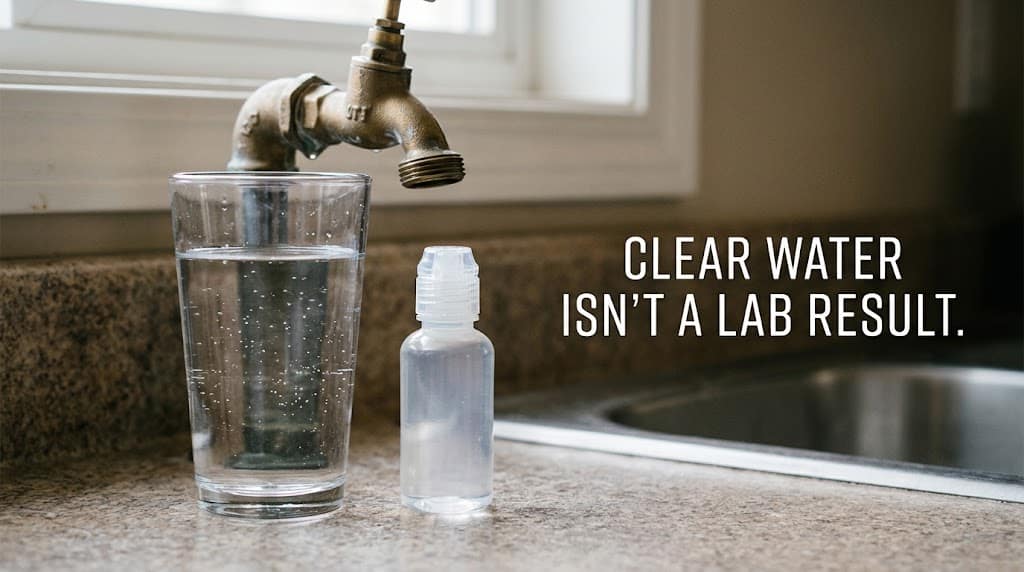
Water quality requires laboratory testing of a properly collected sample. Clear water isn’t a lab result, and good pressure doesn’t tell you about bacteria or other contaminants. Private well water quality is generally the owner’s responsibility, so ask about testing options before you close.
Inspector Hindsight: “Pressure tells you the water is arriving. Testing tells you what’s in it.”
What Septic Evaluation Involves
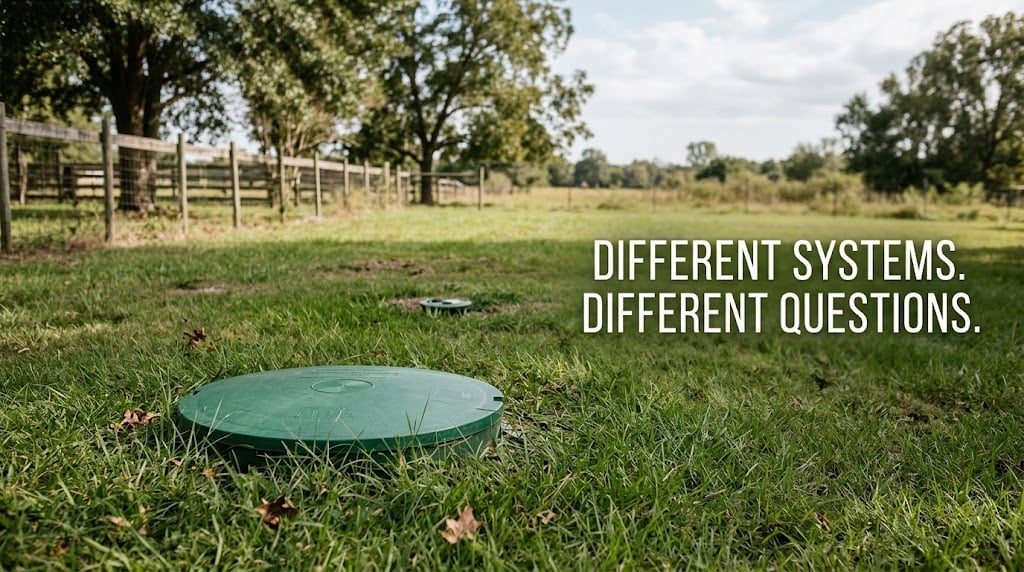
A septic system is mostly underground, so evaluating it properly usually requires specialized access, equipment, and expertise. Depending on the system, a septic evaluation may involve locating and opening tanks, checking levels and components, and looking at the dispersal area.
A standard home inspection may note visible conditions related to wastewater, such as plumbing performance inside the home or visible wet areas in the yard. However, it doesn’t replace a dedicated septic evaluation. So confirm which services you’ve ordered. For more, see our guide to septic tank failure signs.
Conventional vs. Aerobic Systems
Rural Texas properties may have different types of septic systems. Two common categories are:
- Conventional systems, which typically use a tank and an underground drainfield.
- Aerobic systems, which use additional treatment components and may disperse treated water through spray heads or other methods.
Aerobic systems can involve ongoing maintenance requirements, sometimes including a maintenance contract. So if the property has one, ask whether a maintenance agreement is in place, who the provider is, and when the system was last serviced.
Records to Request
Records can tell you a lot about both systems. Useful items include:
- Septic permit records. In Texas, septic systems are regulated as on-site sewage facilities, so records may be available through the local permitting authority.
- Septic pumping and service history
- Aerobic system maintenance contracts and reports, if applicable
- Well records, such as when the well was drilled, its depth, and any equipment replacements
- Previous water test results
- Repair invoices for either system
Records don’t prove current condition. However, they help explain the property’s history and what questions to ask next.
Flat Land, Heavy Rain, and Both Systems
Much of Brazoria County is flat, and heavy rain is common. Those conditions can affect both systems:
- Septic dispersal areas may perform differently when the ground is saturated.
- Wellheads in low areas may be more exposed to surface water during flooding.
So it’s worth noticing where the wellhead and dispersal area sit relative to low spots and drainage paths. After flooding, many health authorities recommend testing private well water before drinking it. For more on local soil and moisture conditions, see our guide to foundation concerns in Brazoria County’s expansive clay soils.
Questions to Ask Before Closing
- Where exactly are the well, the septic tank, and the dispersal area?
- What type of septic system does the property have?
- When was the septic system last pumped or serviced?
- Is there an aerobic maintenance contract, and does it transfer?
- When was the well water last tested, and what were the results?
- Have either of the systems been repaired or replaced?
- Have there been any backups, slow drains, or wet spots in the yard?
- Which evaluations have I ordered, and which questions still need a specialist?
What an Inspection Can’t Do
An inspection is limited to visible and accessible conditions within the agreed scope. A well inspection can’t see down the well or guarantee future performance, and it doesn’t determine water quality without laboratory testing. A standard home inspection doesn’t replace a dedicated septic evaluation. And no inspection decides whether you should buy the property.
Instead, it gives you better information. For help prioritizing findings, see our guide to home inspection red flags.
Captain Obvious: “The faucet works. The toilet flushes. We’re good.”
Inspector Hindsight: “That’s the beginning of the story, not the end.”
Captain Obvious: “It was obvious.”
Inspector Hindsight: “Until it wasn’t.”
Well and Septic Inspection FAQs
Does a standard home inspection include the well and septic system?
Not automatically. Well and septic evaluations are often separate services, so confirm exactly what you’ve ordered.
What does a well inspection check?
It may evaluate the well housing, visible components, plumbing, valves, the pressure tank, limited water pressure, and pump operation.
Does a well inspection test water quality?
No. Water quality requires laboratory testing of a properly collected sample.
Can a home inspector evaluate a septic system?
A home inspector may note visible conditions related to wastewater. However, a full septic evaluation typically requires a specialist.
What’s the difference between conventional and aerobic septic systems?
Conventional systems typically use a tank and drainfield. Aerobic systems add treatment components and may involve ongoing maintenance requirements.
Where can I find septic permit records?
In Texas, septic systems are regulated as on-site sewage facilities. Records may be available through the local permitting authority.
Schedule Your RedFish Inspection
Buying a rural property around Rosharon or West Columbia? Understand the house, and the systems it depends on, before you close.
Schedule your RedFish home inspection, or call (866) 218-6699 to confirm services and availability in your area.
RedFish Inspections
Inspecting To A Higher Standard.

