

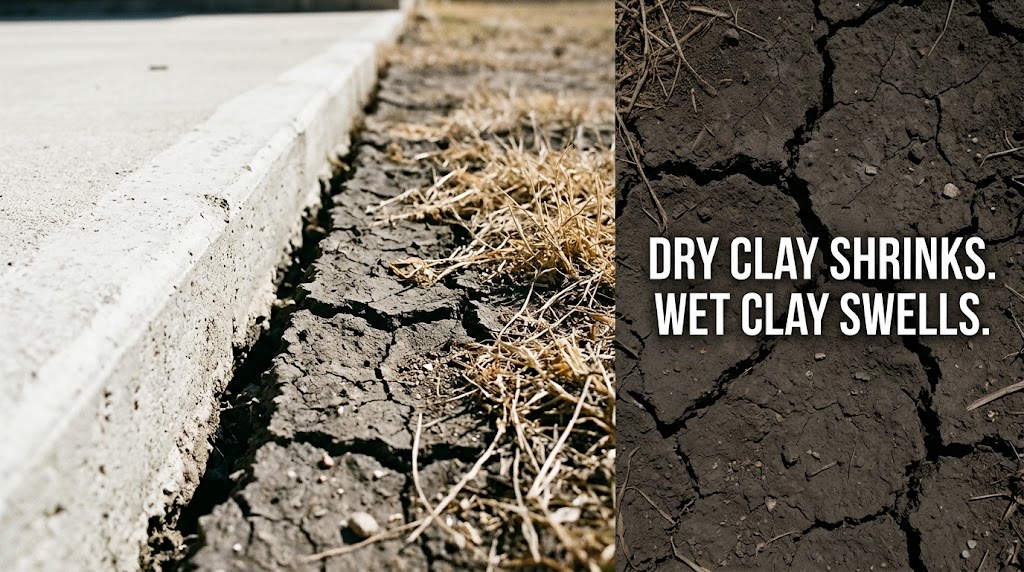
Expansive clay soil foundation concerns are a common topic for homeowners and buyers in Brazoria County. Much of the Gulf Coast region sits on clay soils that swell when wet and shrink as they dry, and that movement can show up in a home over time.
However, clay soil isn’t a diagnosis. Plenty of homes on expansive clay perform well for decades. The useful question isn’t “Is there clay under this house?” It’s “What does the evidence show about this particular foundation?”
Captain Obvious: “Clay soil. Foundation problems.”
Inspector Hindsight: “Clay soil. Let’s look at the foundation.”
How Expansive Clay Works
Expansive clay soils change volume as their moisture content changes. When they absorb water, they swell. As they dry out, they shrink and can even pull away from the edge of a slab.
A house sitting on that soil experiences those changes too. When moisture levels shift unevenly, such as one side of the house staying wet while another dries out, parts of a foundation can move differently from others. For more, see slab foundation movement: settling vs. heave.
Why Gulf Coast Conditions Matter
Several local conditions can affect how much moisture reaches the soil around a home:
- Heavy rain events can saturate soil quickly.
- Hot, dry stretches can dry it out just as fast.
- Flat lots can make it harder for water to drain away from the house.
- Trees and landscaping can draw moisture from the soil near the foundation.
- Irrigation and downspouts can keep some areas much wetter than others.
None of these automatically causes a problem. Together, though, they explain why moisture management around the foundation matters here. For more on drainage for new homes in the area, see our guide to new construction inspections in Manvel and Iowa Colony.
Expansive Clay Soil Foundation Signs That Raise Questions
Some conditions can prompt questions about foundation movement, including:
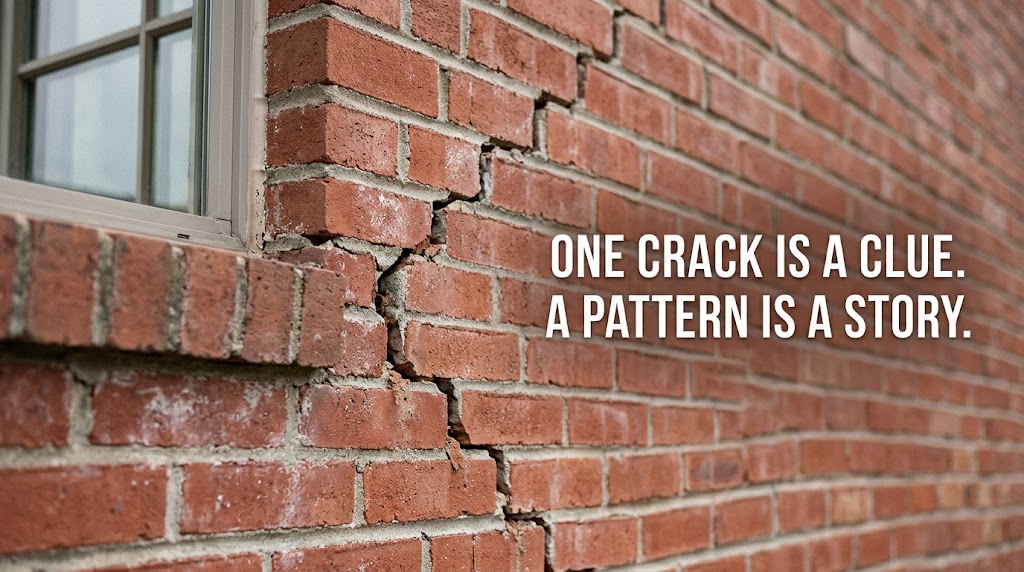
- Cracks in the slab edge, brick veneer, or interior drywall
- Stair-step cracks in brick mortar joints
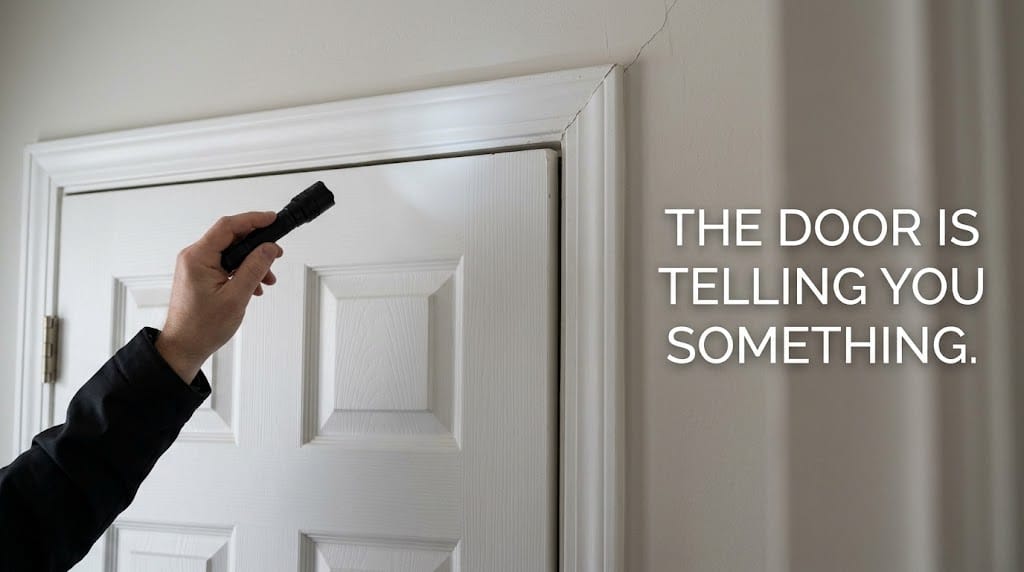
- Doors that stick, swing open, or have uneven gaps at the frame
- Windows that bind or show gaps
- Gaps between walls and ceilings, or at trim and baseboards
- Floors that feel sloped
However, each of these has several possible causes. A sticking door can come from humidity or hardware. Drywall cracks can come from normal shrinkage. One clue raises a question. A consistent pattern across several clues tells more of the story.
What a Home Inspector Looks At
During a home inspection, an inspector evaluates visible and accessible conditions related to the foundation and the structure above it. That may include:
- Visible portions of the slab edge and foundation
- Cracks and their location, direction, and width
- Brick veneer and exterior walls
- Interior walls, ceilings, and floors
- Door and window operation
- Grading, drainage, and downspout discharge near the foundation
The goal is to read the pattern, not to diagnose from a single symptom. When observations suggest possible movement, the report may recommend evaluation by a qualified structural engineer. For more on what’s covered, see what is checked during a home inspection.
When to Call a Structural Engineer
A home inspector documents visible conditions. A structural engineer evaluates whether a foundation is performing as intended and what, if anything, should be done.
It may be time for an engineer when:
- Several movement-related clues appear together.
- Cracks show visible displacement, meaning one side sits higher or lower than the other.
- Conditions seem to be changing over time.
- A home inspection report recommends further evaluation.
Inspector Hindsight: “The inspection identifies the question. The engineer answers it.”
Managing Moisture Around the Foundation
Because expansive clay reacts to moisture, consistent moisture around the foundation is generally better than big swings. Helpful habits include:
- Keeping gutters and downspouts clear and discharging away from the house
- Maintaining grading that slopes away from the foundation
- Avoiding sprinkler heads that spray directly onto the foundation
- Watching for low spots where water collects near the slab
- Considering how large trees near the house may affect the soil
Some homeowners are advised to follow a specific watering routine during dry periods. If you’re considering one, ask a qualified foundation professional first, since too much water can create its own problems.
Post-Tensioned Slabs: Don’t Cut or Drill
Many slab foundations in Texas are post-tensioned, meaning steel cables inside the concrete are stretched under high tension to strengthen the slab.
Cutting or drilling into a post-tensioned slab can be dangerous and can damage the foundation. So before any project that involves cutting, coring, or anchoring into the slab, contact the builder or a qualified structural professional.
Previous Foundation Repairs
A previous foundation repair is information, not automatically a red flag. It also isn’t a guarantee that the foundation is fine today.
Useful records include the repair date, the contractor, any engineering reports, warranty documents, and whether the warranty transfers to a new owner. Meanwhile, the current visible evidence still matters. For help reading findings, see our guide to home inspection red flags.
What a Home Inspection Can’t Do
A home inspection is visual and limited to accessible conditions within scope. It can’t see beneath the slab, measure soil properties, guarantee every concealed condition will be found, or predict how a foundation will perform in the future. It also doesn’t replace a structural engineer’s evaluation.
Instead, it gives you better information and points you toward the right next question. Living near the coast? See our guide to coastal home maintenance in Brazoria County.
Captain Obvious: “Crack in the brick. Call the foundation company.”
Inspector Hindsight: “Crack in the brick. Now check the doors, the windows, and the drainage.”
Captain Obvious: “It was obvious.”
Inspector Hindsight: “Until it wasn’t.”
Expansive Clay Soil Foundation FAQs
Does clay soil mean my foundation has problems?
No. Clay soil is context, not a diagnosis. Many homes on expansive clay perform well. The evidence at the specific home is what matters.
Are foundation cracks always a concern?
No. Some cracks are minor and common. Location, width, direction, displacement, and related conditions determine their significance.
Can a home inspector tell me if my foundation needs repair?
A home inspector documents visible conditions and may recommend further evaluation. A structural engineer determines whether repair is needed.
How can I reduce foundation movement on clay soil?
Good drainage, clear gutters, grading that slopes away from the house, and avoiding big moisture swings near the foundation all help. Ask a foundation professional before starting a watering routine.
Can I drill into my slab foundation?
Not without checking first. Many Texas slabs are post-tensioned, and cutting or drilling into them can be dangerous. Contact the builder or a structural professional before any work.
Does a previous foundation repair mean I shouldn’t buy the house?
Not automatically. Review the repair records and warranty, and look at what the current evidence shows.
Schedule Your RedFish Home Inspection
Buying or owning a home on Brazoria County clay? Understand what the foundation evidence actually shows.
Schedule your RedFish home inspection, or call (866) 218-6699 to confirm service in your area.
RedFish Inspections
Inspecting To A Higher Standard.

