

Flood awareness in Brazoria County is part of buying and owning a home on the Gulf Coast. Flat terrain, heavy rain, and nearby waterways mean water deserves attention, whether you’re house-hunting or maintaining the home you already have.
Awareness isn’t alarm. Most of the time, it simply means knowing where water goes on a property, recognizing clues worth asking about, and getting the right answers from the right sources.
Captain Obvious: “The yard’s dry. No water problems.”
Inspector Hindsight: “Ask me again after a heavy rain.”
Flood Risk and Drainage Are Related but Different
These two terms often get mixed together, but they describe different things:
- Drainage is how water moves across and away from a specific property, through grading, gutters, downspouts, and swales.
- Flood risk is the likelihood that rising water from rainfall, rivers, bayous, or storm surge reaches a property.
A home inspection can tell you a lot about visible drainage. However, it doesn’t determine flood risk. That question has its own sources.
Where Flood Awareness in Brazoria County Starts: Information Sources
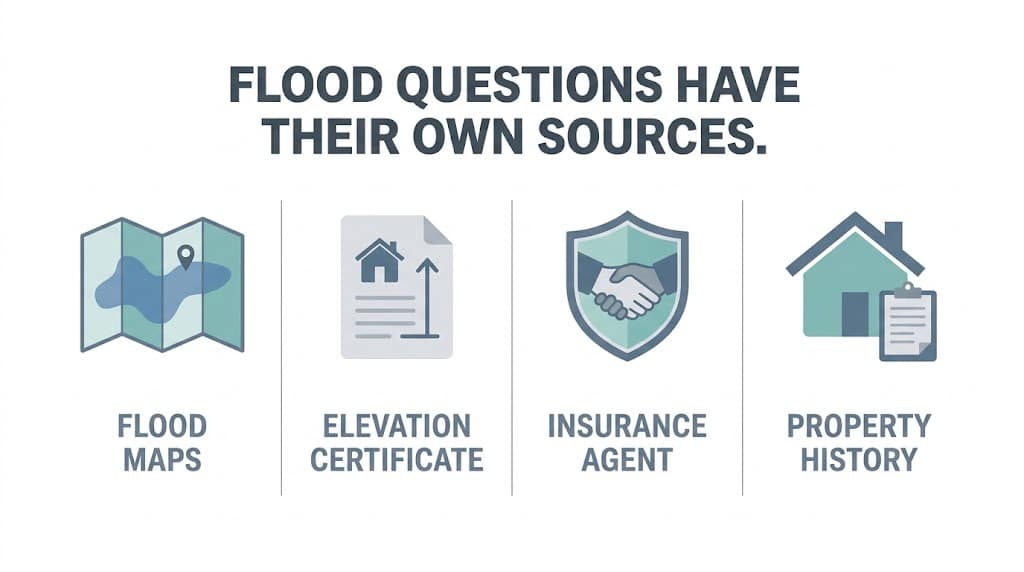
For flood-related questions, these are the right places to look:
- FEMA flood maps show a property’s mapped flood zone.
- An elevation certificate, if one exists, documents a building’s elevation relative to expected flood levels. It may be available from the seller, the local floodplain office, or through insurance.
- Your insurance agent can explain flood coverage options and requirements.
- Property history from the seller can reveal past water events, claims, or repairs. Your real estate professional can explain what sellers are required to disclose.
Outside a High-Risk Zone Doesn’t Mean No Risk
A flood map is a useful starting point, not a guarantee. Properties outside high-risk flood zones can still experience flooding, especially during heavy rain events.
So even if a property isn’t in a mapped high-risk zone, it’s still worth asking about its history and talking with your insurance agent about coverage.
Drainage Clues an Inspector May Observe
During a home inspection, an inspector may observe visible drainage conditions around the house, including:
- Grading near the foundation and whether it slopes away from the house
- Gutters, downspouts, and where they discharge
- Low spots and visible standing water
- Drainage swales between lots
- How patios, driveways, and walkways slope
- Exterior wall bases, door thresholds, and garage entries
These observations describe how water appears to move on the property during the inspection. They don’t predict how the property will behave in a major storm. Drainage also matters for foundations on local clay soils. For more, see foundation concerns in Brazoria County’s expansive clay soils.
Possible Signs of Past Water
An inspector may notice visible conditions that could relate to past water, such as:
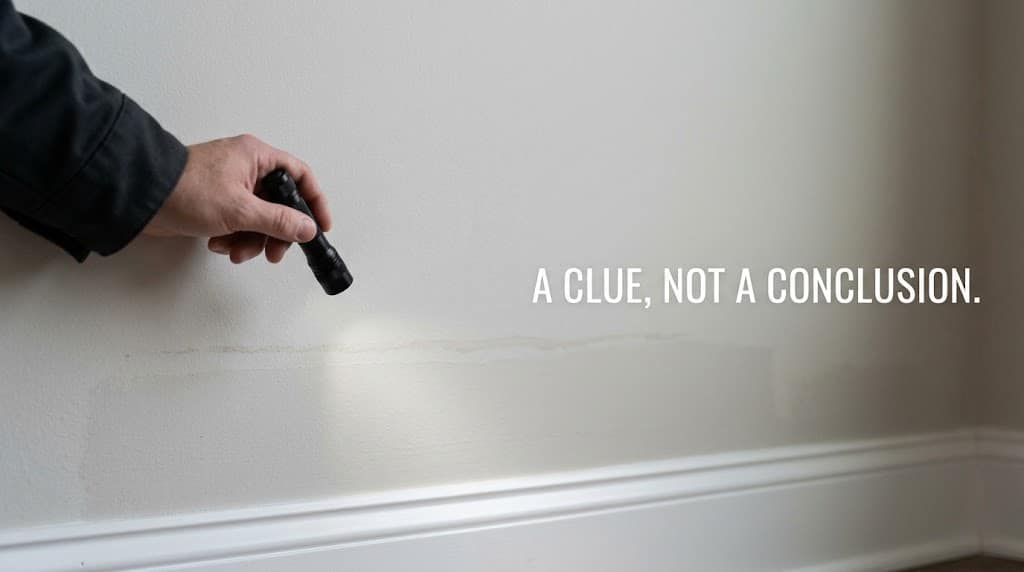
- A faint stain line low on interior walls
- Newer baseboards, drywall, or flooring in lower areas only
- Corrosion at the base of appliances, water heaters, or HVAC equipment
- Debris or silt lines in the garage or along fences
- Musty odors in lower areas
These are clues, not conclusions. A newer baseboard might be a simple upgrade. A stain might come from a plumbing leak. So an inspector documents what’s visible, but determining whether a home has flooded requires property history, records, and the right questions. For more on following moisture clues, see what thermal imaging reveals in a home inspection.
Inspector Hindsight: “I can show you the line on the wall. The history tells you how it got there.”
Raised Equipment and Utilities
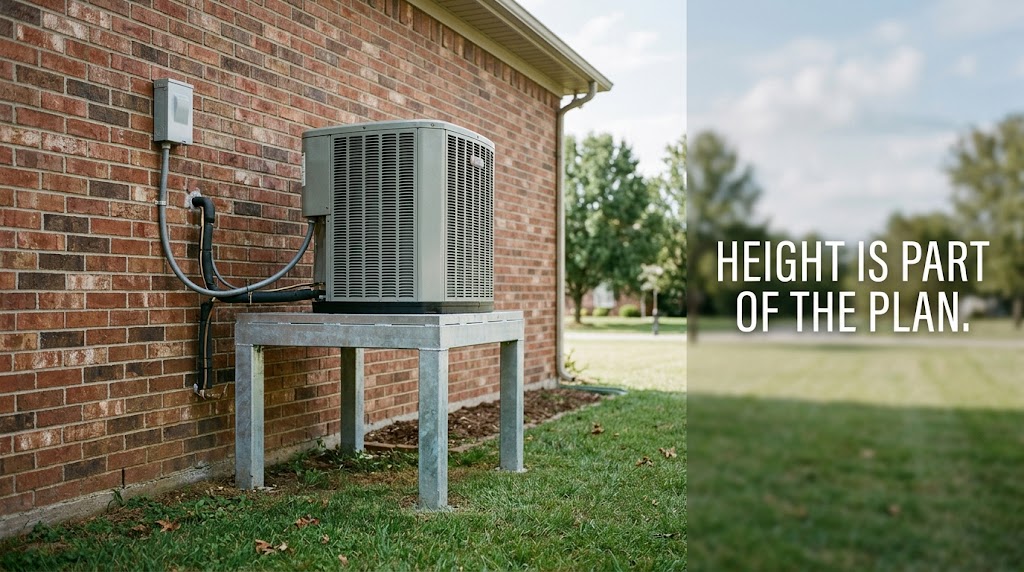
In flood-aware areas, some homes place equipment higher off the ground. For example, outdoor air-conditioning units may sit on raised platforms, and electrical equipment may be mounted higher on walls.
An inspector may note the visible location and condition of this equipment. However, whether a home’s equipment heights meet any specific requirement is a question for the local floodplain office, the builder, or the appropriate professionals.
Buying a Home That Has Flooded Before
A past flood doesn’t automatically rule a home out. However, it raises important questions:
- When did the water event happen, and how high did the water reach?
- What was removed, replaced, or repaired?
- Who did the work, and are there records?
- Were insurance claims filed?
- Are there ongoing moisture concerns?
Depending on the answers, a specialist evaluation may be appropriate, such as a moisture or mold assessment by a qualified professional. For help prioritizing findings, see our guide to home inspection red flags.
What Homeowners Can Watch for After Heavy Rain
When it’s safe to go outside after a heavy rain, take a walk around the house and notice:
- Where water collects in the yard
- Whether downspouts discharge away from the foundation
- Whether gutters overflowed
- Any water near door thresholds or the garage entry
- New staining inside the home
Stay away from standing water near electrical equipment, and never walk or drive through floodwater. Photos taken during and after rain can be very helpful later. If your home is on a private well, note that wellheads in low areas may be exposed to surface water. For more, see our guide to well and septic inspections for rural properties.
What a Home Inspection Can’t Do
A home inspection is visual and limited to accessible conditions within scope. It can’t determine a property’s flood zone, flood history, or flood risk. It also can’t predict how a property will perform in a storm, certify equipment heights, or answer insurance or disclosure questions.
Instead, it gives you better information about the visible condition of the house. For coastal-specific maintenance, see our guide to coastal home maintenance in Brazoria County. For new builds, see new construction inspections in Manvel and Iowa Colony.
Captain Obvious: “No flood zone on the map. No worries.”
Inspector Hindsight: “The map is a starting point. The rain doesn’t read it.”
Captain Obvious: “It was obvious.”
Inspector Hindsight: “Until it wasn’t.”
Flood Awareness and Drainage FAQs
Can a home inspection tell me if a house has flooded?
No. An inspector may document visible clues, but determining flood history requires records, seller information, and the right questions.
Where can I find a property’s flood zone?
FEMA flood maps show a property’s mapped flood zone. Your insurance agent can help explain what it means for coverage.
If a home isn’t in a high-risk flood zone, can it still flood?
Yes. Properties outside high-risk zones can still experience flooding, especially during heavy rain.
What is an elevation certificate?
It documents a building’s elevation relative to expected flood levels. It may be available from the seller, the local floodplain office, or through insurance.
What drainage issues does a home inspector look for?
An inspector may observe grading, gutters, downspout discharge, low spots, swales, and how hardscape slopes relative to the house.
Should I avoid a house that has flooded before?
Not automatically. Review what happened, what was repaired, and whether there are ongoing concerns, and consider a specialist evaluation when appropriate.
Schedule Your RedFish Home Inspection
Buying or owning a home in Brazoria County? Understand how water moves around the house, and know which questions to ask next.
Schedule your RedFish home inspection, or call (866) 218-6699 to confirm service in your area.
RedFish Inspections
Inspecting To A Higher Standard.

