

Buying a home in Baytown? A Baytown home inspection should give you a clear picture of the house’s visible and accessible systems before you commit. On the east side of the Houston area along Galveston Bay, that means paying attention to how the home handles age, humidity, wind, rain, and water.
Baytown has a mix of older established homes and newer subdivisions. So the inspection questions can look different from one street to the next, even when the goal is the same: understand the house before it becomes yours.
Captain Obvious: “Older home, so it’s got problems. Newer home, so it’s fine.”
Inspector Hindsight: “Both of those sentences skipped the inspection.”
What a Baytown Home Inspection Should Cover
A home inspection evaluates visible and accessible conditions within the inspection scope. For most Baytown homes, that includes:
- Roof and exterior
- Structure and foundation
- Plumbing
- Electrical
- Heating and cooling
- Attic, insulation, and ventilation
- Crawl space, when present and accessible
- Interior components, windows, and doors
- Drainage around the house
For a full breakdown, see what is checked during a home inspection.
Older Homes and Newer Homes Ask Different Questions
An older home may have original components alongside decades of updates. So the questions often center on what’s original, what’s been replaced, and how the pieces fit together.
A newer home may have fewer layers of history, but “new” describes age, not guaranteed condition. Installation details still matter. For newer builds, see our guide to new construction home inspections.
Roof and Exterior
Near the bay, wind and heavy rain put steady demands on a home’s exterior. An inspector may observe visible roof coverings, flashing, penetrations, gutters, and drainage, subject to safe access. Edges and transitions get extra attention, because that’s where wind and water tend to find their way in.
On the walls, sealants around windows, doors, and penetrations also matter, since wind-driven rain can push water sideways. For more, see what inspectors check on your roof.

Structure and Foundation
Many Baytown homes sit on concrete slabs, while some older homes may be on pier-and-beam foundations with a crawl space. Either way, the inspector looks at visible foundation conditions and the structure above them, including cracks, door and window operation, floors, and walls.
Much of the Houston area has expansive clay soils, which react to moisture. So one clue raises a question, while a consistent pattern tells more of the story. For more, see our guide to foundation concerns in expansive clay soils.
Plumbing
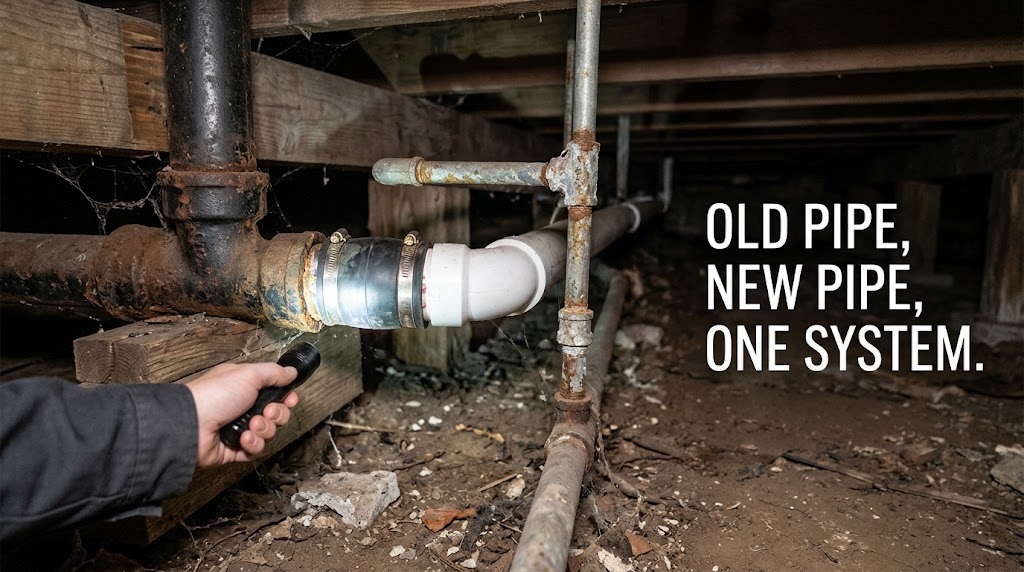
In older homes, plumbing may include a mix of materials from different decades, with older drain or supply piping alongside newer replacements. The inspector evaluates accessible fixtures, visible supply and drain piping, water-heating equipment, and visible signs of leakage.
Piping inside walls, under slabs, or underground isn’t visible during a standard inspection. The main sewer line, in particular, is a separate question. A sewer scope is a specialized service that uses a camera to look inside accessible sewer piping when that service is ordered.
Electrical
Older homes may have older electrical panels, wiring, or devices, sometimes alongside newer updates. The inspector evaluates accessible electrical components, including the panel, breakers, visible wiring, receptacles, switches, and lighting.
Some electrical findings carry meaningful safety implications, while others are simpler corrections. When a finding needs a closer look, the report may recommend a licensed electrician. For more, see electrical defects home inspectors flag.

Heating, Cooling, and Humidity
Baytown’s heat and humidity make the HVAC system one of the hardest-working parts of the house. The inspector evaluates the equipment’s visible condition and operation at the time of inspection.
When equipment is in the attic, condensate drain lines and drain pans deserve attention, since a blocked line can lead to ceiling staining below. Age provides context, but current operation and visible condition provide the evidence.
Attic and Crawl Space
When safely accessible, the attic can show roof framing, decking, insulation, ventilation, ductwork, wiring, and moisture evidence. In a humid climate, ventilation and exhaust routing matter.
If the home has a crawl space, it can show plumbing, framing, supports, and moisture conditions that aren’t visible from inside. For more, see crawl space moisture and what inspectors look for.
Drainage and Water History
On flat Gulf Coast lots, grading, gutters, and downspouts decide where rainwater goes. An inspector may observe how water appears to move around the house and note any visible signs of past water.
Parts of the Houston–Galveston region have also experienced land subsidence over the years, which is one more reason to ask about a property’s water history. However, a home inspection doesn’t determine flood zone, flood history, or flood risk. For those questions, see our guide to flood awareness and drainage on the Gulf Coast.
Inspector Hindsight: “The inspection shows how the house handles water today. The history tells you how it handled it before.”
What May Need a Specialist
Some questions fall outside a standard home inspection, so confirm which services you’ve ordered. Depending on the property, buyers sometimes look into:
- A sewer scope, for the inside of the main sewer line
- A wood-destroying insect (WDI) inspection, for termite and related evidence
- A moisture or mold assessment, when visible conditions raise questions
- A structural engineer, when foundation clues form a pattern
For help prioritizing what the report shows, see our guide to home inspection red flags.
What a Home Inspection Can’t Do
A home inspection is visual and limited to accessible conditions within scope. It can’t see inside walls, under slabs, or underground. It also can’t guarantee every concealed condition will be found, determine flood risk, or predict future performance. And it doesn’t decide whether you should buy the house.
Instead, it gives you better information. For what comes next, see what happens after a home inspection.
Captain Obvious: “Bay breeze, big yard, sold.”
Inspector Hindsight: “Let’s see what the bay breeze has been doing to the roof first.”
Captain Obvious: “It was obvious.”
Inspector Hindsight: “Until it wasn’t.”
Baytown Home Inspection FAQs
What does a Baytown home inspection cover?
It evaluates visible and accessible systems, including the roof, exterior, structure, plumbing, electrical, HVAC, attic, crawl space where present, interior, and drainage.
Do older Baytown homes need special attention?
They often have components from several periods, so the inspection looks at each system individually rather than assuming one age.
Does a home inspection include the sewer line?
Not the inside of the underground line. That typically requires a separate sewer scope service.
Can a home inspection tell me if a Baytown home has flooded?
No. An inspector may document visible clues, but flood history and flood risk require records, seller information, and resources like FEMA flood maps.
Do newer Baytown homes need inspections?
Yes. Newer homes can still contain observable conditions worth documenting.
Schedule Your Baytown Home Inspection
Buying a home in Baytown? Understand the house, and how it handles the bay-area climate, before you close.
Schedule your RedFish home inspection, or call (866) 218-6699 to confirm service in your area.
RedFish Inspections
Inspecting To A Higher Standard.

