

A waterfront home inspection starts with the same goal as any other: understand the visible and accessible condition of the house before you buy. But waterfront properties near Galveston Bay often come with a second set of structures at the water’s edge, such as bulkheads, docks, piers, boat lifts, and boathouses.
Those structures can matter as much to your purchase as the house itself. However, many of them fall outside a standard home inspection. So the key is knowing which questions the inspection answers, and which ones need a different professional.
Captain Obvious: “Great house, great dock, great view.”
Inspector Hindsight: “That’s three different inspections.”
The House vs. the Shoreline
It helps to think about a waterfront property in two parts:
- The house: the roof, structure, plumbing, electrical, HVAC, attic, interior, and the drainage around it. A home inspection covers visible and accessible conditions here, within scope.
- The shoreline: bulkheads, seawalls, docks, piers, boat lifts, and boathouses. These are often separate from a standard home inspection and may need specialists.
So before inspection day, confirm exactly what’s included. For a full breakdown of the house side, see what is checked during a home inspection.
Bulkheads and Seawalls
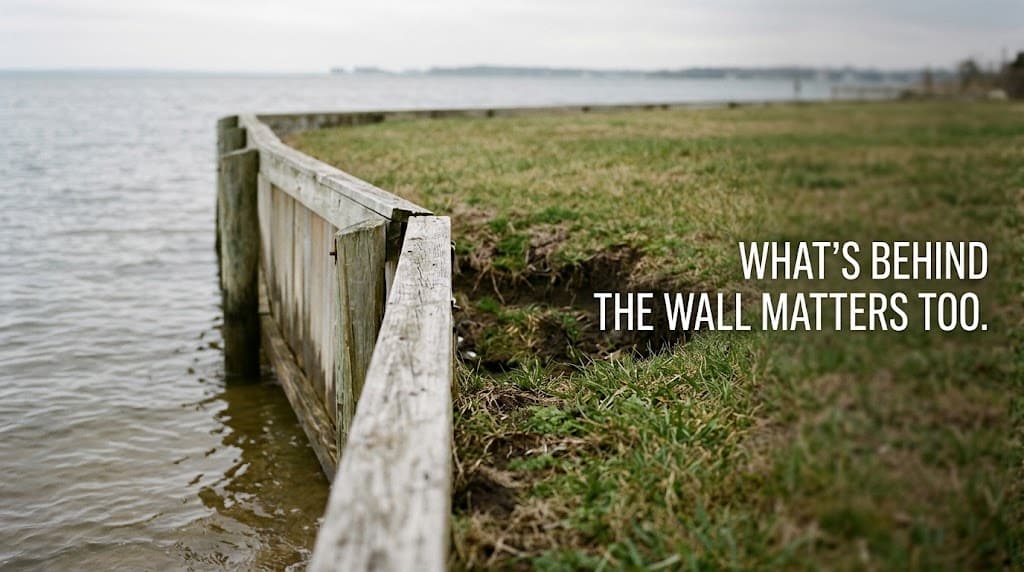
A bulkhead or seawall holds back soil at the water’s edge. When it’s not performing well, the clues often show up behind the wall rather than on its face.
Visible clues that may raise questions include:
- Sections that lean, bow, or sit out of line
- Gaps or separations between panels
- Depressions, sinkholes, or soil loss in the yard behind the wall
- Corroded or damaged tie-backs, caps, or hardware
Evaluating whether a bulkhead is structurally sound requires a qualified marine contractor or structural engineer. A home inspection doesn’t certify shoreline structures.
Docks, Piers, and Boathouses
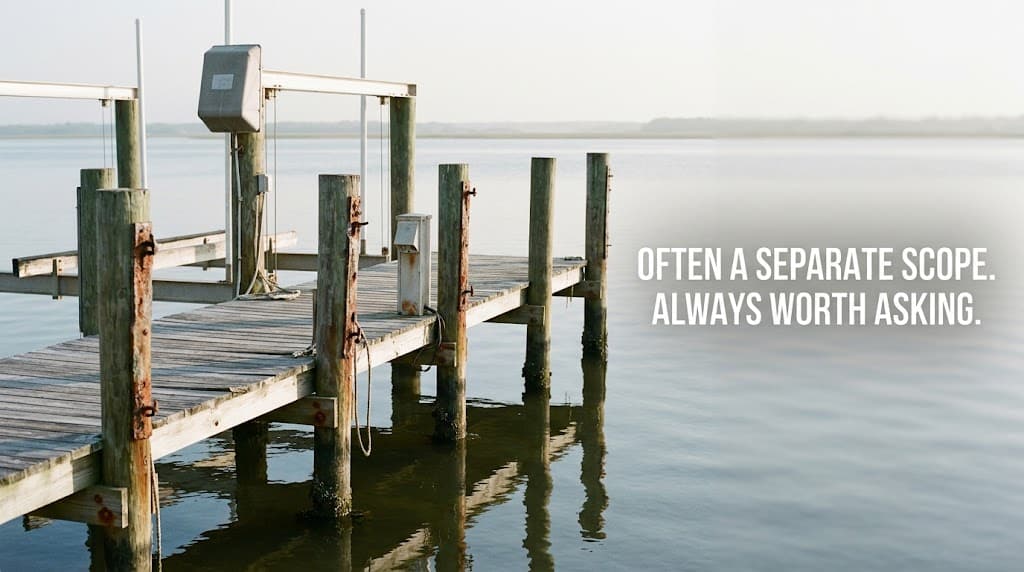
Docks, piers, and boathouses spend their lives over the water, exposed to salt, sun, and wind. Over time, that can affect decking, pilings, fasteners, and connections.
These structures are usually outside the scope of a standard home inspection. So if a dock or boathouse matters to your purchase, ask about a separate evaluation by a qualified marine contractor or other appropriate professional. Ask the seller about the structure’s age, repairs, and any maintenance records, too.
Boat Lifts and Waterfront Equipment
Boat lifts, davits, and other waterfront equipment have their own motors, cables, and mechanical parts. Evaluating them typically requires the manufacturer, a qualified installer, or a marine service professional.
Don’t assume they’re included in a home inspection. Instead, ask about their age, service history, and any warranties.
Electrical Near the Water
Electricity and water are a serious combination. Docks, boat lifts, and boathouses often have their own electrical service, outlets, and lighting.
A home inspection evaluates the home’s accessible electrical components within scope. Electrical equipment on docks and waterfront structures may fall outside that scope, so have it evaluated by a licensed electrician. Never touch damaged electrical equipment near the water. For more on electrical findings at the house, see electrical defects home inspectors flag.
Inspector Hindsight: “Water and wiring don’t negotiate. Get the right professional.”
Salt Air and Elevated Homes
Waterfront homes near the bay face constant salt air, which speeds up corrosion on metal components like outdoor HVAC units, fasteners, railings, and exterior electrical equipment. Many are also elevated, so the pilings, framing, and stairs beneath the house deserve attention.
For more on both, see our guide to coastal home maintenance on the Gulf Coast.
Bay-Facing Exposure
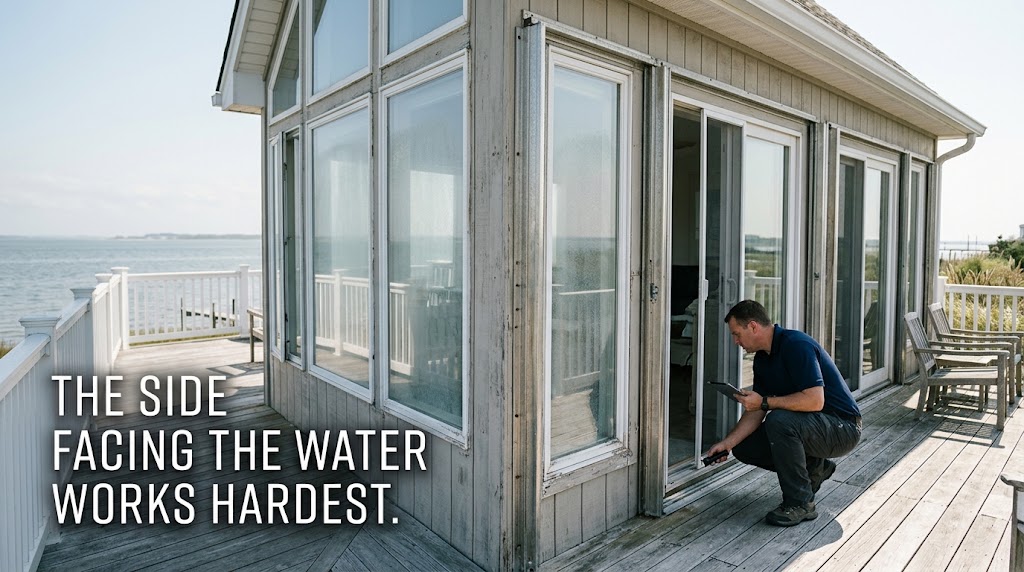
The side of a waterfront home that faces the bay usually takes the most wind, rain, and salt. That’s also often where the largest windows, sliding doors, and decks are.
So an inspector may pay close attention to visible conditions on that side, including window and door sealants, thresholds, deck connections, siding, and roof edges. Storm shutters, if present, may be noted, but their operation and performance may fall outside the inspection scope. For roof details, see what inspectors check on your roof.
Flood, Permits, and Records
Waterfront properties naturally raise flood questions. A home inspection doesn’t determine flood zone, flood history, or flood risk. Those answers come from FEMA flood maps, elevation certificates, insurance agents, and property history. For more, see our guide to flood awareness and drainage on the Gulf Coast.
Shoreline structures may also involve permits. So ask the seller for any permit records, repair invoices, and maintenance history for the bulkhead, dock, and other waterfront structures, and check with the appropriate authorities if questions remain.
Who to Call for What
- The house’s visible condition: a home inspector
- Bulkheads and seawalls: a marine contractor or structural engineer
- Docks, piers, and boathouses: a marine contractor
- Boat lifts and waterfront equipment: the manufacturer, installer, or a marine service professional
- Dock and waterfront electrical: a licensed electrician
- Flood zone and insurance: FEMA flood maps and your insurance agent
- Permits and disclosure: the appropriate authorities and your real estate professional
Buying elsewhere along the bay? See our guide to buying a home in Baytown.
What a Waterfront Home Inspection Can’t Do
A home inspection is visual and limited to accessible conditions within scope. It can’t certify bulkheads, docks, or other shoreline structures, evaluate equipment outside the agreed scope, determine flood risk, or predict future performance. It also doesn’t decide whether you should buy the property.
Instead, it gives you better information about the house and points you toward the right specialists for everything else. For help prioritizing findings, see our guide to home inspection red flags.
Captain Obvious: “The dock looks solid. I walked on it.”
Inspector Hindsight: “Walking on it isn’t the same as evaluating what’s holding it up.”
Captain Obvious: “It was obvious.”
Inspector Hindsight: “Until it wasn’t.”
Waterfront Home Inspection FAQs
Does a home inspection include the dock or bulkhead?
Usually not. Shoreline structures are typically separate from a standard home inspection, so confirm the scope and consider a marine contractor or structural engineer.
What are signs of bulkhead problems?
Visible clues can include leaning or bowing sections, gaps between panels, and soil loss or depressions behind the wall. A qualified professional can evaluate them.
Who should inspect dock electrical systems?
A licensed electrician. Electrical equipment near water carries serious safety concerns.
Can a home inspection tell me the flood risk of a waterfront property?
No. Flood risk questions belong with FEMA flood maps, elevation certificates, and your insurance agent.
Do waterfront homes need extra attention during an inspection?
The core inspection is the same, but salt exposure, bay-facing elevations, elevated structures, and drainage often deserve a closer look.
Schedule Your RedFish Home Inspection
Buying a waterfront property near Galveston Bay? Understand the house, and know which shoreline questions to ask next.
Schedule your RedFish home inspection, or call (866) 218-6699 to confirm service in your area.
RedFish Inspections
Inspecting To A Higher Standard.

