

Waller County expansive clay soils matter to anyone buying or building a home in the area. Much of the region’s soil swells when wet and shrinks as it dries, and that movement can affect foundations, driveways, and drainage over time.
For rural buyers and people building on their own land, the most useful questions are often practical. What was learned about the soil before the foundation was poured? How was the site prepared? And where does all that roof water go?
Captain Obvious: “Dirt’s dirt. Pour the slab and move in.”
Inspector Hindsight: “Clay has opinions. Let’s find out what they are.”
Clay Soils: The Short Version
Expansive clay changes volume as its moisture content changes. When moisture around a home changes unevenly, parts of the foundation can move differently from others.
For a deeper look at how clay works, common warning signs, and everyday moisture habits, see our guide to foundation concerns in expansive clay soils. To learn how to monitor cracks over time, see our guide to foundation movement on expansive soils.
Building on Your Own Lot? Ask About the Soil Report
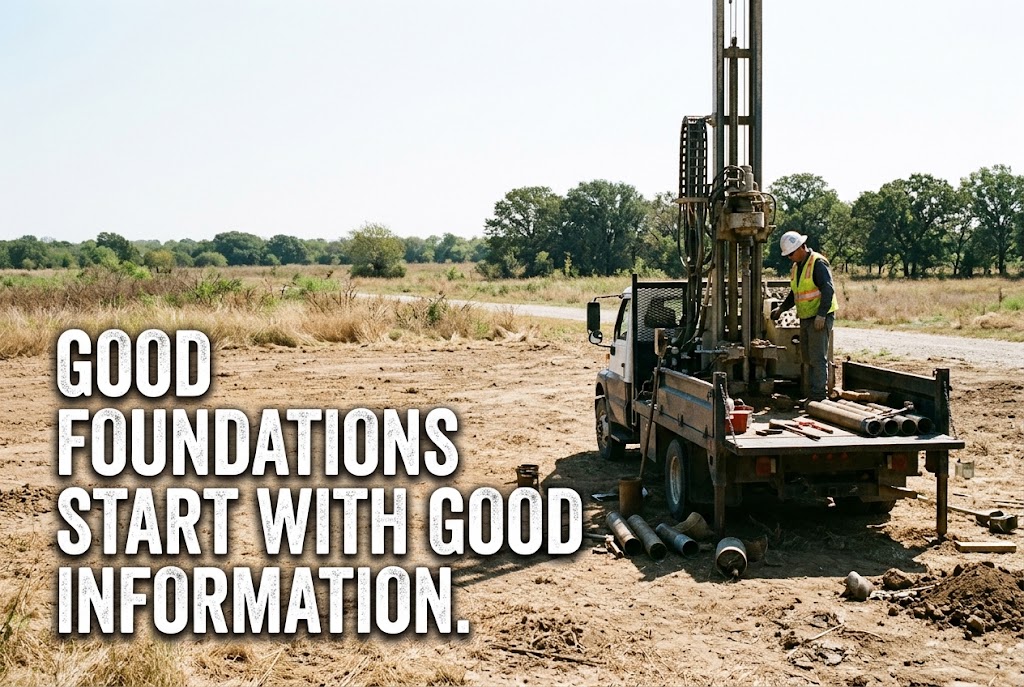
Foundations on expansive soils are commonly designed using information from a geotechnical investigation, where soil samples are collected and tested to understand how the ground is likely to behave.
If you’re building a home, ask your builder:
- Was a soil investigation done for this site?
- How was the foundation designed for the soil conditions?
- Who designed the foundation?
- Can I get copies of the soil report and foundation plans?
These are questions for the builder and the engineers involved. A home inspection doesn’t review soil reports or foundation designs. However, keeping these documents with your home records is a good habit.
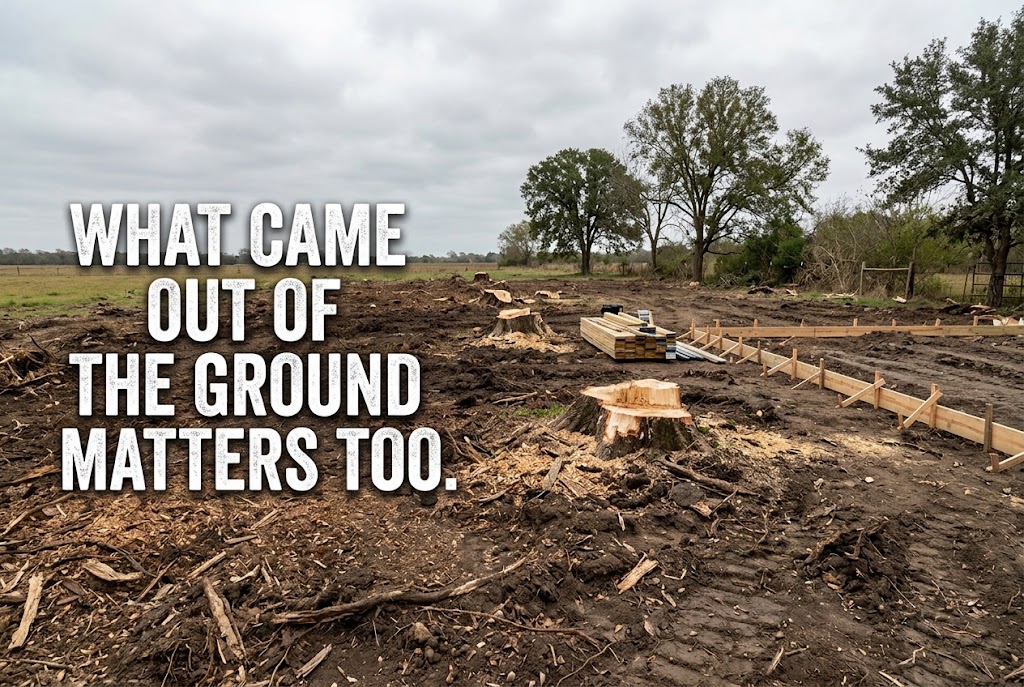
Clearing Trees Before Building
Rural lots often need large trees cleared before construction. Large trees draw a lot of moisture from the soil, so removing them can change soil moisture conditions over time.
So if trees were cleared from the building area, ask your builder how the site was prepared and whether that was considered in the foundation design. If you’re buying a newer home, ask the seller whether large trees were removed near the house.
Inspector Hindsight: “The tree’s gone. The soil remembers it was there.”
Big Roofs Without Gutters
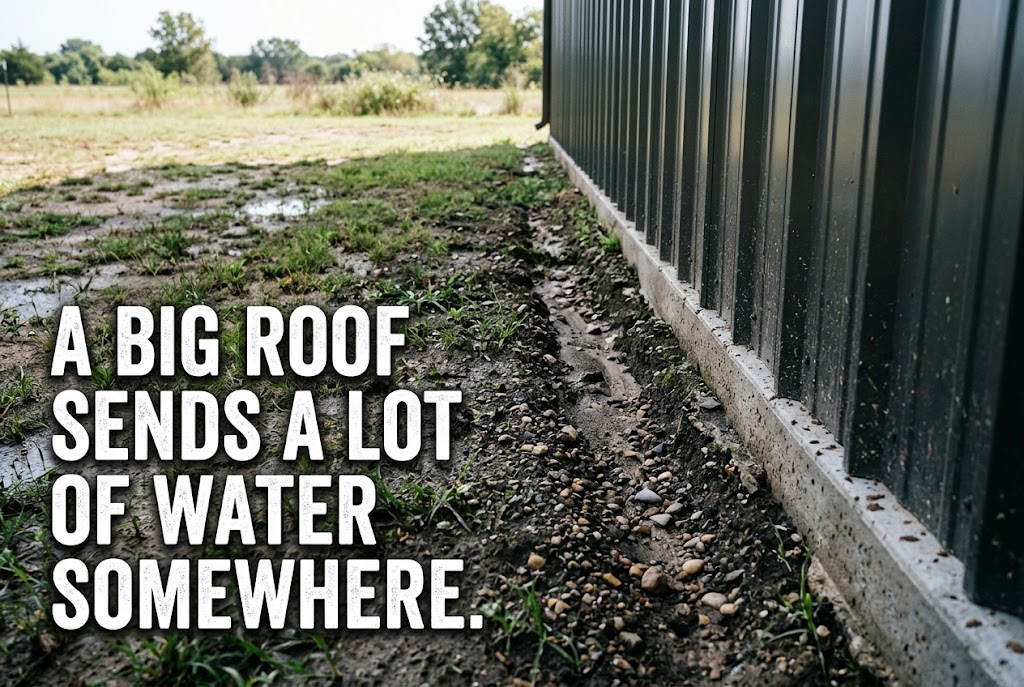
Barndominiums, metal buildings, and large shops are common in rural Waller County. They often have long, wide roofs, and some don’t have gutters.
Without gutters, a big roof drops a lot of water along the drip line, right next to the slab. Over time, that can erode soil, splash the lower walls, and keep the soil beside the foundation much wetter than the rest of the lot.
An inspector may note drip-line erosion, splash marks, and how water appears to drain away from the slab. If you’d like to manage roof runoff better, talk with a qualified contractor about gutters or other drainage options. For more on metal-building homes, see our guide to buying a home in Hempstead, TX.
A Seasonal Moisture Calendar
On expansive clay, the seasons matter. Here’s what to watch for through the year:
- Hot, dry stretches: Soil can shrink and pull away from the slab edge. Watch for gaps between the soil and the foundation, and for new cracks or sticking doors.
- Wet seasons and heavy rain: Soil can swell. Watch where water collects, whether downspouts discharge away from the house, and whether any area stays soggy.
- Transitions between seasons: Doors and small cracks may change. A quick photo log helps you compare.
- Year-round: Keep irrigation consistent, and keep sprinklers from spraying onto the foundation.
Some homeowners are advised to follow a watering routine during dry periods. If you’re considering one, ask a qualified foundation professional first.
Buying an Existing Home on Clay
If you’re buying an existing home, a home inspection can document visible foundation-related conditions, such as cracks, door and window operation, floors, walls, and drainage. When several clues appear together, the report may recommend a structural engineer.
For more, see what is checked during a home inspection and slab foundation movement: settling vs. heave. Buying new? See why new construction inspections in Waller matter.
What a Home Inspection Can’t Do
A home inspection is visual and limited to accessible conditions within scope. It can’t test soil, review soil reports or foundation designs, see beneath the slab, guarantee every concealed condition will be found, or predict future foundation performance. It also doesn’t replace a structural engineer’s evaluation.
Instead, it gives you better information about what’s visible today.
Captain Obvious: “No gutters, no problem. Less to clean.”
Inspector Hindsight: “Less to clean. More water at the slab.”
Captain Obvious: “It was obvious.”
Inspector Hindsight: “Until it wasn’t.”
Waller County Clay Soil FAQs
Should I get a soil report before building on my land?
Foundations on expansive soils are commonly designed using a geotechnical investigation. Ask your builder whether one was done, and keep a copy.
Does clearing trees affect the soil?
It can. Large trees draw moisture from the soil, so removing them can change soil conditions over time. Ask your builder how the site was prepared.
Do metal-building homes need gutters?
Not always, but big roofs without gutters can concentrate water at the slab edge. A qualified contractor can recommend drainage options.
What should I watch for during dry spells?
Gaps between the soil and the slab, new cracks, and doors that start sticking. A photo log helps you compare over time.
Can a home inspection test the soil?
No. Soil testing requires a geotechnical investigation. A home inspection documents visible conditions.
Schedule Your RedFish Home Inspection
Buying or building on clay in Waller County? Understand what the visible evidence shows, and which questions to ask next.
Schedule your RedFish home inspection, or call (866) 218-6699 to confirm service in your area.
RedFish Inspections
Inspecting To A Higher Standard.

