

Chambers County foundation movement is a common question for homeowners and buyers across the county’s mix of suburban neighborhoods, rural acreage, and bayfront properties. The region’s expansive soils react to moisture, so foundations here can show small changes over time.
However, a single crack or a sticking door rarely tells the whole story. Foundation clues make the most sense when you understand what kind of foundation you have, watch how clues change over time, and know which professional to call for which question.
Captain Obvious: “New crack. Call someone today.”
Inspector Hindsight: “New crack. Mark it, photograph it, and let’s see what it does.”
The Short Version on Expansive Soils
Expansive clay soils swell when wet and shrink as they dry. When moisture around a home changes unevenly, parts of the foundation can move differently from others.
For a deeper look at how clay works, common warning signs, and moisture management, see our guide to foundation concerns in expansive clay soils. For subsidence, pier-and-beam homes, and under-slab plumbing, see our guide to foundation concerns in East Harris County.
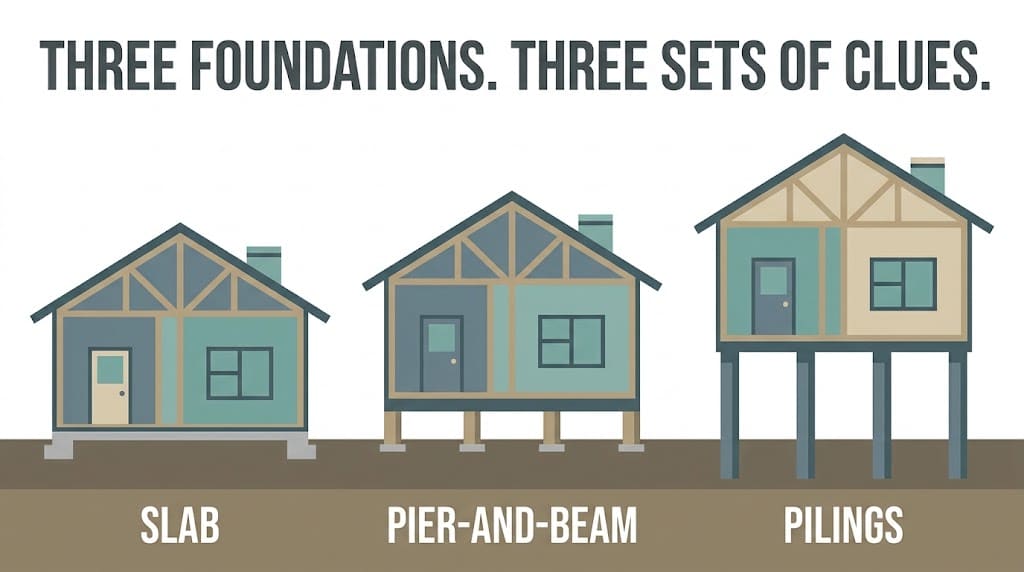
Three Foundation Types, Three Sets of Clues
Chambers County homes sit on a few different foundation types, and each one shows movement in its own way:
- Concrete slab: Common in subdivisions. Clues often show up in slab-edge cracks, brick veneer, interior drywall, and door operation.
- Pier-and-beam: More common on older and rural homes. Clues may include sloping floors, shims between piers and beams, and soil changes at pier bases, which are visible from an accessible crawl space.
- Pilings: Common on raised bay homes. Clues may include visible piling condition, connections, bracing, and how stairs and decks line up with the house.
Knowing your foundation type helps you know where to look. For raised bay homes, see our guide to waterfront home inspections near Trinity Bay.
How to Monitor Chambers County Foundation Movement Over Time
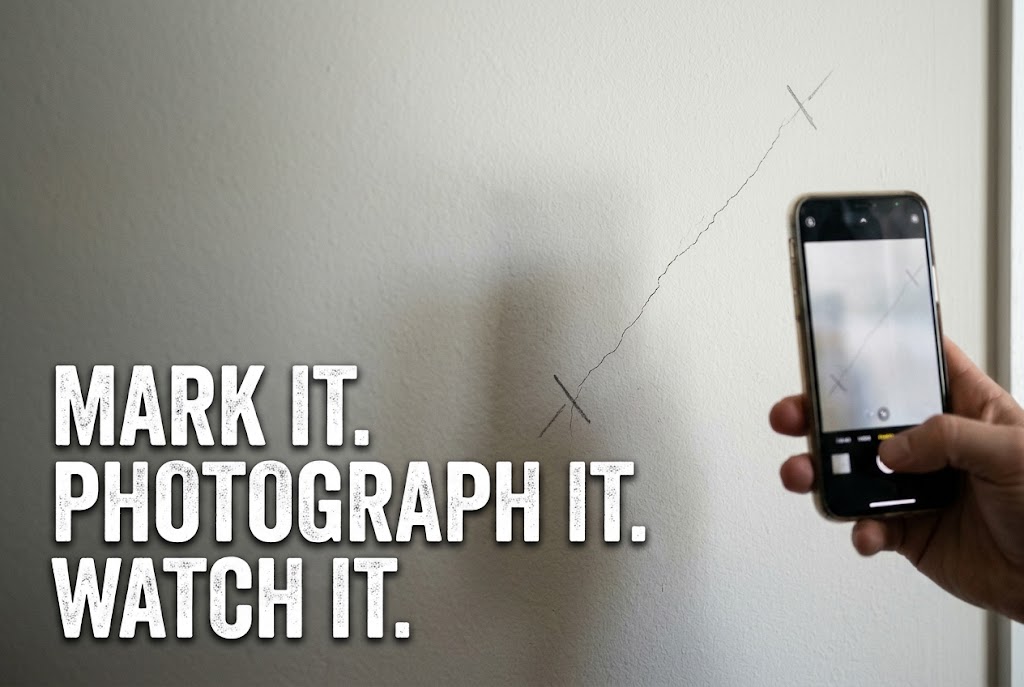
One of the most useful things a homeowner can do is watch whether clues are changing. A crack that stays the same for years tells a different story than one that keeps growing.
A simple monitoring routine:
- Mark the ends of a crack with a small pencil tick and write the date nearby.
- Photograph it from the same angle each time, with a coin beside it for scale.
- Note door behavior: which doors stick, swing, or don’t latch, and when.
- Check every few months, and after long dry spells or heavy rain.
- Keep a simple log of dates, photos, and observations.
If a crack grows past your marks, widens noticeably, or one side shifts higher than the other, that’s a good time to bring in a structural engineer.
Seasonal Changes: What’s Normal to Notice
On expansive soils, some minor cracks may open slightly during dry periods and close somewhat after wet weather. Likewise, a door that sticks in one season may work fine in another.
That doesn’t automatically mean something is wrong. However, it does mean a single observation can be misleading. Tracking clues across seasons gives a much clearer picture than one look on one day.
Inspector Hindsight: “One photo is a snapshot. A year of photos is a story.”
Structural Engineer vs. Foundation Repair Company
These two professionals play different roles:
- A structural engineer evaluates the foundation and structure, and can provide an assessment and recommendations.
- A foundation repair company performs repair work, and may also offer its own evaluations.
Some homeowners prefer to get an independent engineer’s evaluation first, then use it when reviewing repair proposals. That way, the plan is based on an assessment from someone who isn’t also selling the repair.

Questions to Ask Before Any Foundation Work
- Is the repair plan based on an engineering evaluation?
- What exactly will the work address, and what won’t it address?
- Are permits required?
- What does the warranty cover, and does it transfer to a future owner?
- Are drainage or moisture changes also recommended?
- Will there be a follow-up evaluation after the work?
- What documentation will I receive when the work is done?
If you’re buying a home with past foundation work, ask the seller for these same records.
What a Home Inspection Can and Can’t Do
A home inspection documents visible and accessible conditions, such as cracks, door and window operation, floors, walls, visible foundation areas, and drainage. It can help you identify patterns worth asking about.
However, it can’t see beneath slabs, measure soil properties, guarantee every concealed condition will be found, predict future foundation performance, or replace a structural engineer’s evaluation. For more, see what is checked during a home inspection and slab foundation movement: settling vs. heave.
Captain Obvious: “The crack was there last year too. So it’s fine.”
Inspector Hindsight: “Was it the same size last year?”
Captain Obvious: “It was obvious.”
Inspector Hindsight: “Until it wasn’t.”
Chambers County Foundation Movement FAQs
How can I tell if a foundation crack is getting worse?
Mark the ends with pencil, date it, and photograph it from the same angle over time. Growth past the marks, widening, or one side shifting higher are worth an engineer’s attention.
Is it normal for cracks to change with the seasons?
On expansive soils, some minor cracks may open slightly in dry periods and close somewhat after wet weather. Tracking over time gives a clearer picture.
Should I call a structural engineer or a foundation repair company?
An engineer evaluates and recommends, while a repair company performs work. Some homeowners get an independent engineer’s evaluation first.
Do raised homes on pilings have foundation concerns too?
They can. Visible piling condition, connections, and bracing deserve attention, and structural evaluation requires a qualified professional.
What should I ask for when buying a home with past foundation repairs?
Ask for engineering reports, repair details, permits if required, and warranty documents, including whether the warranty transfers.
Schedule Your RedFish Home Inspection
Buying or owning a home in Chambers County? Understand what the foundation evidence shows today, and what to keep an eye on.
Schedule your RedFish home inspection, or call (866) 218-6699 to confirm service in your area.
RedFish Inspections
Inspecting To A Higher Standard.

