

Building or buying a new home in Mont Belvieu? Knowing what to expect from a Mont Belvieu new construction inspection helps you get more out of it, from scheduling with your builder to turning the report into action.
A new construction inspection gives you an independent look at the house while there’s still time to raise what you find with the builder. Here’s how the process typically works, step by step.
Captain Obvious: “Inspector shows up, looks around, done.”
Inspector Hindsight: “There’s a before and an after, too. That’s where the value is.”
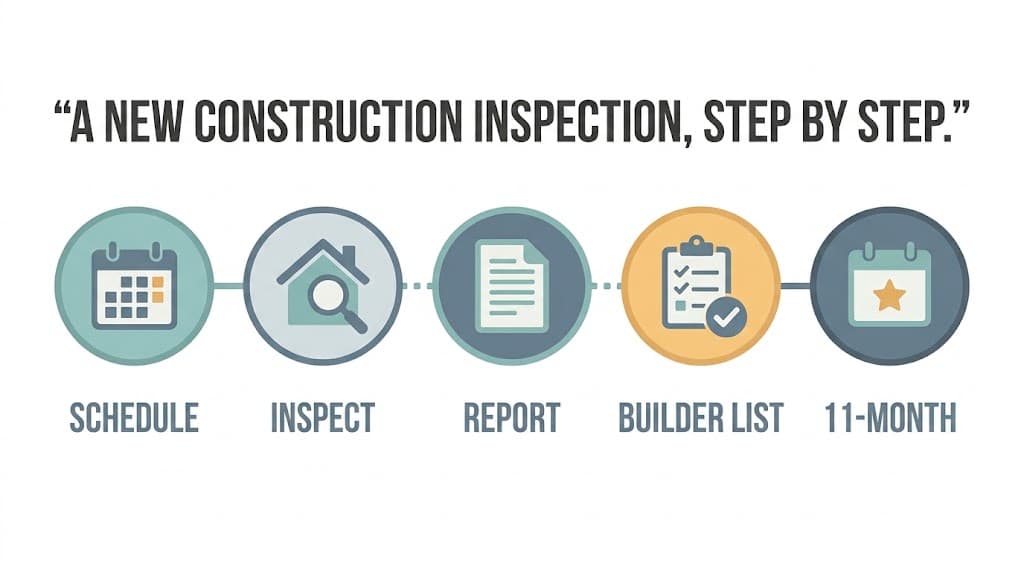
Before the Inspection: Coordinate With the Builder
New homes are still under the builder’s control until closing, so a little coordination goes a long way. Before inspection day:
- Tell your builder you’ve scheduled an independent inspection, and ask whether they have a process for third-party inspections.
- Confirm access, including who will unlock the home and whether a builder representative will be on site.
- Make sure utilities are on, so water, electrical, and HVAC systems can be operated.
- Ask what’s finished, since items still in progress can’t be fully evaluated.
Your real estate professional can often help with this coordination.
Choosing Your Inspection Stages
Many buyers choose to have a new home inspected at more than one stage, such as before drywall, when framing, wiring, plumbing, and ductwork are still exposed, and before closing, when the finished systems can be operated.
For more on stages, see our overview of new construction home inspections and our guide to new construction inspections in Manvel and Iowa Colony.
What Happens on Mont Belvieu New Construction Inspection Day
Every inspection is a little different, but the inspector generally works through the home system by system. That often includes:
- Exterior and grounds: grading, drainage, siding or brick, windows, doors, and the garage
- Roof: visible coverings, flashing, penetrations, and gutters, subject to safe access
- Attic: framing, insulation, ventilation, ductwork, and equipment, when safely accessible
- Interior: walls, ceilings, floors, doors, windows, stairs, and cabinets
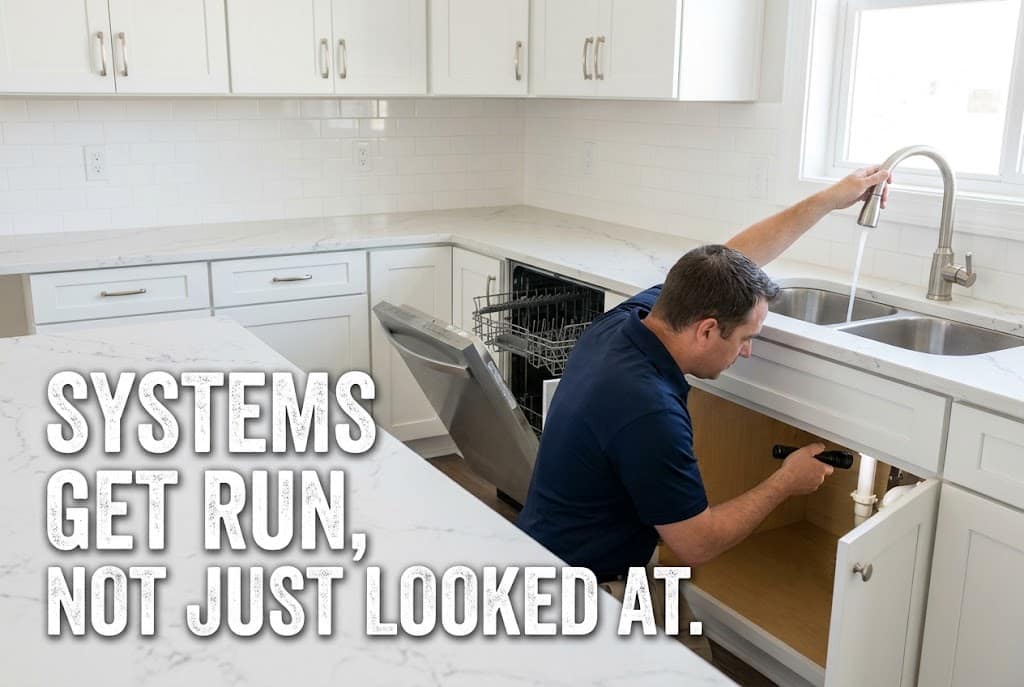
- Plumbing: fixtures operated, visible piping, drains, and the water heater
- Electrical: the panel and accessible receptacles, switches, and lighting
- Heating and cooling: equipment operated, as conditions allow
Systems get run, not just looked at. That’s how a new home’s plumbing, electrical, and HVAC show how they’re actually performing. For a full breakdown, see what is checked during a home inspection.
Should You Attend?
Attending can be a great way to see findings in person and ask questions. Ask about the inspection company’s process, including whether to be there for the whole inspection or join near the end to review what was found.
If you attend, bring questions and a way to take notes. However, try not to rush the inspector, since a thorough look takes focus.
What the Report Looks Like
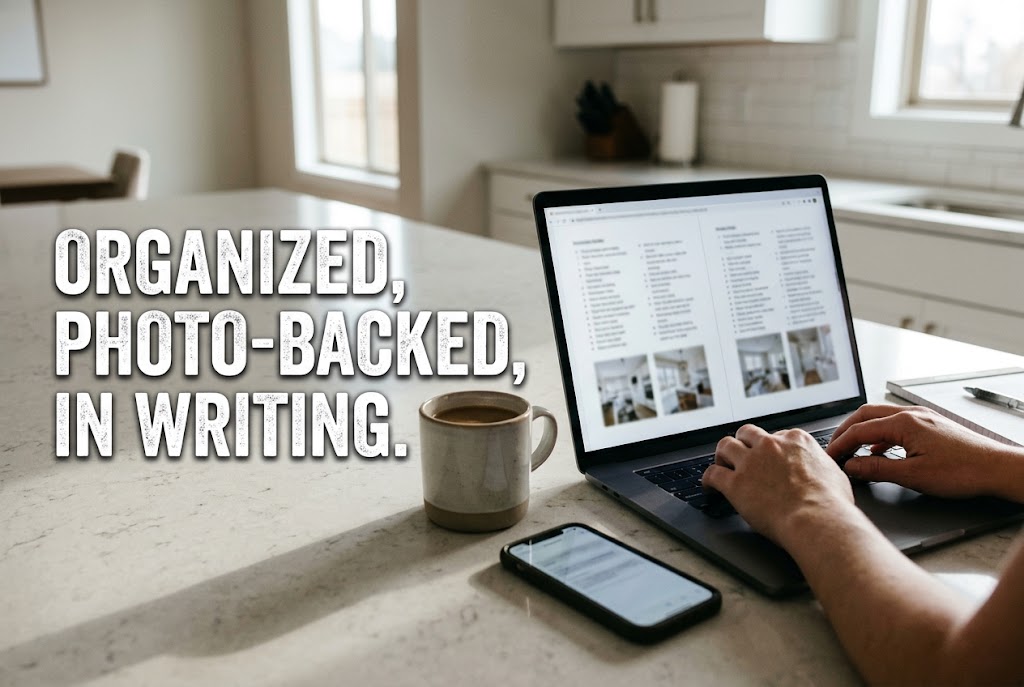
After the inspection, you’ll receive a written report. A good report typically includes:
- Photos of observed conditions
- Where each item is located
- A description of what was observed
- Recommendations, including when further evaluation is suggested
- Inspection limitations, such as areas that weren’t accessible
In new homes, many findings are installation or completion items, such as a missing cover plate, an insulation gap, or a door that needs adjustment. Still, some findings may matter more than others. For help prioritizing, see our guide to home inspection red flags.
Turning the Report into a Builder List
A report is most useful when it becomes a clear, organized list for your builder. A few tips:
- Group items by area, such as exterior, roof, attic, and each room.
- Include the photo and the report reference for each item.
- Keep descriptions clear and factual.
- Send it in writing, and ask for a written response.
- Agree on timing for when items will be addressed.
Your real estate professional can help with how and when to submit the list.
Inspector Hindsight: “A finding in a report is information. A finding on the builder’s list is a next step.”
Following Up on Corrections
Before closing, check which items the builder has addressed. Ask for documentation of corrections, and take your own photos.
Some buyers also arrange a follow-up evaluation to confirm corrections. If you’re considering one, ask about its scope, since a follow-up observation doesn’t certify all the work. For more on what comes next, see what happens after a home inspection.
Later: The 11-Month Warranty Inspection
The first year in a new home brings its first full cycle of heat, humidity, rain, and everyday use. Items can show up after move-in that weren’t visible before closing.
An inspection near the end of the first year can document visible conditions while there may still be time to raise them under the builder warranty. For more, see our guide to the 11-month warranty inspection. For homes that are already a few years old, see our guide to buying a home in Mont Belvieu.
What a New Construction Inspection Can’t Do
A home inspection is visual and limited to accessible conditions within scope. It can’t see inside finished walls, guarantee every concealed condition will be found, certify code compliance, or interpret your builder contract or warranty. It also can’t evaluate items that aren’t finished yet.
Instead, it gives you better information at the moment it’s most useful. For more on new construction near Mont Belvieu, see our guide to new construction inspections in Baytown and Crosby.
Captain Obvious: “The builder already has a checklist.”
Inspector Hindsight: “Theirs is for them. This one’s for you.”
Captain Obvious: “It was obvious.”
Inspector Hindsight: “Until it wasn’t.”
Mont Belvieu New Construction Inspection FAQs
Do I need to tell my builder about the inspection?
Yes. Coordinate access, confirm utilities are on, and ask whether the builder has a process for third-party inspections.
What happens during a new construction inspection?
The inspector works through the home system by system, including the exterior, roof, attic, interior, plumbing, electrical, and HVAC, and operates systems where possible.
Should I attend the inspection?
Attending can help you see findings in person. Ask the inspection company about its process.
How do I share findings with my builder?
Turn the report into an organized, photo-backed list, send it in writing, and ask for a written response.
Can items be checked again after the builder fixes them?
Some buyers arrange a follow-up evaluation. Ask about its scope, since it doesn’t certify all the work.
When should I schedule an 11-month warranty inspection?
Before your builder warranty’s first-year deadline. Check your warranty documents for exact dates.
Schedule Your New Construction Inspection
Building or buying new in Mont Belvieu? Know what to expect, and get the most out of every step.
Schedule your RedFish home inspection, or call (866) 218-6699 to confirm service in your area.
RedFish Inspections
Inspecting To A Higher Standard.

