

Buying a new home in Baytown or Crosby? A Baytown new construction inspection gives you an independent look at the house while there’s still time to raise what you find with the builder.
New homes on the east side of the Houston area range from subdivision homes to custom builds on larger lots. Either way, “new” describes the home’s age, not its condition. Even a well-built home is the work of many trades on a busy schedule, so small items can slip through.
Captain Obvious: “Brand new house. Nothing to find.”
Inspector Hindsight: “Brand new house. Nobody’s looked at it from your side yet.”
Subdivision Homes and Custom Builds
In Baytown and Crosby, new construction can look very different from one property to the next:
- Subdivision homes are often built from established plans, with shared drainage and city or district utilities.
- Custom homes on larger lots may have their own drainage paths, longer driveways, and, in some cases, a private well and septic system.
The core inspection is the same. However, the questions around the house can change a lot depending on which type you’re buying.
The Basics: Stages and Walkthroughs
Many new-construction buyers choose to have the home inspected at more than one stage, such as before drywall and before closing. An independent inspection also serves a different purpose from the builder’s walkthrough.
For a full look at inspection stages, the builder walkthrough, and final walkthrough tips, see our guide to new construction inspections in Manvel and Iowa Colony and our overview of new construction home inspections.
Know Which Inspections Already Happened
Depending on where a home is built, the local permitting and inspection process can differ. Some homes go through several required inspections during construction, while others may have fewer.
So ask your builder:
- Which inspections were performed during construction?
- Who performed them?
- Can I see the records?
Those inspections and a home inspection answer different questions. A home inspection isn’t a code inspection, and it doesn’t replace any required permit inspections.
Bay-Area Wind and Brand-New Roofs
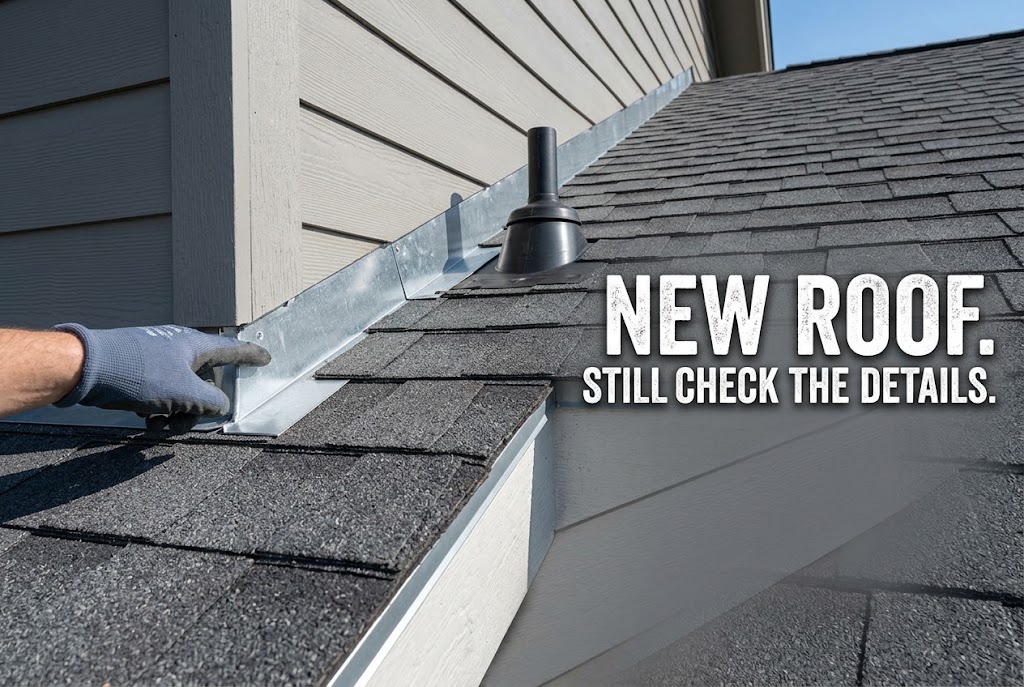
Near Galveston Bay, wind and heavy rain test a roof from day one. A brand-new roof should be in good shape, but installation details still matter.
So, subject to safe access, an inspector may observe visible flashing at walls and valleys, drip edges, vent boots and penetrations, roof edges, and gutters. Small details like a missing piece of flashing or a loose vent boot are much easier to address before closing. For more, see what inspectors check on your roof.
Ditches, Culverts, and Lot Drainage
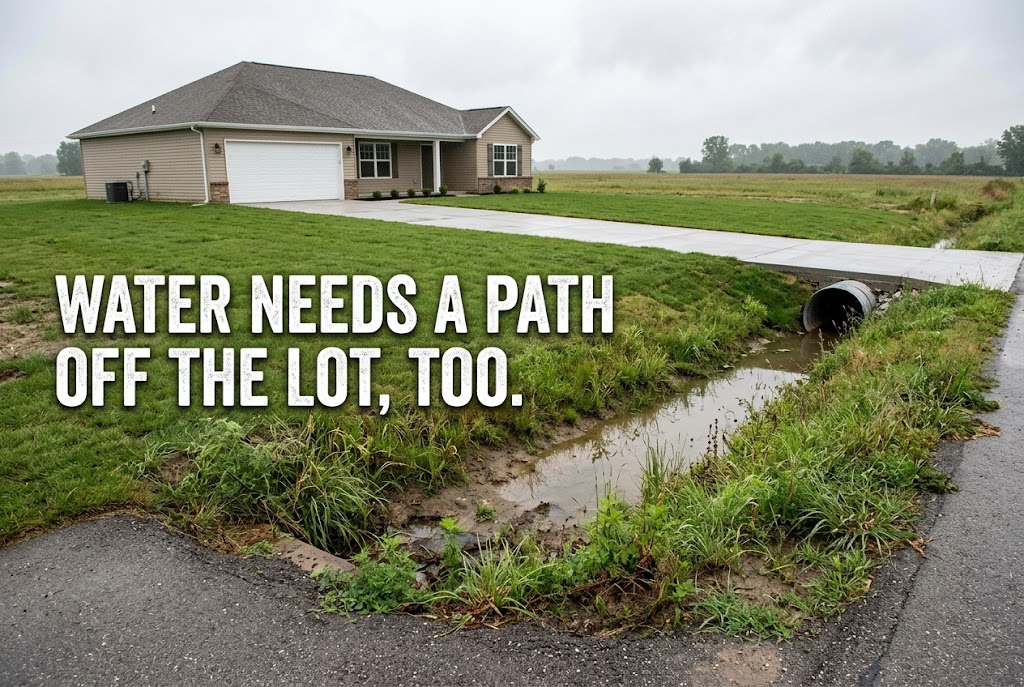
On larger or semi-rural lots, rainwater often leaves the property through roadside ditches, sometimes passing under the driveway through a culvert. In subdivisions, it’s usually swales and storm drains.
Either way, the question is the same: does water move away from the house and off the lot? An inspector may observe visible grading near the foundation, downspout discharge, low spots, and visible drainage paths around the house.
The condition of roadside ditches and culverts may fall outside the inspection scope. However, it’s worth noticing how they look after a heavy rain. For flood and water-history questions, see our guide to flood awareness and drainage on the Gulf Coast.
New Homes With Private Wells and Septic Systems
Some new homes on larger lots aren’t connected to city water and sewer. Instead, they may rely on a private well and a septic system.
New systems still deserve attention. A well inspection can evaluate the visible and accessible well components and how the system operates, while water quality requires separate laboratory testing. Septic evaluation is typically a specialized service. For more, see our guide to well and septic inspections for rural properties.
Attics, Insulation, and HVAC in a New Build
In the Houston area’s heat and humidity, the attic does a lot of work. When it’s safely accessible, an inspector may observe insulation coverage, ventilation, ductwork connections, HVAC equipment, and condensate drain lines and pans.
In new homes, gaps in insulation around attic equipment and loose duct connections are common items worth catching early.
Keep Your Warranty Documents Organized
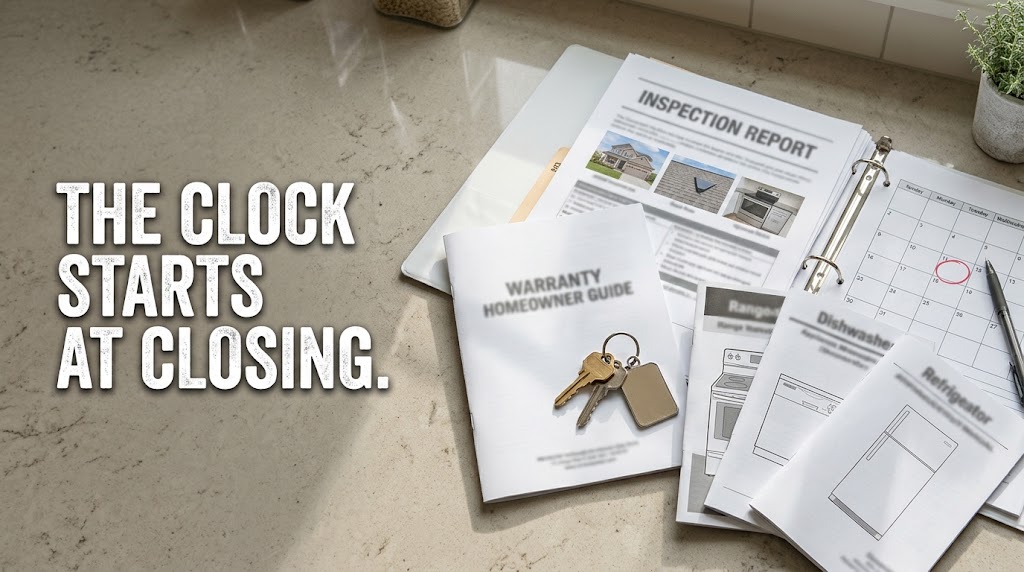
Most new homes come with a builder warranty, and the clock typically starts at closing. Keep these documents together:
- The builder warranty and its terms
- Your inspection reports
- Appliance and equipment manuals and warranties
- Any construction inspection records
- Photos of items you’ve reported to the builder
Mark key warranty dates on your calendar. An inspection near the end of the first year can document visible conditions while there may still be time to raise them. For more, see our guide to the 11-month warranty inspection.
What a New Construction Inspection Can’t Do
A home inspection is visual and limited to accessible conditions within scope. It can’t see inside finished walls, guarantee every concealed condition will be found, certify code compliance, or interpret your builder contract or warranty. It also can’t predict future performance.
Instead, it gives you better information while it’s most useful. For help prioritizing findings, see our guide to home inspection red flags. For next steps, see what happens after a home inspection.
Captain Obvious: “Builder says it’s perfect.”
Inspector Hindsight: “Then the report should be short.”
Captain Obvious: “It was obvious.”
Inspector Hindsight: “Until it wasn’t.”
Baytown and Crosby New Construction FAQs
Do new homes in Baytown and Crosby need inspections?
Yes. New construction can still contain observable conditions, and finding them before closing gives you the most options.
Does a home inspection replace builder or permit inspections?
No. They serve different purposes. Ask your builder which inspections were performed during construction.
Does a new roof need to be inspected?
Yes. Installation details like flashing and vent boots still matter, especially in bay-area wind.
What if my new home has a private well and septic system?
A well inspection can evaluate the visible well system and its operation, while water quality and septic evaluation typically require separate services.
When should I schedule an 11-month warranty inspection?
Before your builder warranty’s first-year deadline, so there’s time to report any items. Check your warranty documents for exact dates.
Schedule Your New Construction Inspection
Buying new in Baytown or Crosby? Understand the home while there’s still time to act on what you learn.
Schedule your RedFish home inspection, or call (866) 218-6699 to confirm service in your area.
RedFish Inspections
Inspecting To A Higher Standard.

