

Buying an older home in Pasadena or Deer Park? A Pasadena older home inspection helps you understand what you’re really buying: the original components, the updates, and how they fit together.
Older homes often have character, established neighborhoods, and mature trees. However, they also carry decades of history. Some materials may be original, some may have been replaced, and some updates may have been done well while others weren’t. So the inspection is about sorting out which is which.
Captain Obvious: “New kitchen, new floors. Basically a new house.”
Inspector Hindsight: “New finishes. Let’s see how old the rest of it is.”
“Older” Covers a Lot of Ground
An “older home” might be 30 years old or 70. Homes built in different decades often used different materials, so the questions change with the home’s age and history.
That’s why a Pasadena older home inspection looks at each system individually. The roof may be newer than the plumbing, the HVAC may be newer than the wiring, and a remodel may have changed some systems but not others. For a full breakdown of what’s covered, see what is checked during a home inspection.
Electrical Features by Era
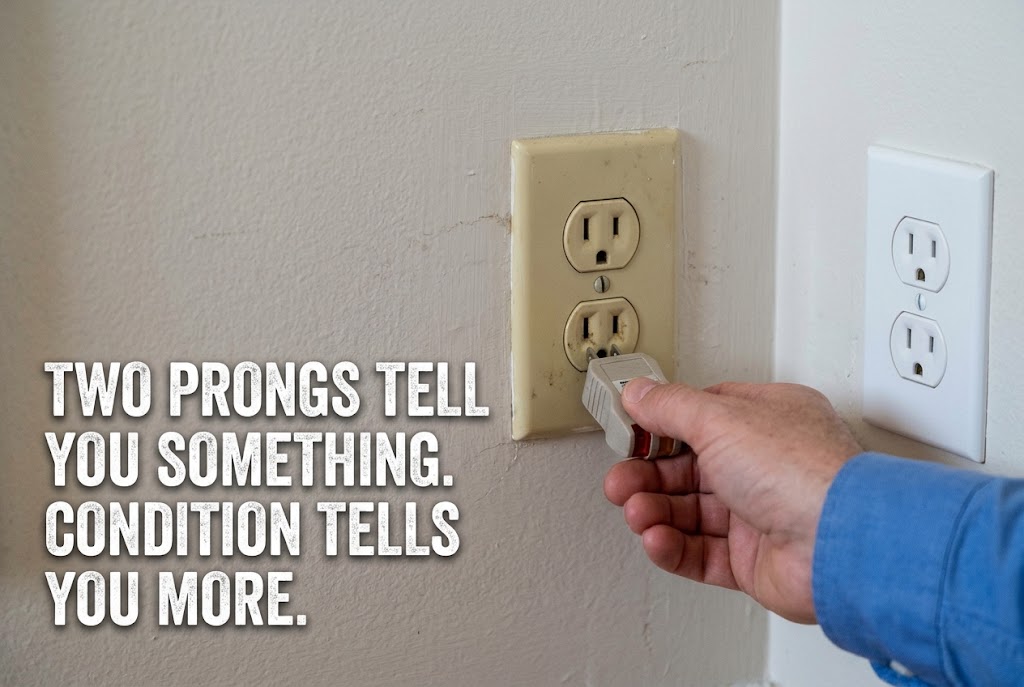
Older homes may include electrical features that are less common in newer construction. An inspector may observe:
- Two-prong outlets, which may indicate ungrounded circuits
- Aluminum branch wiring, which was used in some homes built roughly in the mid-1960s to early 1970s and can raise concerns at connections
- Older electrical panels, some of which have known concerns
- A mix of original and updated wiring from different renovations
Some of these are simple updates, while others deserve a closer look by a licensed electrician. For more, see electrical defects home inspectors flag.
Plumbing Materials by Era
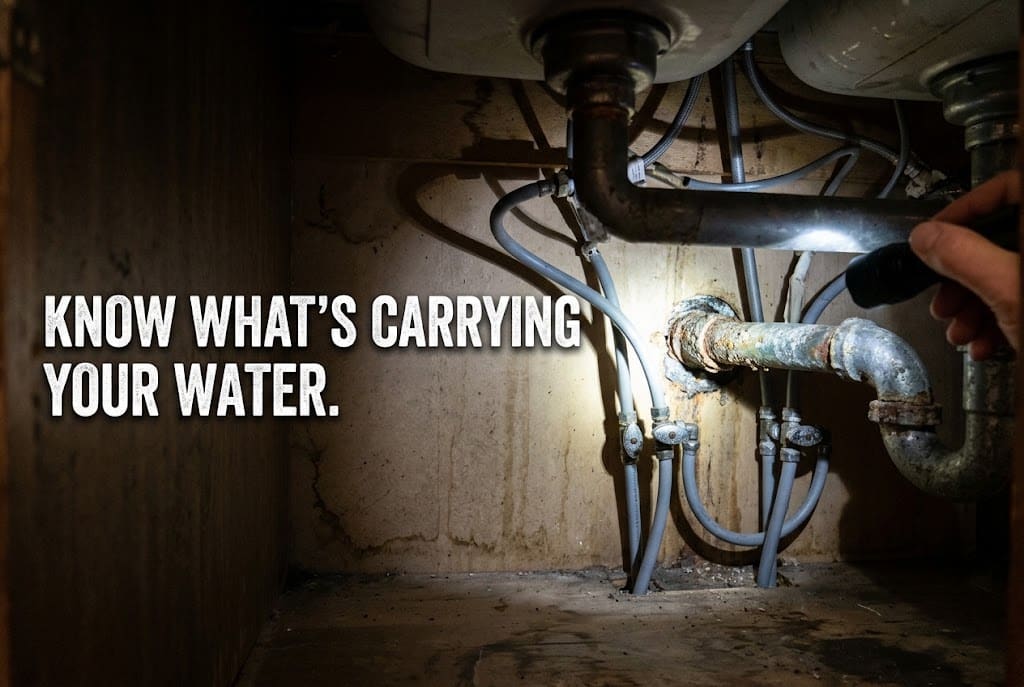
Plumbing materials have changed over the decades, and older homes may contain several types. Where visible and accessible, an inspector may observe:
- Galvanized steel supply pipe, which can corrode internally over time
- Cast iron drain pipe, which can deteriorate with age
- Polybutylene supply pipe, a gray plastic pipe installed in many homes roughly from the late 1970s to the mid-1990s, which has been the subject of widespread concerns about failures
- Newer replacement piping alongside original sections
An inspector can only observe piping that’s visible and accessible. Pipes inside walls, under slabs, or underground aren’t visible during a standard inspection. So if material questions come up, a licensed plumber can help evaluate them.
Renovated and Flipped Homes
A freshly renovated older home can look move-in ready. However, new finishes don’t automatically mean updated systems. Paint, flooring, and cabinets can cover a lot.
So ask the seller:
- What was updated, and when?
- Who did the work?
- Were permits pulled for electrical, plumbing, or structural work?
- Are there invoices, warranties, or records?
An inspector evaluates visible and accessible conditions. However, a home inspection doesn’t verify permits or confirm that work met code.
Inspector Hindsight: “Fresh paint tells you someone painted. It doesn’t tell you what’s behind it.”
Lead Paint and Asbestos
Homes built before 1978 may contain lead-based paint, and sellers of those homes are generally required to disclose known lead-based paint hazards. Some older building materials, such as certain flooring, insulation, or textured ceiling finishes, may also contain asbestos.
A standard home inspection doesn’t test for lead or asbestos. These materials can only be confirmed through appropriate sampling and testing by qualified professionals. So if you’re planning renovations, especially sanding, demolition, or removal, ask about testing first.

Windows, Insulation, and Ductwork
Older homes may have original single-pane windows, less attic insulation, and older ductwork. These often affect comfort and energy use more than safety.
An inspector may observe window operation and visible condition, attic insulation coverage, and visible ductwork and connections. In the Houston area’s heat and humidity, disconnected or damaged ducts in the attic can also contribute to moisture concerns.
Sewer Lines, Trees, and Termite History
Some older-home questions go beyond a standard home inspection:
- Sewer lines: Older underground sewer lines and mature tree roots can be a concern. A sewer scope uses a camera to view the inside of accessible piping when that service is ordered.
- Termite history: Older homes may have past termite activity or treatment. A wood-destroying insect (WDI) inspection is a separate, specialized service.
So confirm which services you’ve ordered before inspection day.
Foundations in Older Homes
Older homes may be on concrete slabs or pier-and-beam foundations, sometimes with additions on a different foundation type. Clay soils and decades of moisture changes can add to the story.
For a deeper look at pier-and-beam homes, under-slab plumbing, and additions, see our guide to foundation concerns in East Harris County.
Questions to Ask the Seller
- How old are the roof, HVAC system, and water heater?
- Has the electrical system or panel been updated?
- Has the plumbing been replaced, and with what materials?
- Were permits pulled for major renovations?
- Is there any history of termite treatment?
- Have there been foundation repairs?
- Has the home ever had water intrusion or flooding?
For water history, see our guide to flood awareness and drainage on the Gulf Coast.
What a Home Inspection Can’t Do
A home inspection is visual and limited to accessible conditions within scope. It can’t see inside walls or underground, test for lead or asbestos, verify permits, guarantee every concealed condition will be found, or predict future performance. It also doesn’t decide whether you should buy the house.
Instead, it gives you better information. For help prioritizing findings, see our guide to home inspection red flags. Looking nearby? See our guide to buying a home in Baytown.
Captain Obvious: “It’s been standing for 50 years. It’ll stand for 50 more.”
Inspector Hindsight: “Fifty years is the history. The inspection is about today.”
Captain Obvious: “It was obvious.”
Inspector Hindsight: “Until it wasn’t.”
Older Home Inspection FAQs
Do older homes in Pasadena and Deer Park need special inspections?
The core inspection is the same. However, older homes often have materials and updates from several periods, so each system is evaluated individually.
Are two-prong outlets a problem?
They may indicate ungrounded circuits. A licensed electrician can explain the options.
What is polybutylene pipe?
It’s a gray plastic supply pipe installed in many homes roughly from the late 1970s to the mid-1990s. It has been the subject of widespread failure concerns, so a plumber can help evaluate it.
Does a home inspection test for lead or asbestos?
No. Those require sampling and testing by qualified professionals.
Does a renovated home still need an inspection?
Yes. New finishes don’t confirm the condition of the systems behind them.
Can a home inspector verify permits?
No. Ask the seller for permit records, and check with the local permitting office if needed.
Schedule Your RedFish Home Inspection
Buying an older home in Pasadena or Deer Park? Understand what’s original, what’s been updated, and what questions to ask next.
Schedule your RedFish home inspection, or call (866) 218-6699 to confirm service in your area.
RedFish Inspections
Inspecting To A Higher Standard.

