

Is a Waller new construction inspection really necessary? It’s a fair question. The home is brand new, the builder has a process, and there’s usually a warranty. However, each of those reasons leaves gaps that an independent inspection is designed to fill.
Growth along the US 290 corridor northwest of Houston has brought plenty of new homes to Waller and the surrounding area. Here’s why an independent look still matters, and why the reasons buyers skip it don’t hold up.
Captain Obvious: “It’s new. What could an inspector possibly find?”
Inspector Hindsight: “Let’s find out before you sign.”
Why New Homes Still Have Findings
A new home is built by many different trades, including framers, plumbers, electricians, HVAC installers, roofers, and finishers, often on a tight schedule. Each one does their part, and small items can be missed along the way.
That’s not a criticism of builders. It’s simply the nature of construction. An independent inspection gives you a look at the result from the buyer’s side.
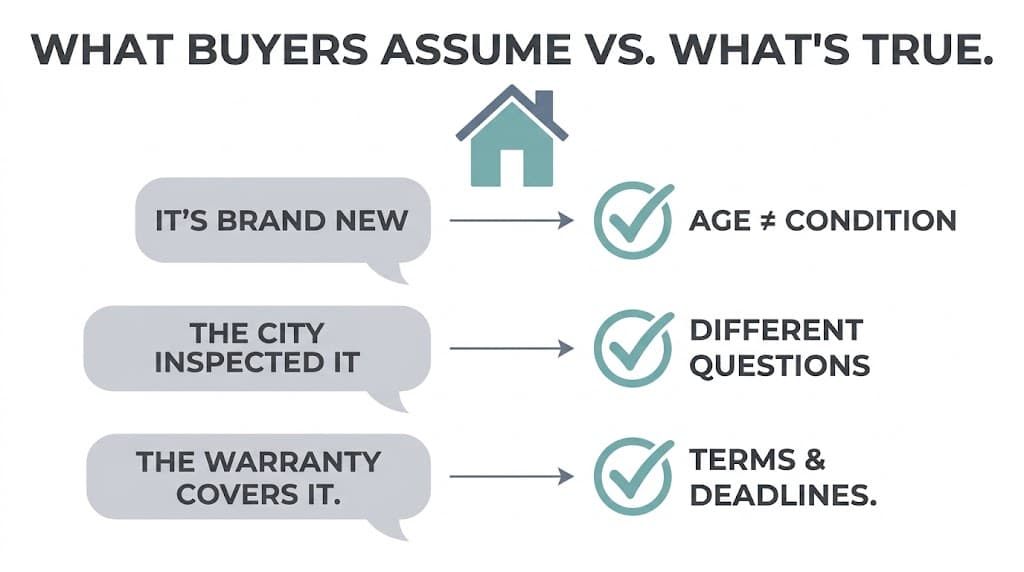
Myth: “It’s Brand New”
“New” describes the home’s age, not its condition. A brand-new home hasn’t been through years of weather and wear, but it also hasn’t been through anyone’s independent review on your behalf.
New-home inspections often document items like insulation gaps in the attic, flashing details, plumbing leaks under sinks, electrical devices that don’t work, doors that need adjustment, and grading near the foundation. Most are straightforward to address, especially before closing.
Myth: “The City Already Inspected It”
Depending on where a home is built, it may go through required inspections during construction. Those are valuable. However, they serve a different purpose from a home inspection.
Code inspections check construction against applicable requirements at specific points. A home inspection evaluates visible and accessible conditions in the finished home from the buyer’s side. Neither one replaces the other. Ask your builder which inspections were performed during construction, and by whom.
Myth: “The Builder’s Walkthrough Is Enough”
Most builders offer a walkthrough before closing. It’s useful for learning the home’s features and noting cosmetic touch-ups.
However, the builder’s walkthrough is the builder’s process. An independent inspection looks at the home’s systems and components for you, and documents what it finds in a written report.
Inspector Hindsight: “The builder’s checklist is for the builder. This one’s for you.”
Myth: “The Warranty Covers Everything”
Builder warranties are valuable, but they typically have specific terms, coverage limits, and deadlines. Some items may be covered for a shorter period than others, and requests often need to be made in writing.
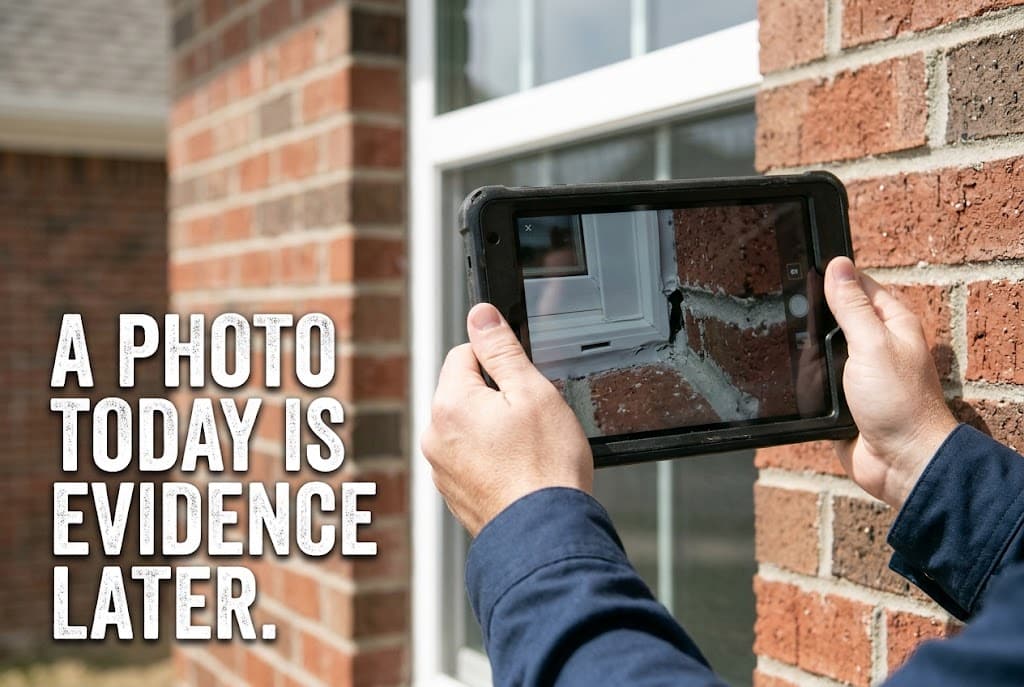
An inspection doesn’t interpret your warranty. However, it does give you a documented, photo-backed record of conditions, which can make it easier to raise items within the warranty’s terms. Review your warranty documents for exact coverage and dates.
Myth: “I’ll Find Problems After I Move In”
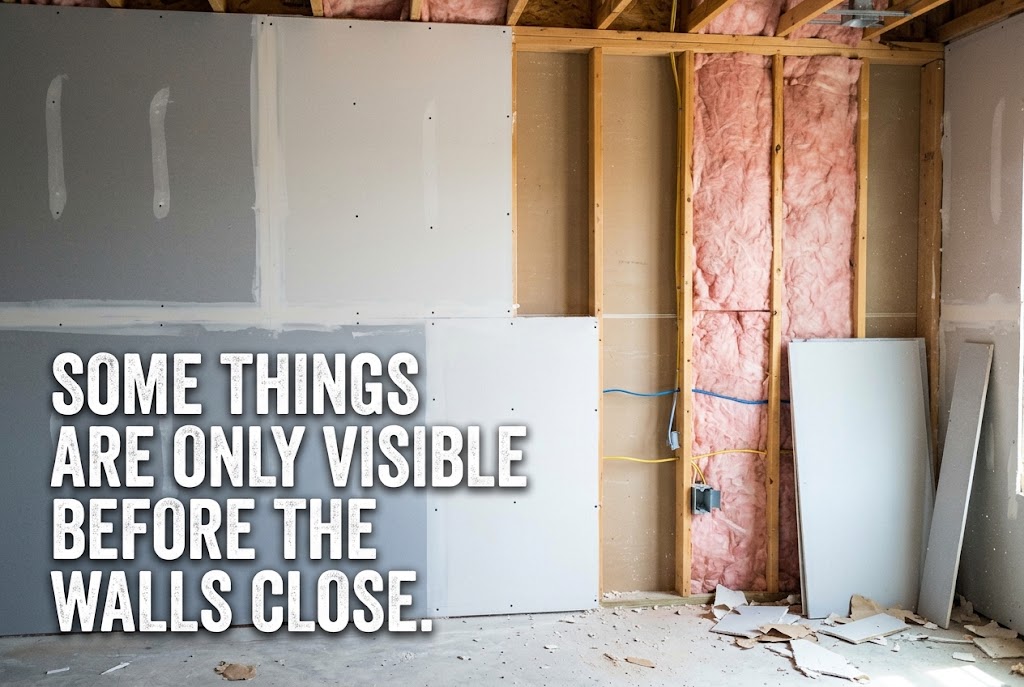
Some items do show up after move-in. However, others are only visible at certain stages. Once drywall goes up, the framing, wiring, plumbing, and insulation behind it can no longer be seen.
Timing matters after construction, too. Before closing is usually the easiest time to raise items with the builder, while the home is still in the builder’s hands.
What’s at Stake at Each Stage
- Before drywall: Framing, wiring, plumbing, and ductwork are still visible.
- Before closing: Finished systems can be operated, and items are easiest to raise with the builder.
- Near the end of the first year: The home has been through a full cycle of seasons, and there may still be time to raise items under the warranty.
For more on stages, see our overview of new construction home inspections and our guide to the 11-month warranty inspection. For a step-by-step look at the process, see what to expect from a new construction inspection.
Records That Help Now and Later
An inspection report is more than a list of findings. It’s a dated, photo-backed record of the home’s condition at a specific point in time. That record can help in a few ways:
- Now: It gives you a clear, organized basis for your list of items to raise with the builder.
- During the warranty period: It documents what was observed, and when.
- Later: Combined with records of corrections and maintenance, it helps tell the home’s story when you eventually sell.
So keep your reports, builder correspondence, and correction records together. For what to do with the report, see what happens after a home inspection.
What a New Construction Inspection Can’t Do
A home inspection is visual and limited to accessible conditions within scope. It can’t see inside finished walls, guarantee every concealed condition will be found, certify code compliance, or interpret your builder contract or warranty. It also can’t predict future performance.
Instead, it gives you better information at the moments it’s most useful. For help prioritizing findings, see our guide to home inspection red flags. Buying an existing home in the area? See our guide to buying a home in Hempstead, TX.
Captain Obvious: “New house, new warranty, no worries.”
Inspector Hindsight: “A warranty helps most when you know what to ask for.”
Captain Obvious: “It was obvious.”
Inspector Hindsight: “Until it wasn’t.”
Waller New Construction Inspection FAQs
Does a brand-new home really need an inspection?
Yes. New construction can still contain observable conditions, and finding them before closing gives you the most options.
Isn’t the city inspection enough?
Code inspections and home inspections serve different purposes. Neither replaces the other.
Does the builder walkthrough replace an independent inspection?
No. The walkthrough is the builder’s process. An independent inspection evaluates the home from the buyer’s side.
Will my builder warranty cover anything the inspection finds?
It depends on the warranty’s terms, limits, and deadlines. An inspection documents conditions, but it doesn’t interpret the warranty.
When should a new home be inspected?
Many buyers choose before drywall, before closing, and near the end of the first year.
Schedule Your New Construction Inspection
Buying new in Waller? Get an independent look while there’s still time to act on what you learn.
Schedule your RedFish home inspection, or call (866) 218-6699 to confirm service in your area.
RedFish Inspections
Inspecting To A Higher Standard.

