

A farm and ranch property inspection usually starts with the house. But on a farm or ranch, the house is only one part of what you’re buying. There may be barns, shops, ponds, fencing, water lines, roads, and land, and each raises its own questions.
The key is knowing what a home inspection covers, what it doesn’t, and who to call for everything else. That way, nothing important falls through the cracks between inspection day and closing.
Captain Obvious: “One inspection for the whole ranch.”
Inspector Hindsight: “One inspection for the house. A few phone calls for the rest.”
The House vs. the Rest of the Property
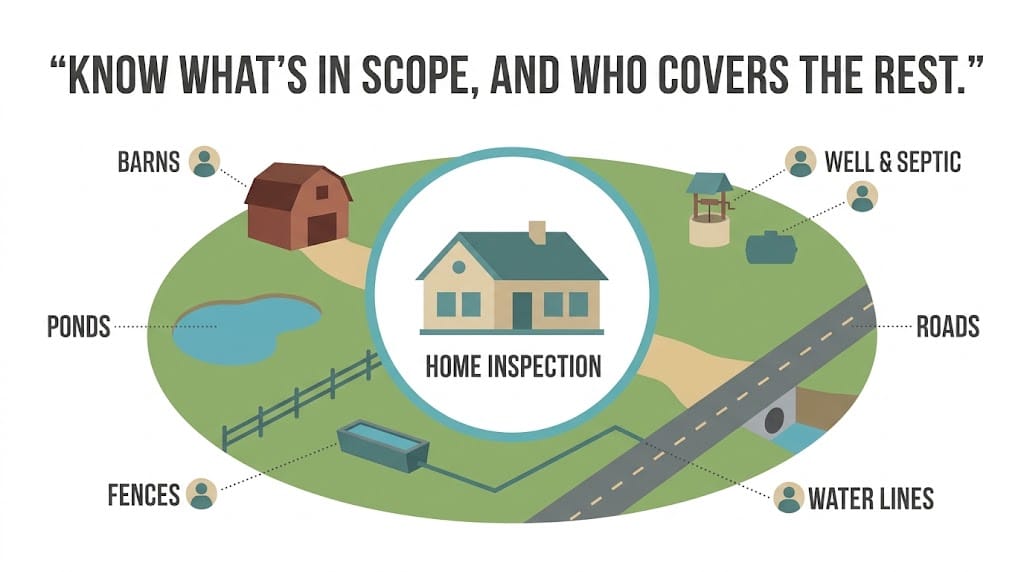
It helps to think about a farm or ranch in two parts:
- The house: a home inspection evaluates its visible and accessible systems and components within scope.
- Everything else: barns, ponds, fencing, livestock water, irrigation, roads, and the land itself. Much of this falls outside a standard home inspection and may need other professionals.
So before inspection day, confirm exactly what’s included, and make a list of the other features that matter to you.
What a Farm and Ranch Property Inspection Covers at the House
For the home itself, an inspection evaluates visible and accessible conditions, including the roof, exterior, structure, plumbing, electrical, heating and cooling, attic, interior, and drainage around the house.
For a full breakdown, see what is checked during a home inspection. For rural property types like barndominiums, propane, and manufactured homes, see our guide to buying a home in Hempstead, TX.
Barns, Shops, and Outbuildings
Barns, shops, equipment sheds, and hay barns can be among the most valuable features on a property. They can also be among the oldest.
Outbuildings are often outside a standard home inspection. If they matter to your purchase, ask about a separate evaluation by a qualified contractor or structural professional. Questions worth asking the seller include:
- How old is each building, and what has been repaired or replaced?
- Do any buildings have plumbing, electrical, or HVAC?
- Have there been any roof leaks or storm damage?
Electrical Beyond the House
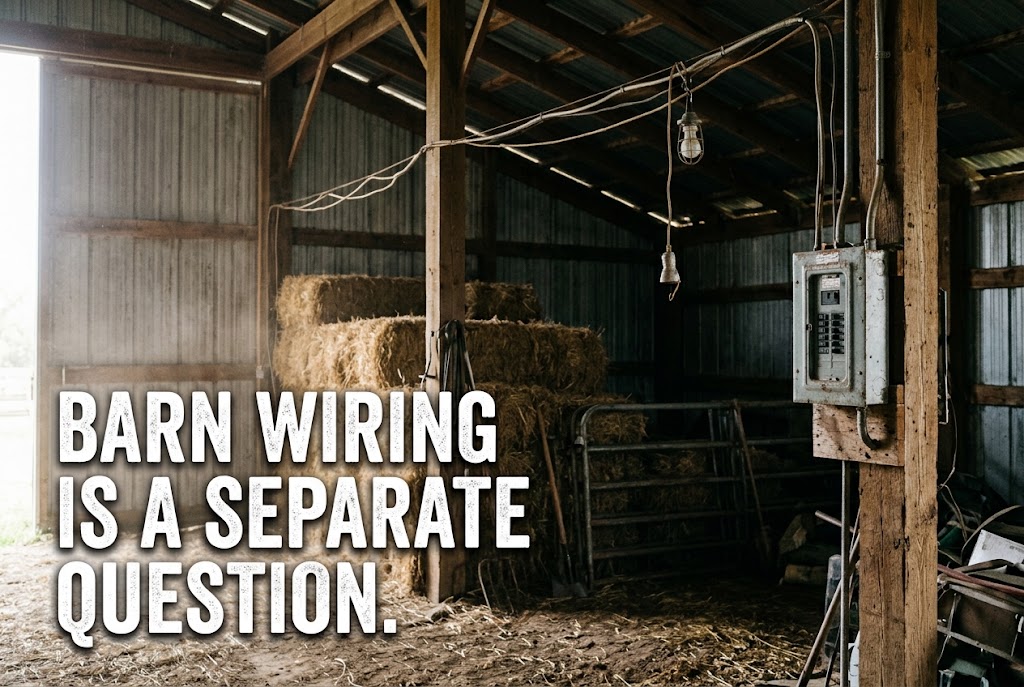
On many farms and ranches, electricity runs to barns, shops, well pumps, gates, pens, and outdoor lighting. Some of that wiring may be older, added over time, or exposed to dust, moisture, and animals.
Electrical systems in outbuildings and across the property may fall outside a home inspection. So have them evaluated by a licensed electrician, especially if you see extension cords used as permanent wiring, damaged wiring, or older panels. For more on electrical findings at the house, see electrical defects home inspectors flag.
Inspector Hindsight: “Dust, hay, and old wiring are a combination worth a licensed electrician’s time.”
Ponds, Stock Tanks, and Dams
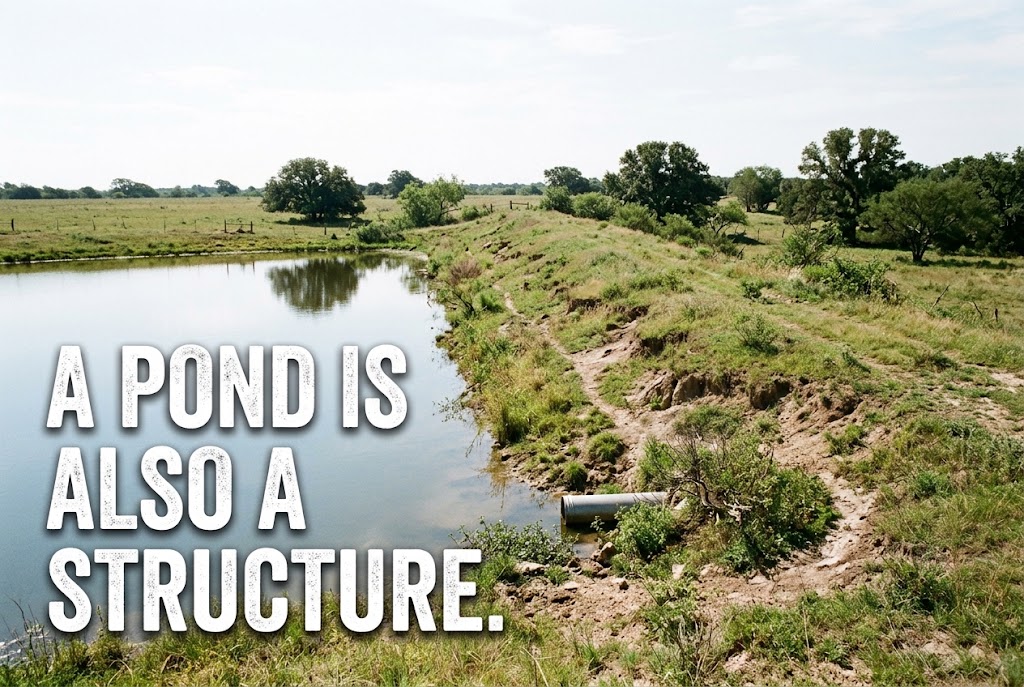
A pond or stock tank can be a big part of a property’s appeal and usefulness. However, if it’s held back by an earthen dam or embankment, that dam is also a structure.
Clues worth noticing include erosion on the embankment, seepage or wet areas below it, trees growing on it, and the condition of any outlet pipes or spillways. Some dams may be subject to regulation. So for questions about a dam’s condition or requirements, consult a qualified engineer and the appropriate authorities. A home inspection doesn’t evaluate ponds or dams.
Water for Livestock and Land
Farms and ranches often have water systems beyond the house, such as underground lines to troughs, frost-free hydrants, irrigation systems, or separate wells for livestock.
These systems are usually outside a home inspection. So ask the seller where the lines run, which well or source supplies them, and whether there have been leaks or repairs. A qualified plumber, well professional, or irrigation specialist can evaluate them if needed.
Fencing, Gates, Roads, and Culverts
Fencing, gates, cattle guards, interior roads, and culverts all take wear over time. They’re typically outside a home inspection, but they can affect how you use the property and what upkeep it needs.
It’s worth walking the property, or driving it if it’s large, to see the condition of fences, roads, and drainage crossings for yourself. Notice how roads and culverts handle water after rain, too.
Wells, Septic, and Propane
Many farm and ranch homes rely on a private well, a septic system, and propane. A well inspection can evaluate the visible well system and its operation, while water quality and septic evaluation are typically separate services. Propane tanks are usually handled by the propane supplier.
For more, see our guides to well and septic inspections for rural properties, multiple wells and older systems, and living with a well and septic system.
Land Questions: Survey, Easements, Minerals, and Taxes
Farm and ranch purchases often involve land questions that no inspection answers:
- Boundaries and easements: the survey and title documents, with your title company
- Mineral rights: your title company and a real estate attorney
- Agricultural or wildlife valuation: the county appraisal district and a tax professional, including how a sale may affect it
- Environmental questions: the appropriate environmental professionals
These are worth starting early, since some answers take time.
Who to Call for What
- The house: a home inspector
- Barns and outbuildings: a qualified contractor or structural professional
- Outbuilding and property electrical: a licensed electrician
- Ponds and dams: a qualified engineer
- Livestock water and irrigation: a plumber, well professional, or irrigation specialist
- Well water quality: a water testing laboratory
- Septic systems: a septic professional
- Propane tanks: the propane supplier
- Survey, easements, and minerals: your title company and a real estate attorney
- Agricultural valuation: the county appraisal district and a tax professional
What an Inspection Can’t Do
A home inspection is visual and limited to accessible conditions within scope. It can’t evaluate barns, ponds, fencing, or other features outside its scope, answer land, title, or tax questions, guarantee every concealed condition will be found, or predict future performance. It also doesn’t decide whether you should buy the property.
Instead, it gives you better information about the house and points you toward the right specialists for everything else. For soil and drainage on rural land, see understanding expansive clay soils. For flood questions, see flood awareness for homebuyers.
Captain Obvious: “Two hundred acres, one inspection. Efficient.”
Inspector Hindsight: “Two hundred acres, one house inspection. Let’s make the rest of the list.”
Captain Obvious: “It was obvious.”
Inspector Hindsight: “Until it wasn’t.”
Farm and Ranch Property Inspection FAQs
Does a home inspection cover the whole ranch?
No. A home inspection focuses on the house. Barns, ponds, fencing, water systems, and land typically need other professionals.
Who should evaluate barns and outbuildings?
A qualified contractor or structural professional, plus a licensed electrician for any wiring.
Does a home inspection evaluate ponds or dams?
No. For dam condition or requirements, consult a qualified engineer and the appropriate authorities.
Who answers questions about mineral rights and easements?
Your title company and a real estate attorney.
How do I find out about agricultural valuation?
Contact the county appraisal district and a tax professional, including about how a sale may affect it.
Schedule Your RedFish Home Inspection
Buying a farm or ranch? Start with a clear picture of the house, and a plan for everything else.
Schedule your RedFish home inspection, or call (866) 218-6699 to confirm services and availability in your area.
RedFish Inspections
Inspecting To A Higher Standard.

