

Chambers County flood awareness is an important part of buying a home anywhere in the county, whether it’s a subdivision home near Mont Belvieu, rural acreage near Winnie, or a place on the bay. Flat land, heavy rain, and nearby water mean flood questions belong on every buyer’s list.
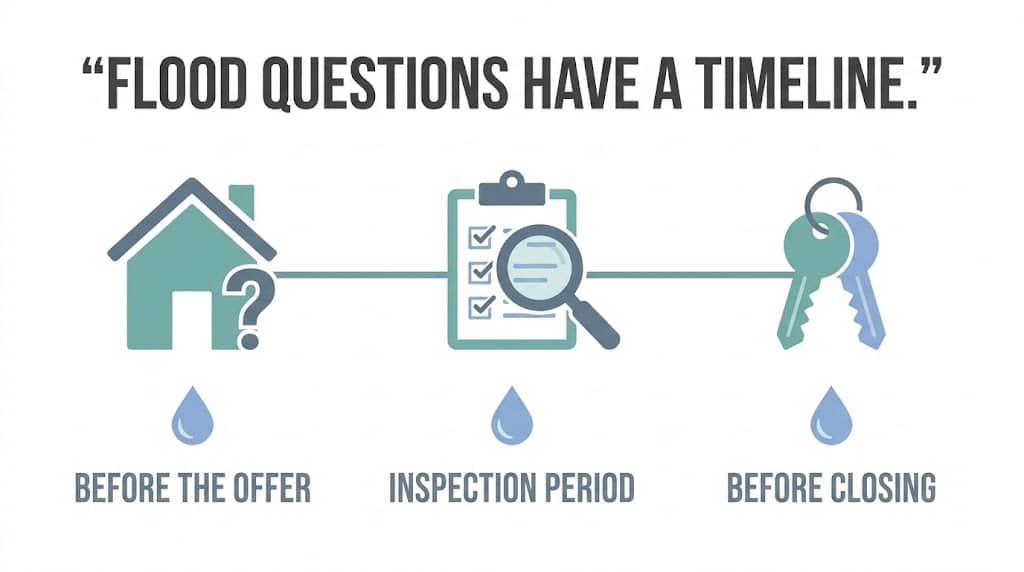
The key is timing. Flood questions are easiest to answer, and most useful, when you ask them early, before you’re days away from closing.
Captain Obvious: “We’ll ask about flooding after the inspection.”
Inspector Hindsight: “Some of those answers take time. Start now.”
The Short Version on Flood Information
A home inspection documents the visible condition of a house, including drainage and possible signs of past water. However, it doesn’t determine flood zone, flood history, or flood risk. Those answers come from other sources, like FEMA flood maps, elevation certificates, your insurance agent, and the property’s history.
For a full guide to those sources, drainage clues, and signs of past water, see our guide to flood awareness and drainage on the Gulf Coast.
Before You Make an Offer
A few early steps can save time and surprises later:
- Look up the property on FEMA’s flood maps.
- Ask your real estate professional what’s known about the property’s flood history.
- Ask whether an elevation certificate exists.
- Drive by after a heavy rain, if you can, and notice how the street, lot, and nearby land handle water.
None of these is a final answer. However, together they help you decide whether to move forward and which questions to prioritize.
During Your Inspection or Option Period
Once you’re under contract, your inspection period (or option period, depending on your contract) is when the most detailed information comes together. This is a good time to:
- Schedule your home inspection, and review drainage findings and any visible signs of past water.
- Ask the seller follow-up questions about any clues in the report.
- Request repair records, insurance claim history, and any elevation certificate.
- Bring in specialists if questions come up, such as a moisture assessment or a structural engineer.
Your real estate professional can explain the deadlines in your specific contract. For what to do with the report, see what happens after a home inspection.
Before Closing
Before you close, make sure the flood-related pieces are settled:
- You understand the property’s flood zone and what it means for insurance.
- Your insurance coverage, including any flood coverage, is arranged.
- You’ve reviewed the seller’s disclosures and any records you requested.
- Any open questions from the inspection have answers, or you understand what remains unknown.
Get an Insurance Quote Early
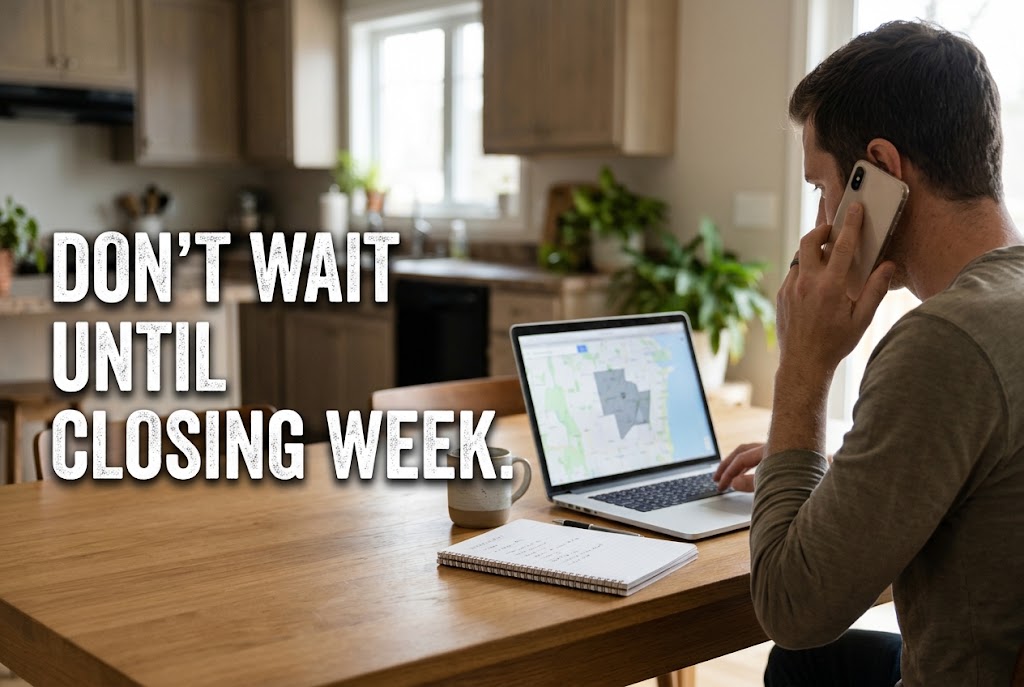
Insurance is one of the most common late surprises in a home purchase. So talk with your insurance agent early, ideally soon after you’re under contract or even before.
Flood coverage is typically a separate policy from standard homeowners insurance, and new flood policies often have a waiting period before coverage begins. Your agent can explain the options, costs, and timing for your specific property.
Inspector Hindsight: “The best time to learn what insurance costs is before it’s too late to change your mind.”
Seller Disclosures and Records
Texas seller disclosure forms typically include questions about flooding. Read those answers carefully, and ask follow-up questions about anything unclear.
It’s also worth requesting any records related to water events, such as repair invoices, insurance claims, elevation certificates, and drainage improvements. Your real estate professional can explain what sellers are required to disclose and how to request more information.
Think Beyond the House
A house that stays dry is only part of the picture. It’s also worth thinking about:
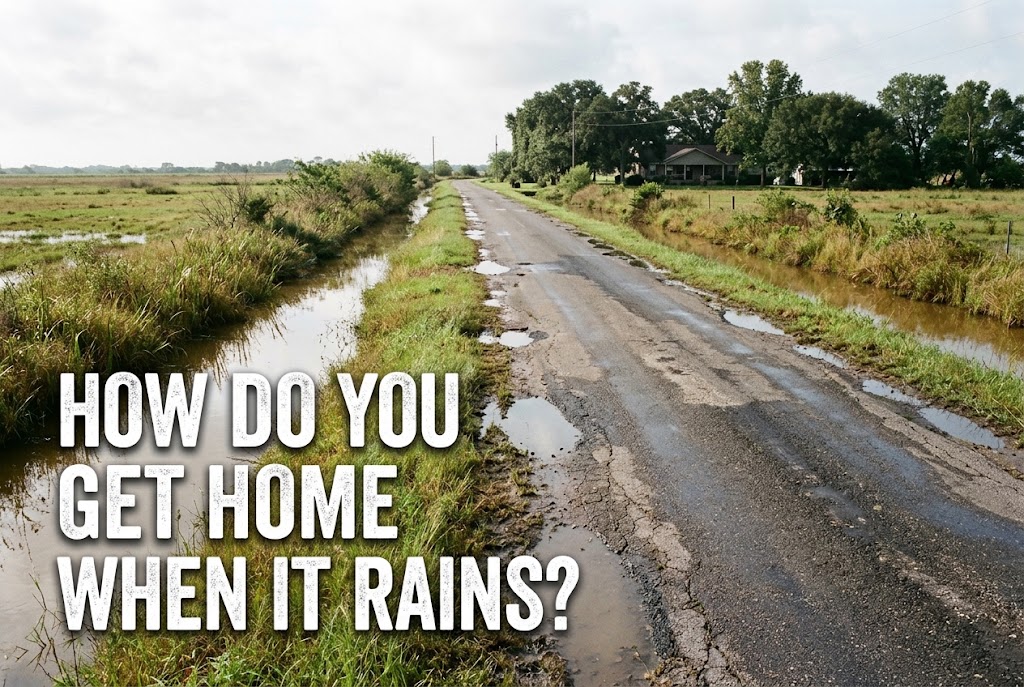
- Road access: How do you get to and from the property during heavy rain?
- The lot: Where does water collect, and where does it drain?
- Neighboring land: Does water from nearby properties or fields flow toward this lot?
- Outbuildings and equipment: Are wells, septic components, and outdoor equipment in low spots?
Ask neighbors and the seller how the area handles big storms. Local experience can tell you a lot.
Different Property Types, Different Questions
Flood questions change with the type of property you’re buying:
- Subdivision homes: how the neighborhood’s drainage works, and how the lot is graded. See our guide to buying a home in Mont Belvieu.
- Rural acreage: road access, low spots, and where wells and septic systems sit. See our guide to well and septic inspections in Winnie and Stowell.
- Bayfront properties: elevation, raised structures, and shoreline questions. See our guide to waterfront home inspections near Trinity Bay.
What a Home Inspection Can and Can’t Show
A home inspection can show you visible drainage conditions, how the house appears to manage water, and visible clues that may relate to past water. That’s valuable information for your flood questions.
However, it can’t determine flood zone, flood history, or flood risk, predict how a property will perform in a storm, or answer insurance or disclosure questions. For more, see what is checked during a home inspection.
Captain Obvious: “The house looked dry on inspection day.”
Inspector Hindsight: “Inspection day was sunny. Ask about the rainy ones.”
Captain Obvious: “It was obvious.”
Inspector Hindsight: “Until it wasn’t.”
Chambers County Flood Awareness FAQs
When should I ask about flooding when buying a home?
Early. Start before you make an offer, continue during your inspection or option period, and have answers settled before closing.
Can a home inspection tell me if a house has flooded?
No. An inspector may document visible clues, but flood history requires records, seller information, and the right questions.
When should I get a flood insurance quote?
As early as possible. Flood coverage is typically separate, and new policies often have a waiting period.
Do Texas sellers have to disclose flooding?
Texas seller disclosure forms typically include questions about flooding. Your real estate professional can explain the specific requirements.
What should I think about beyond the house itself?
Road access during heavy rain, how the lot drains, water from neighboring land, and where wells, septic components, and equipment sit.
Schedule Your RedFish Home Inspection
Buying in Chambers County? Understand how the house handles water, and know which questions to ask next.
Schedule your RedFish home inspection, or call (866) 218-6699 to confirm service in your area.
RedFish Inspections
Inspecting To A Higher Standard.

